

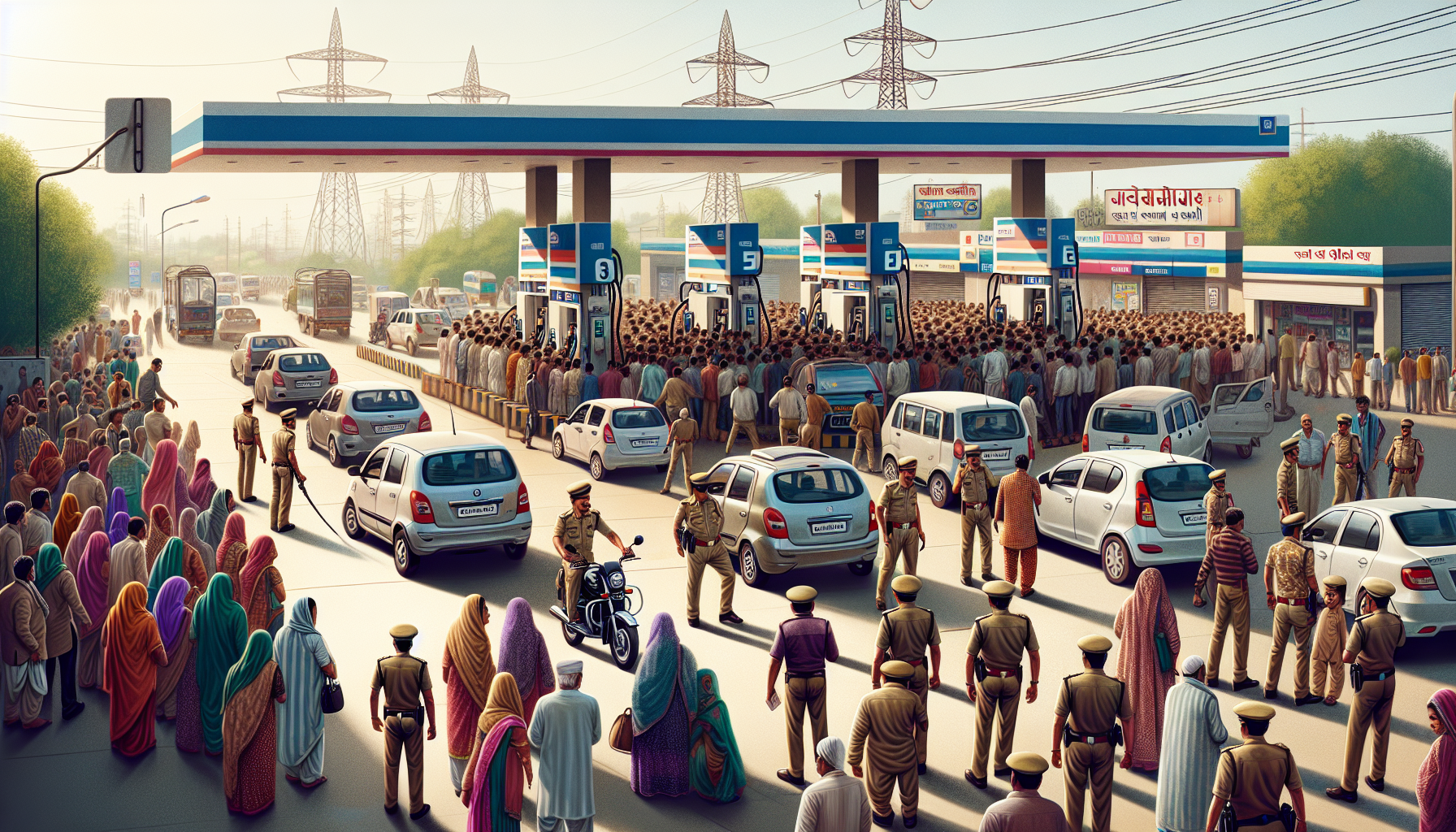
In the western Indian state of Gujarat, law enforcement authorities have been actively deployed at numerous petrol stations as a precautionary measure to handle the surge of anxious citizens rushing to fill their vehicles. The mounting apprehension among the public stems from widespread rumors and reports suggesting an impending shortage of fuel supplies, which has triggered long queues and heightened tension across the region.
Over the past few days, petrol pumps have witnessed an unprecedented influx of customers, many of whom are concerned about securing enough fuel for their daily commutes and essential travel. This sudden spike in demand has placed considerable pressure on both the fuel distribution network and the police tasked with maintaining order. Officers have been working tirelessly to ensure that the crowds remain peaceful and that the refueling process proceeds smoothly despite the growing unrest.
It is worth noting that Gujarat, being one of India’s most industrialized states with a significant population dependent on road transport, is particularly vulnerable to disruptions in fuel availability. The anxiety gripping the public reflects broader concerns about supply chain stability and the potential economic impact of any prolonged shortage. Meanwhile, local authorities continue to monitor the situation closely, coordinating with fuel suppliers to mitigate any disruptions and reassure the public.
In a related development, government officials have urged citizens to remain calm and avoid panic buying, emphasizing that there is currently no official confirmation of any imminent fuel scarcity. They have also highlighted ongoing efforts to maintain steady fuel supplies and prevent any artificial shortages caused by misinformation or hoarding. Despite these reassurances, the atmosphere at petrol stations remains tense, with many customers opting to fill their tanks at the earliest opportunity.
As the situation unfolds, the role of the police in managing public order has become increasingly critical. Their presence at fuel stations not only helps regulate the flow of vehicles but also serves as a deterrent against any potential conflicts or disturbances arising from the heightened anxiety. The coming days will be crucial in determining whether the fuel supply stabilizes and if public confidence can be restored in this key sector of daily life.
