

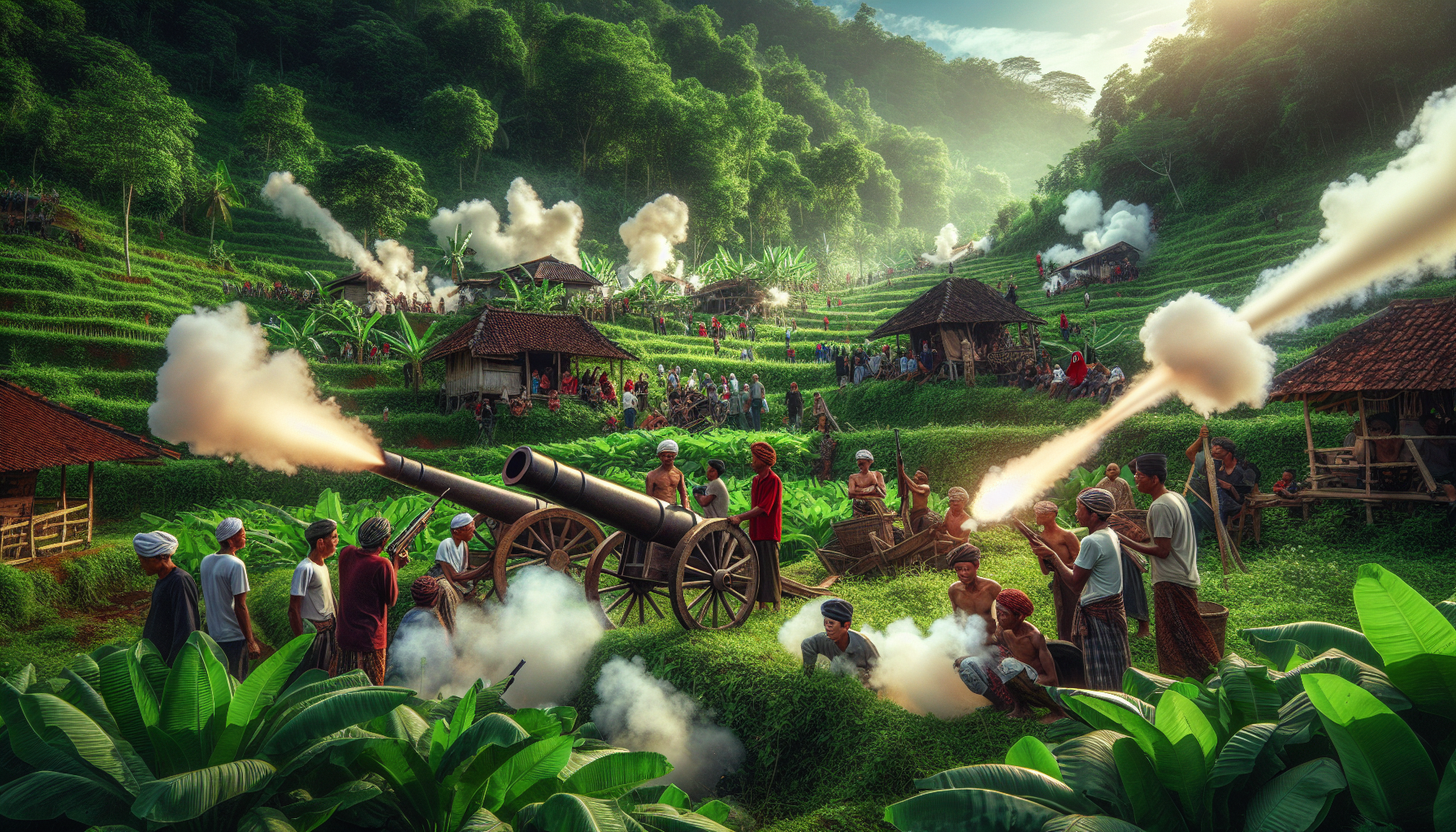
In the lush landscapes of Indonesia’s West Java province, a unique and colorful tradition unfolds each year following the Eid celebrations. Two neighboring villages come together to engage in a spirited contest, firing wooden cannons in a ritual that blends history, culture, and communal pride. This event, deeply rooted in local customs, serves as a vibrant expression of joy and unity after the solemnity of Eid.
The wooden cannons, handcrafted with skill and care, are not merely decorative but are actively used in this ceremonial showdown. Villagers from both sides gather to ignite these cannons, producing thunderous sounds that echo across the countryside. The tradition is believed to ward off evil spirits and bring blessings to the community, while simultaneously fostering friendly rivalry and camaraderie among participants.
It is worth noting that this practice has been preserved for generations, passed down as a cherished cultural heritage that connects the present with the past. The craftsmanship involved in creating these wooden artillery pieces reflects the villagers’ dedication to maintaining their ancestral customs. Each cannon is unique, often adorned with intricate carvings and painted in vibrant colors, symbolizing the identity and pride of the respective villages.
Meanwhile, the post-Eid timing of this event holds special significance. After the month of fasting and reflection during Ramadan, the communities celebrate Eid with prayers and feasting, followed by this lively cannon firing ritual. It marks a transition from spiritual observance to communal festivity, reinforcing social bonds and collective joy.
In a related development, local authorities have supported the continuation of this tradition by ensuring safety measures are in place during the cannon firing. This balance between preserving cultural heritage and prioritizing public safety highlights the community’s commitment to honoring their customs responsibly. The event attracts visitors from surrounding areas, eager to witness this spectacular display of sound and color, further boosting local tourism and cultural awareness.
