

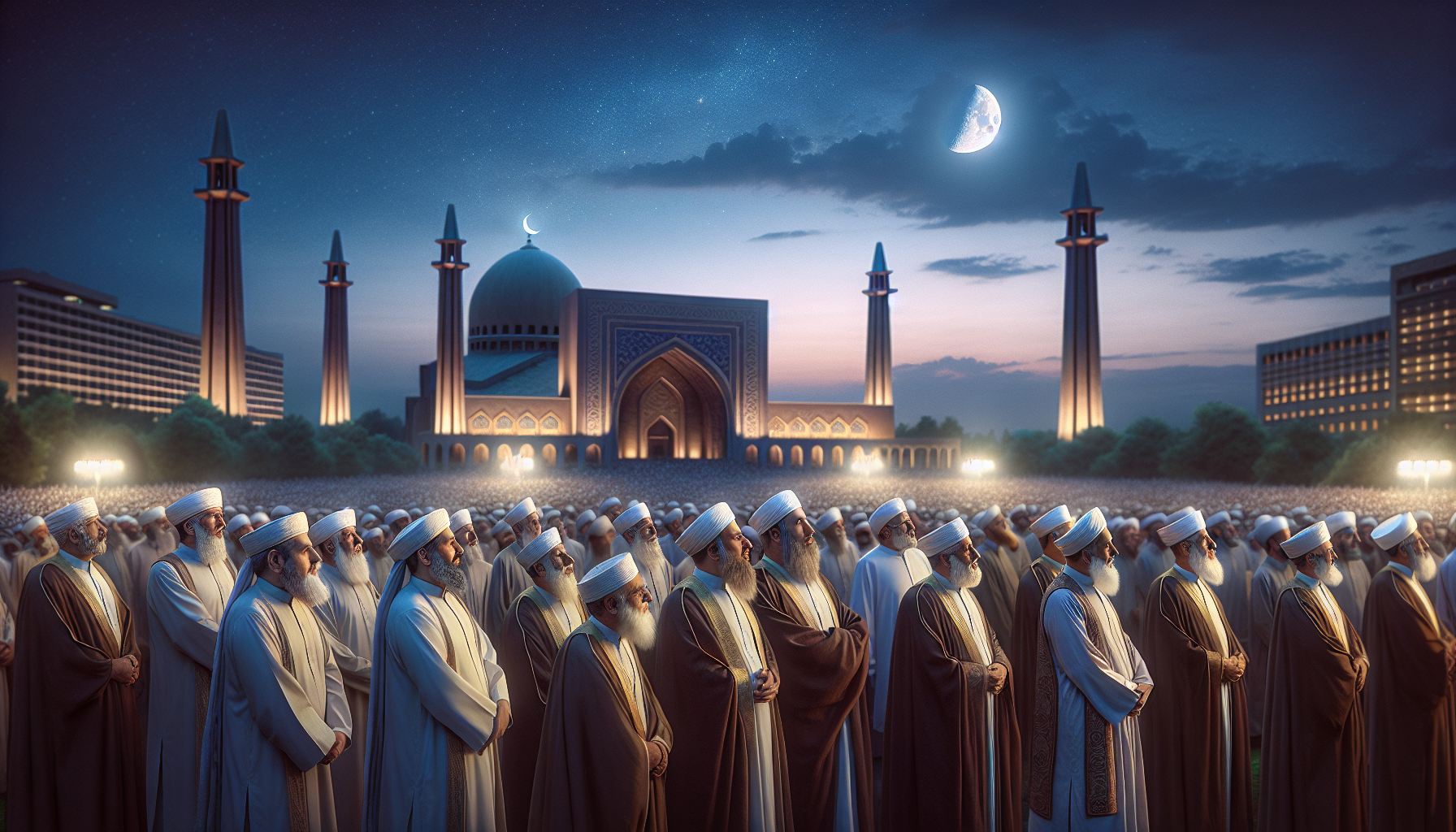
ISLAMABAD: The Central Ruet-e-Hilal Committee is scheduled to gather today, Thursday, to undertake the important task of sighting the Shawwal moon, which signals the conclusion of the holy month of Ramadan and the arrival of Eid ul Fitr. This annual meeting, held in the capital city, brings together committee members who will meticulously examine moon sighting reports submitted from various regions across Pakistan before making an official announcement regarding the commencement of Eid celebrations.
It is important to highlight that the Shawwal crescent was not observed in Saudi Arabia on Wednesday, where Eid ul Fitr is expected to be celebrated on Friday. Meanwhile, neighboring Afghanistan has already begun observing Eid today, reflecting the slight variations in moon sighting across the region. These differences underscore the significance of local moon sighting committees in determining the exact date of Eid within each country.
Experts suggest that the first day of Shawwal in Pakistan is more likely to fall on March 21, 2026, following a full 30-day cycle of Ramadan. The chances of spotting the Shawwal crescent on the evening of March 19 remain slim. the Pakistan Space and Upper Atmosphere Research Commission (Suparco), the new moon of Shawwal 1447 AH is anticipated to be born on March 19 at 06:23 Pakistan Standard Time (PST). At sunset on the same day, the moon will be approximately 12 hours and 41 minutes old, with only a brief 28-minute window between sunset and moonset along Pakistan’s coastal areas, making the sighting challenging.
The observance of Eid ul Fitr holds immense spiritual significance for Muslims worldwide, marking the end of a month-long period of fasting, reflection, and self-restraint. Over a billion Muslims engage in this sacred practice annually, embracing values such as patience, generosity, and community solidarity. In Pakistan, the month of Ramadan 2026 began on February 19, following the official crescent moon sighting announced by Central Ruet-e-Hilal Committee Chairman Maulana Abdul Khabeer Azad.
It is worth noting that the Islamic calendar is lunar-based, with months lasting either 29 or 30 days depending on the moon’s cycle. This lunar system causes Islamic months, including Ramadan, to shift approximately 10 days earlier each year relative to the Gregorian calendar. As the ninth month of the Islamic year, Ramadan’s timing varies annually, which in turn affects the date of Eid ul Fitr. The Central Ruet-e-Hilal Committee’s role remains crucial in ensuring that the religious observances align with traditional moon sighting practices, preserving the sanctity and unity of the celebrations across Pakistan.
