

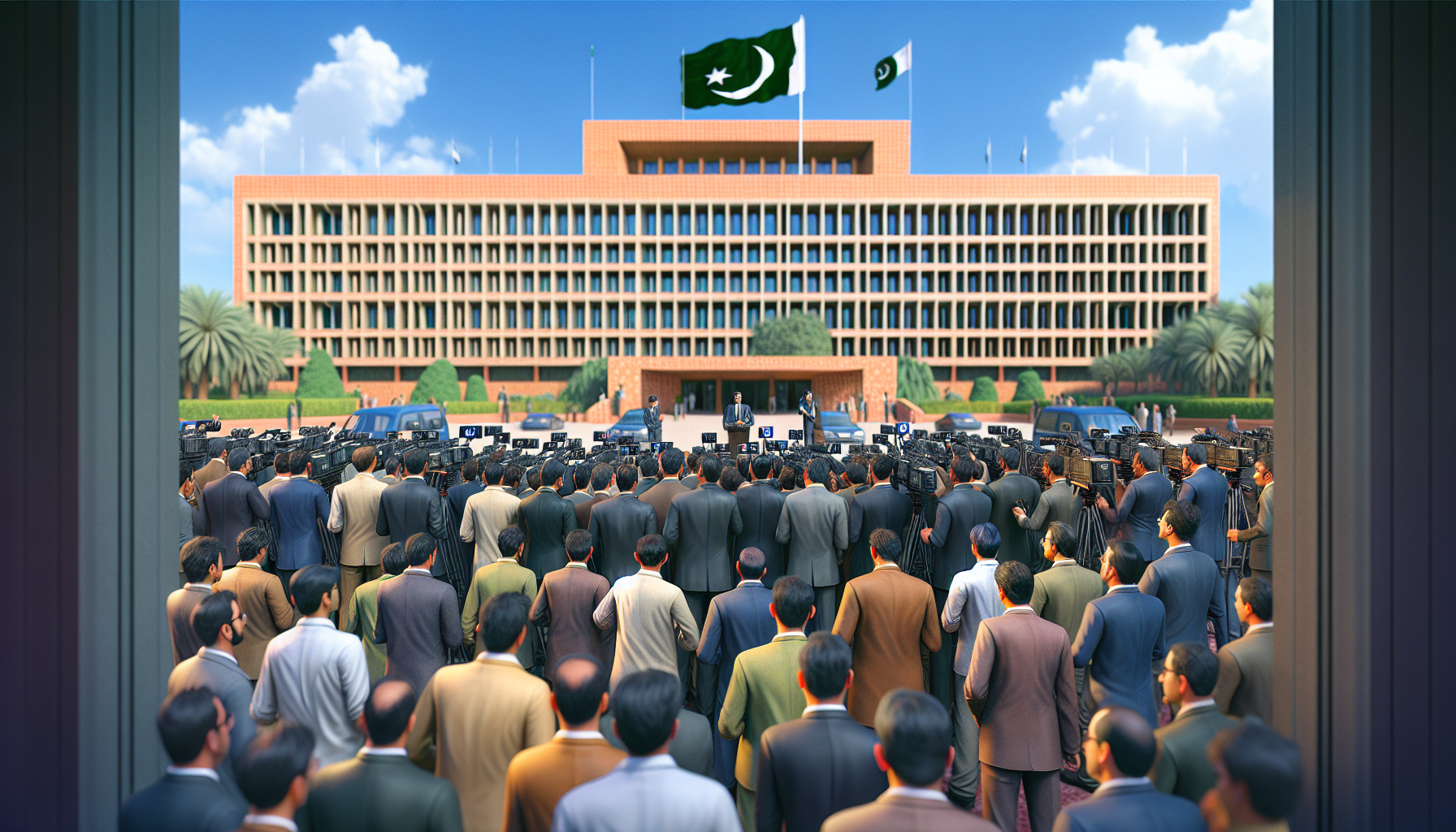
ISLAMABAD: The Foreign Office (FO) of Pakistan has strongly refuted recent allegations made by the US Director of National Intelligence, Tulsi Gabbard, regarding Pakistan’s missile capabilities posing a potential threat to the United States. In a detailed statement released on Thursday, FO Spokesperson Tahir Hussain Andrabi underscored that Pakistan’s strategic arsenal is purely defensive, designed to protect the country’s sovereignty and to uphold peace and stability within South Asia.
Responding to media inquiries about the US official’s remarks, Andrabi emphasized that Pakistan’s missile program remains well within the bounds of credible minimum deterrence, specifically tailored to counterbalance regional threats, primarily from India. He categorically dismissed the notion that Pakistan’s missile capabilities could extend to intercontinental ranges, clarifying that the country’s ballistic missiles do not possess the reach to threaten the American homeland.
These comments come in the wake of Gabbard’s testimony before the Senate Intelligence Committee, where she presented the 2026 Annual Threat Assessment. During her address, she identified Pakistan alongside Iran, China, Russia, and North Korea as nations actively advancing missile technologies, including those capable of delivering nuclear and conventional warheads. Gabbard warned that Pakistan’s evolving missile program might eventually include intercontinental ballistic missiles (ICBMs), potentially bringing the US mainland within striking distance.
However, the FO spokesperson countered this assertion by highlighting the stark contrast between Pakistan’s missile development and that of India. Andrabi pointed out that India’s missile capabilities, which reportedly exceed 12,000 kilometers, far surpass regional security needs and pose a broader concern not only for South Asia but for the international community as well. This comparison was made to underline Pakistan’s commitment to maintaining a defensive posture rather than pursuing offensive or expansive missile capabilities.
Furthermore, the Foreign Office reiterated Pakistan’s dedication to fostering constructive and respectful relations with the United States. Andrabi called for a more balanced and fact-based approach in assessing South Asia’s strategic environment, emphasizing that mutual respect and accurate understanding are essential for promoting peace, security, and stability across the region. He urged Washington to consider the broader geopolitical context and to avoid alarmist rhetoric that could undermine regional harmony.
In a related development, Pakistan continues to advocate for dialogue and confidence-building measures with its neighbors to reduce tensions and prevent an arms race in South Asia. The FO’s statement serves as a reminder that Pakistan’s defense policies are guided by the principles of deterrence and responsible stewardship of its strategic assets, rather than aggressive posturing.
As global powers closely monitor developments in missile technology and strategic capabilities, Pakistan’s firm stance reflects its ongoing commitment to safeguarding national security while contributing to regional peace. The government remains open to engagement based on mutual respect and transparency, aiming to dispel misconceptions and build trust with international partners.
