

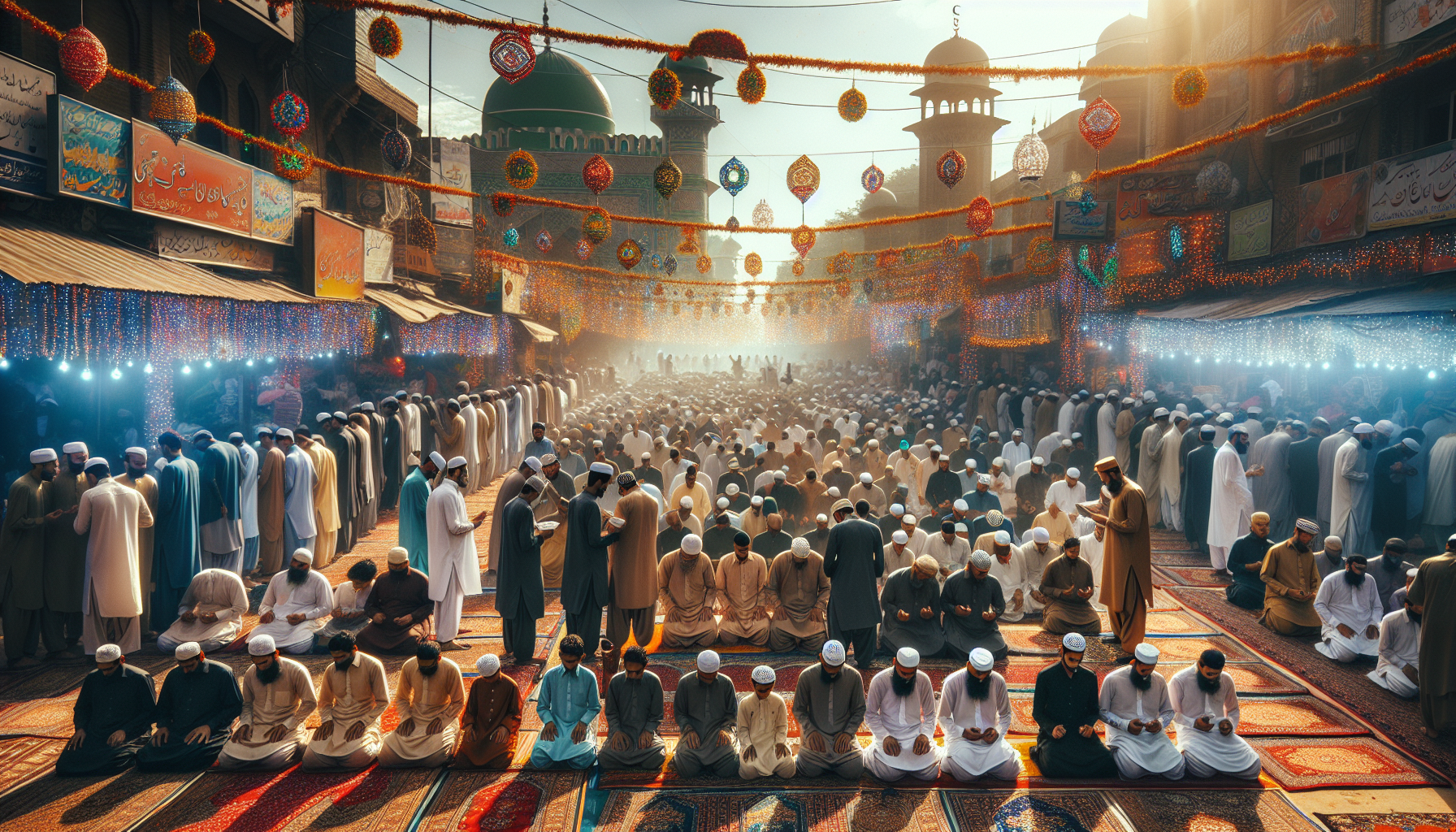
Across Pakistan, Eid ul Fitr was celebrated today with great enthusiasm and deep spiritual reflection, as millions gathered in mosques, Eidgahs, and open spaces to perform congregational prayers. The atmosphere was charged with a sense of devotion and community, as sermons delivered during the prayers underscored the festival’s profound spiritual meaning. Special emphasis was placed on fostering unity and peace, particularly in light of the ongoing tensions in the Middle East, which continue to affect the global Muslim community.
The joyous occasion marks the end of Ramadan, the holy month of fasting that is one of the five pillars of Islam. Eid ul Fitr is not only a time for celebration but also a moment to engage in acts of charity, reflecting the core Islamic values of compassion and generosity. Muslims across the country began the day by offering prayers in large congregations, often in open-air venues, symbolizing the collective spirit of worship and togetherness. Following the prayers, families donned new clothes, visited relatives and friends, and exchanged heartfelt greetings of “Eid Mubarak,” reinforcing social bonds and familial ties.
Gift-giving and charitable donations remain central to Eid festivities. Children eagerly received “Eidi,” a traditional monetary gift, which brings joy and excitement to the younger generation. Meanwhile, families observed Zakat ul Fitr by donating food or money to those less fortunate, ensuring that the spirit of giving reaches all layers of society. Traditional sweets and special dishes were prepared and shared, adding to the festive ambiance and cultural richness of the celebration.
In his Eid message, President Asif Ali Zardari highlighted the spiritual rewards of Ramadan, describing Eid as a culmination of worship, patience, and sacrifice. He reflected on the Quranic verse that prescribes fasting as a means to attain righteousness and emphasized that Eid serves as a reminder to renew one’s commitment to piety, self-reflection, and moral integrity. Quoting the Prophet Muhammad (PBUH), the President noted that fasting with sincere faith leads to the forgiveness of past and future sins, underscoring the transformative power of Ramadan.
President Zardari further called on the nation to embody the values of patience, tolerance, compassion, justice, and brotherhood—qualities essential not only for individual character but also for building a strong, united Pakistan. He urged citizens to use Eid as an opportunity to promote social harmony and extend support to orphans, the needy, and marginalized groups. Stressing the importance of national unity, constitutional supremacy, and the rule of law, he reminded Pakistanis that the country’s development and stability are collective responsibilities.
Turning to regional concerns, the President prayed for the Muslim Ummah’s solidarity amidst the ongoing conflicts in the Middle East, expressing hope that peace and unity would prevail globally. He also invoked blessings for Pakistan’s peace, security, and progress, calling for a spirit of consensus and cooperation to guide the nation forward.
Prime Minister Muhammad Shehbaz Sharif also conveyed warm Eid greetings to Muslims across Pakistan and worldwide. He described Eid as a manifestation of Allah’s mercy and grace, a time to thank the Almighty for the blessings of Ramadan and to seek acceptance of worship. The Prime Minister emphasized that Eid renews the values of sacrifice, unity, and service to humanity, which are vital for collective progress.
Highlighting government initiatives, Shehbaz Sharif mentioned the recent launch of a digital wallet system designed to provide dignified financial assistance to vulnerable populations, reflecting the administration’s commitment to social welfare. He called on the nation to share Eid’s joyous moments with the less fortunate, reinforcing the principle of collective responsibility as the foundation for national prosperity.
Addressing the ongoing turmoil in the Middle East, the Prime Minister expressed sorrow for the suffering of people in Gaza and other conflict zones. He stressed that their plight serves as a stark reminder of the urgent need for greater unity within the Muslim world to promote justice, dignity, and lasting peace. In these challenging times, he said, the greatest strength lies in solidarity and brotherhood.
Meanwhile, the top military leadership, including Field Marshal and Chief of Defence Staff Asim Munir, Chief of Naval Staff Naveed Ashraf, and Air Chief Marshal Zaheer Ahmed Baber Sidhu, extended heartfelt Eid greetings to the nation on behalf of the armed forces. The Inter-Services Public Relations (ISPR) highlighted that Eid embodies enduring values such as unity, compassion, and gratitude. For the armed forces, the true essence of Eid is found in their unwavering dedication to safeguarding the country, often away from their families, to ensure peace and security for all Pakistanis.
The military leadership paid tribute to the courage and sacrifices of service members and acknowledged the steadfast support of their families. They expressed hopes that this Eid would bring peace, prosperity, and blessings not only to Pakistan but to the entire Muslim Ummah, reinforcing the shared aspirations for harmony and stability across the region.
