

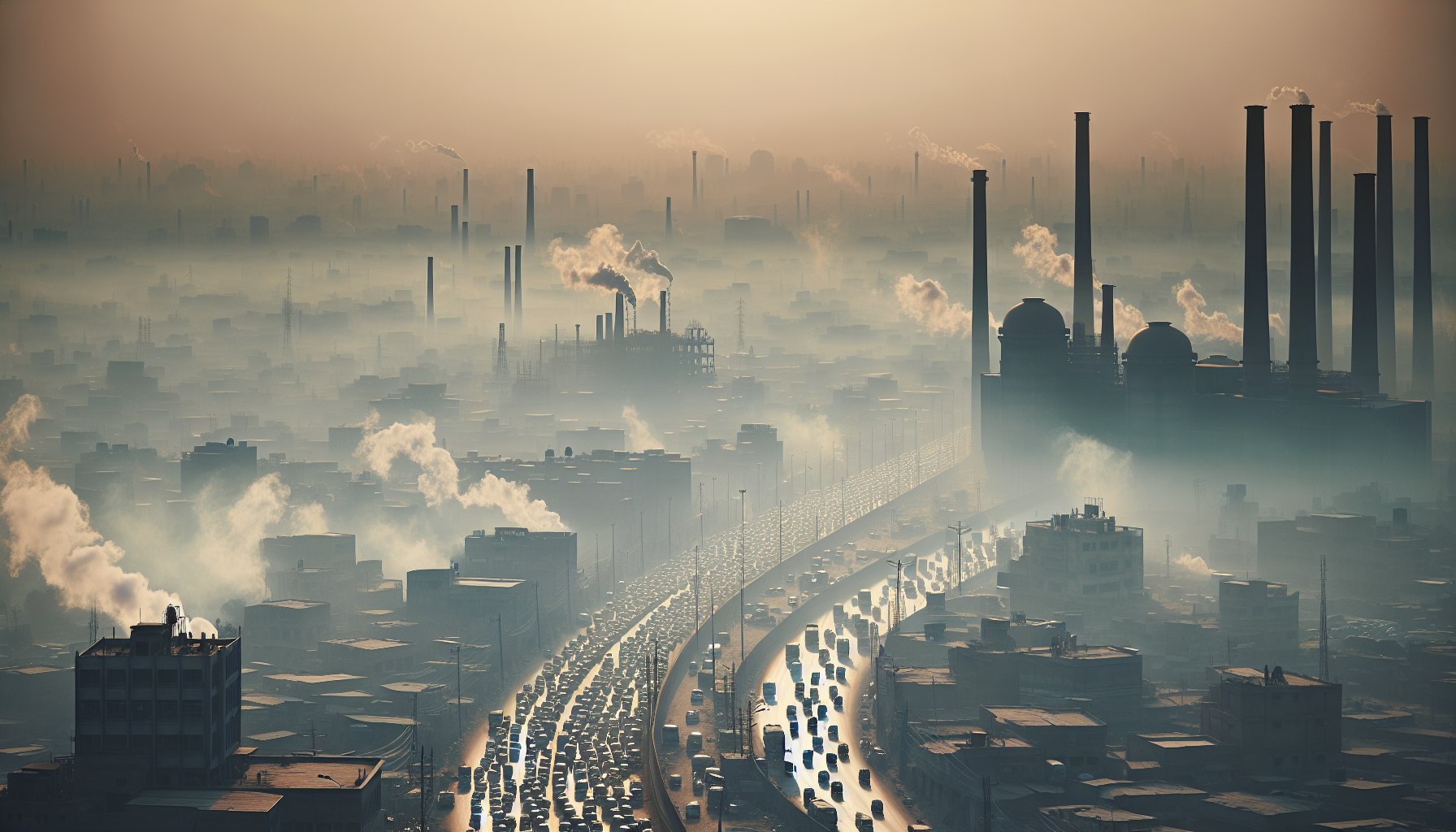
Pakistan has been identified as the most polluted country on the planet in 2025, the latest findings from a comprehensive global air quality study. The nation’s concentration of fine particulate matter, known as PM2.5, reached levels nearly 13 times higher than the safety threshold recommended by the World Health Organization (WHO). This alarming statistic underscores the severe environmental and public health challenges Pakistan continues to face amid rapid urbanization and industrial growth.
The annual report, published by Swiss air quality monitoring organization IQAir, highlights a concerning trend worldwide. While 13 countries and territories succeeded in maintaining average PM2.5 concentrations below the WHO’s recommended limit of 5 micrograms per cubic meter last year—a notable increase from just seven in 2024—the vast majority of the globe still struggles with hazardous air pollution. Out of 143 countries and territories monitored, a staggering 130 failed to meet the WHO guidelines, indicating a widespread environmental crisis.
Following Pakistan, Bangladesh and Tajikistan were ranked second and third respectively on the list of the most polluted countries. Interestingly, Chad, which held the dubious distinction of being the smoggiest country in 2024, dropped to fourth place in 2025. However, experts caution that this apparent improvement may be misleading due to significant gaps in data collection. This issue was exacerbated by the United States’ decision in March to terminate a global pollution monitoring program that gathered critical air quality data from its embassies and consulates worldwide, citing budgetary constraints. The loss of this data source has left many countries, including Burundi, Turkmenistan, and Togo, absent from the 2025 report due to insufficient information.
Christi Chester Schroeder, the lead author of the IQAir report, emphasized the uncertainty surrounding Chad’s pollution levels, stating, “The loss of the data in March made it appear there was a significant drop in PM2.5 levels, but the fact of the matter is that we don’t know.” This highlights the challenges faced by researchers in accurately tracking global air quality trends amidst shifting data availability.
On the city level, India’s Loni topped the list as the world’s most polluted city in 2025, recording an average PM2.5 concentration of 112.5 micrograms per cubic meter. Hotan, located in China’s northwestern Xinjiang region, followed closely behind with 109.6 micrograms. Notably, all of the 25 most polluted cities globally were situated within India, Pakistan, and China, underscoring the regional intensity of air pollution in South Asia and parts of East Asia.
It is worth noting that only 14% of the world’s cities met the WHO air quality standards in 2025, a decline from 17% the previous year. This deterioration was partly driven by environmental factors such as the Canadian wildfires, which significantly elevated PM2.5 levels across the United States and even reached parts of Europe, demonstrating how pollution can transcend borders and affect distant regions.
Meanwhile, some countries managed to achieve notable improvements. Australia, Iceland, Estonia, and Panama were among the few that maintained air quality within the WHO’s recommended limits. Additionally, nations like Laos, Cambodia, and Indonesia reported substantial reductions in PM2.5 concentrations compared to 2024, largely attributed to the wetter and windier conditions brought on by the La Niña weather pattern. Mongolia also experienced a remarkable 31% decrease in average PM2.5 levels, falling to 17.8 micrograms per cubic meter.
Overall, the IQAir report revealed a mixed global picture: 75 countries recorded lower PM2.5 pollution levels in 2025 relative to the previous year, while 54 countries saw an increase. This data underscores the complexity of tackling air pollution, which is influenced by a combination of human activities, natural phenomena, and policy interventions. The findings serve as a stark reminder of the urgent need for coordinated international efforts to improve air quality and protect public health worldwide.
