

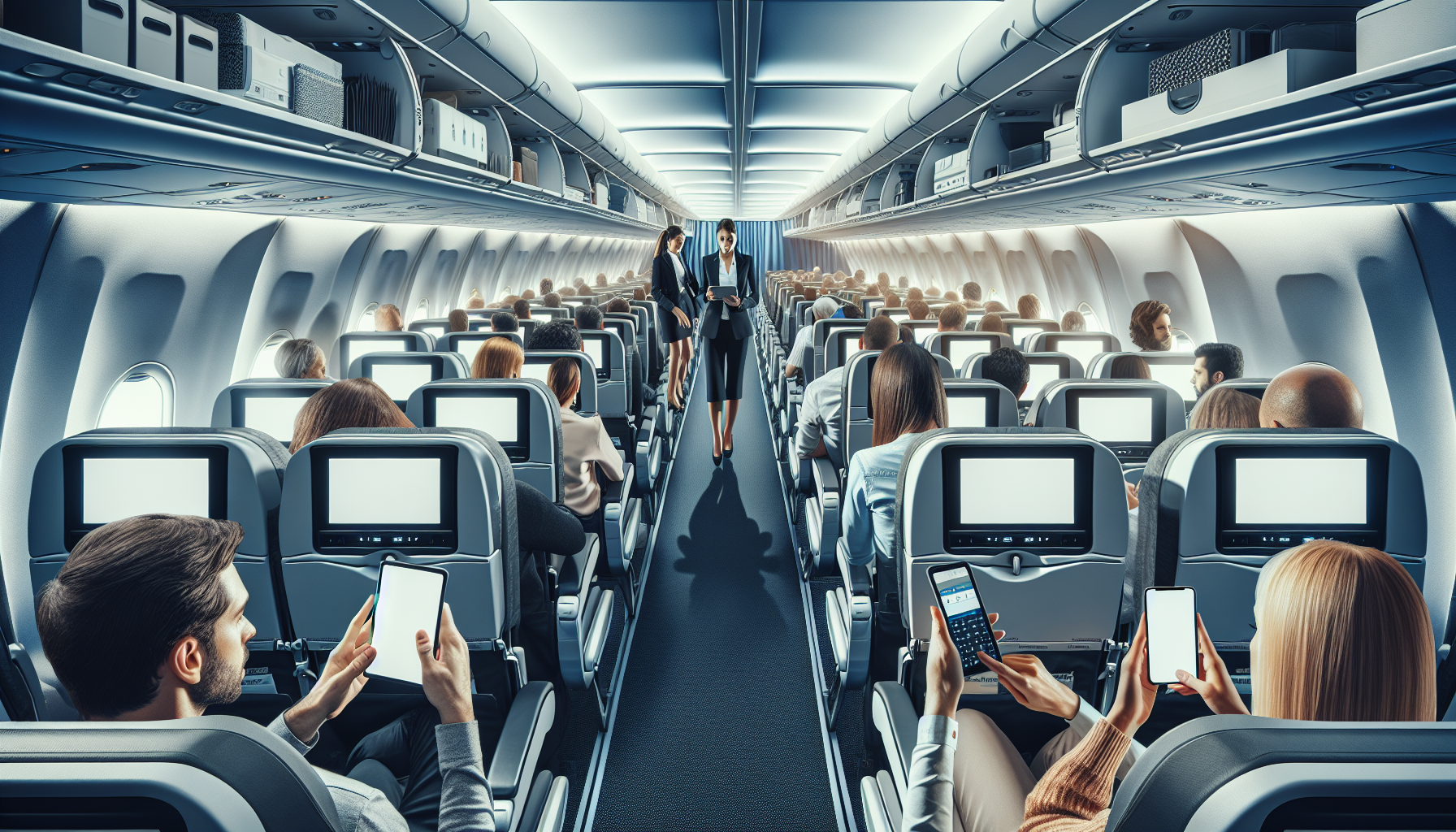
Every time we board an aircraft, the familiar announcement echoes through the cabin: “Please make sure your seats are upright, tray tables are securely stowed, window shades are raised, laptops are safely tucked away in overhead compartments, and all electronic devices are switched to airplane mode.” This routine instruction has become second nature to travelers worldwide, but many remain unaware of the deeper reasons behind this precaution.
Airplane mode, often referred to as flight mode, is a setting on mobile phones, tablets, and laptops that disables wireless transmission functions such as cellular signals, Wi-Fi, and Bluetooth. While it might seem like a simple request from the flight crew, activating airplane mode plays a vital role in maintaining the safety and efficiency of the flight.
One of the primary concerns is the potential interference that active electronic devices can cause to the aircraft’s communication and navigation systems. Although modern airplanes are designed to withstand a certain level of electromagnetic interference, multiple devices transmitting signals simultaneously could, in rare cases, disrupt sensitive avionics. This interference might affect the pilot’s ability to communicate with air traffic control or interfere with navigation instruments, which are critical for safe flight operations.
Moreover, when devices are not in airplane mode, they continuously search for cellular networks, especially at high altitudes where signals are weak or unavailable. This constant searching can cause devices to emit stronger signals, which increases the risk of interference. Switching to airplane mode prevents this by halting all wireless transmissions, ensuring that the aircraft’s systems remain unaffected.
It is worth noting that while airplane mode disables cellular connectivity, many airlines now allow passengers to use Wi-Fi and Bluetooth once the plane reaches cruising altitude. This development reflects advancements in technology and regulatory changes, but the initial activation of airplane mode remains mandatory during takeoff and landing phases, which are the most critical moments of any flight.
In a related development, the aviation industry continues to study and update guidelines on electronic device usage to balance passenger convenience with safety. Passengers are encouraged to follow crew instructions carefully and understand that these measures are in place not to inconvenience but to protect everyone on board.
