

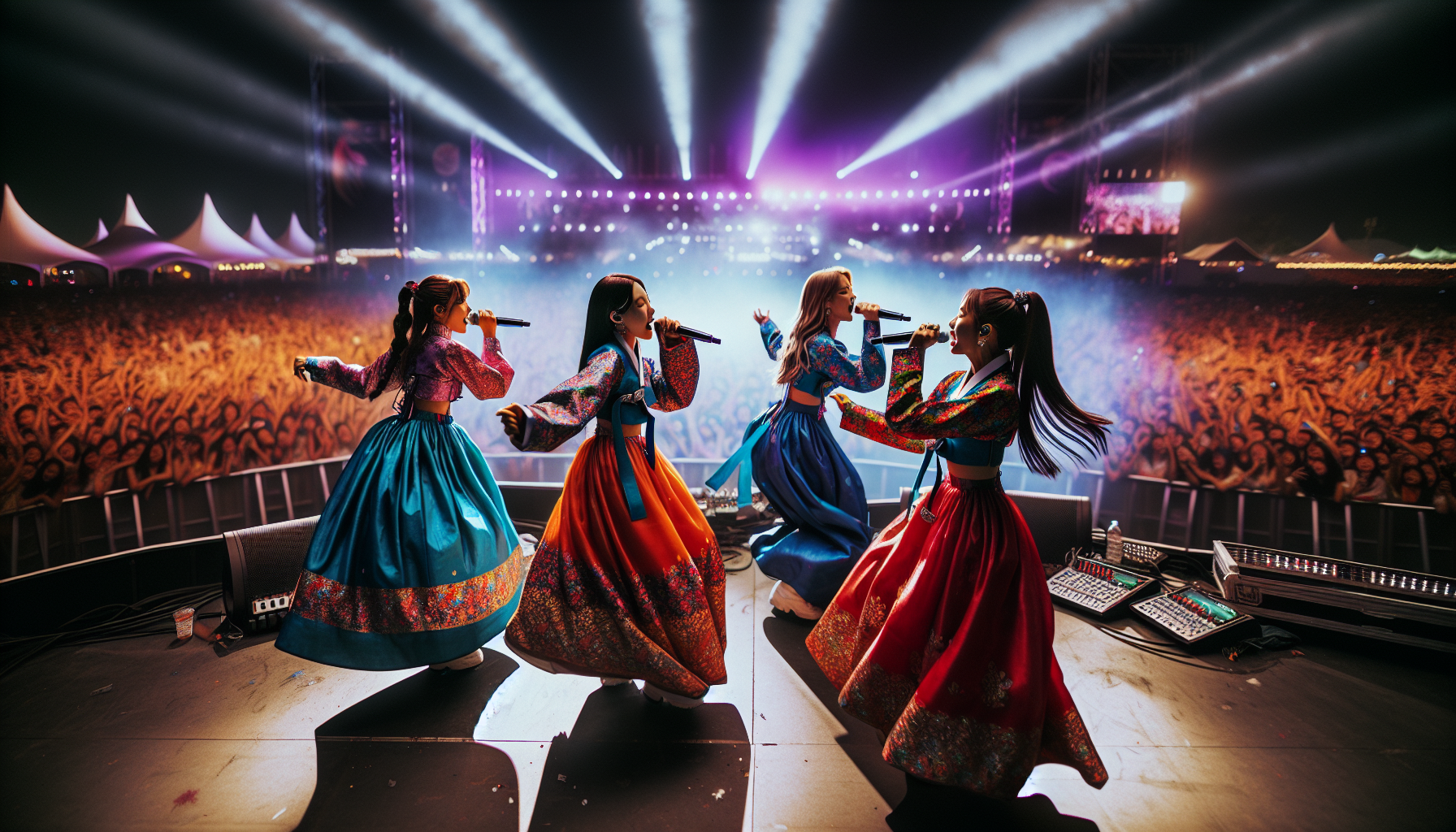
On a landmark evening at this year’s Coachella Valley Music and Arts Festival, the globally renowned K-pop girl group Blackpink etched their name in history by becoming the first Asian act ever to headline the iconic event. The electrifying performance took place on Saturday night, drawing an immense crowd reportedly exceeding 125,000 enthusiastic fans, all eager to witness this groundbreaking moment in music history.
Blackpink’s members—Jennie, Jisoo, Lisa, and Rosé—did not just deliver a high-energy show; they also chose to celebrate their rich cultural roots in a powerful and visually striking way. As they stepped onto the stage, they were adorned in beautifully crafted hanboks, the traditional Korean garments known for their vibrant colors and elegant designs. This deliberate choice was a heartfelt tribute to their heritage, seamlessly blending modern pop with centuries-old Korean tradition.
The hanbok, with its flowing lines and symbolic patterns, has long been a significant emblem of Korean identity, often worn during festivals and important ceremonies. By showcasing these garments on such a prominent international platform, Blackpink not only highlighted their personal connection to Korean culture but also introduced a global audience to the beauty and history of hanbok fashion. This moment resonated deeply with fans worldwide, many of whom expressed admiration for the group’s dedication to honoring their origins.
Meanwhile, the festival itself has grown into a cultural phenomenon, known for its diverse lineup and trendsetting performances. Blackpink’s headlining spot marks a significant milestone, reflecting the increasing influence of Asian artists in the global music scene. Their presence at Coachella underscores the expanding reach of K-pop and its ability to bridge cultural divides through music and style.
In a related development, Blackpink’s Coachella appearance has sparked renewed interest in traditional Korean attire among younger generations, both in South Korea and abroad. Fashion enthusiasts and cultural advocates alike have praised the group for bringing hanbok into the contemporary spotlight, inspiring a fusion of traditional and modern aesthetics in popular culture.
