


Punjab Information Minister Azma Bukhari announced on Tuesday that the province’s flagship housing programme, “Apni Chhat, Apna Ghar,” has received the 2026 UN-Habitat Scroll of Honour Award, marking a significant milestone in Chief Minister Maryam Nawaz Sharif’s efforts to provide affordable housing. Bukhari stated that the chief minister’s initiatives are beginning to yield tangible results.
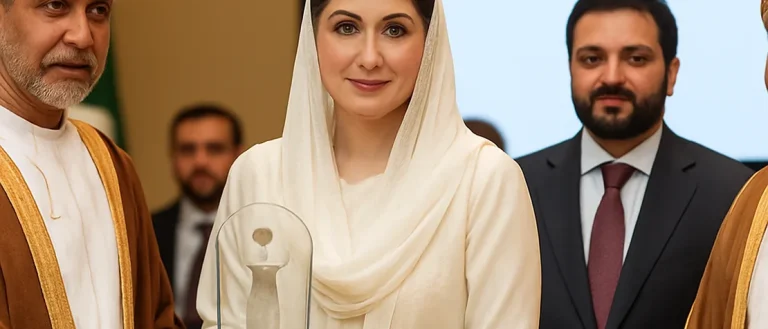
At a press conference alongside Punjab Housing Minister Bilal Yasin, Bukhari highlighted the international recognition as a testament to the government’s commitment to expanding access to safe and affordable housing for low-income families. The award was presented to Maryam Nawaz on Monday at the Oman Convention and Exhibition Centre in Muscat during the global observance of World Habitat Day.
The United Nations Human Settlements Programme (UN-Habitat) acknowledged the Punjab Housing and Town Planning Agency (PHATA) and its housing scheme for significantly contributing to the availability of adequate housing for economically disadvantaged households. The selection for the 2026 Scroll of Honour was officially announced in September after a competitive global nomination process.
Bukhari emphasized that UN-Habitat focuses specifically on affordable housing, and Maryam Nawaz is the first chief minister to receive this prestigious award, which is given to only five projects annually. She noted that the programme’s success is rooted in merit and transparency.
Maryam Nawaz, upon receiving the award, described “Apni Chhat, Apna Ghar” as a symbol of hope for low-income families in Punjab and across Pakistan. Over 200,000 individuals have benefited from loans under the scheme, with the provincial government aiming to construct 500,000 houses within the next five years. Bukhari further revealed that the chief minister’s broader vision includes building one million houses in Punjab over five years.
The housing model is distinctive in providing interest-free loans to landowners, rather than relying on traditional mortgage or financing systems. Eligible applicants owning between one and ten marlas of land receive loans in two instalments, enabling them to build homes tailored to their needs. Maryam Nawaz has reiterated that safe, dignified, and quality housing is a fundamental right for every citizen, and her government remains committed to ensuring a roof over every deserving family’s head.
Housing Minister Bilal Yasin described the programme as one of the fastest-growing initiatives of its kind globally. He stressed that the awards earned by Maryam Nawaz are based solely on performance, free from political bias or favoritism. Yasin confirmed that no loans or houses have been distributed based on political affiliation or nepotism, underscoring the programme’s integrity.
Yasin also criticized the previous Pakistan Tehreek-e-Insaf (PTI) government, stating that its housing initiatives largely remained at the planning and announcement stages without substantial implementation. He pointed out that the PTI’s model depended on mortgages and financing, contrasting with Punjab’s interest-free loan approach.
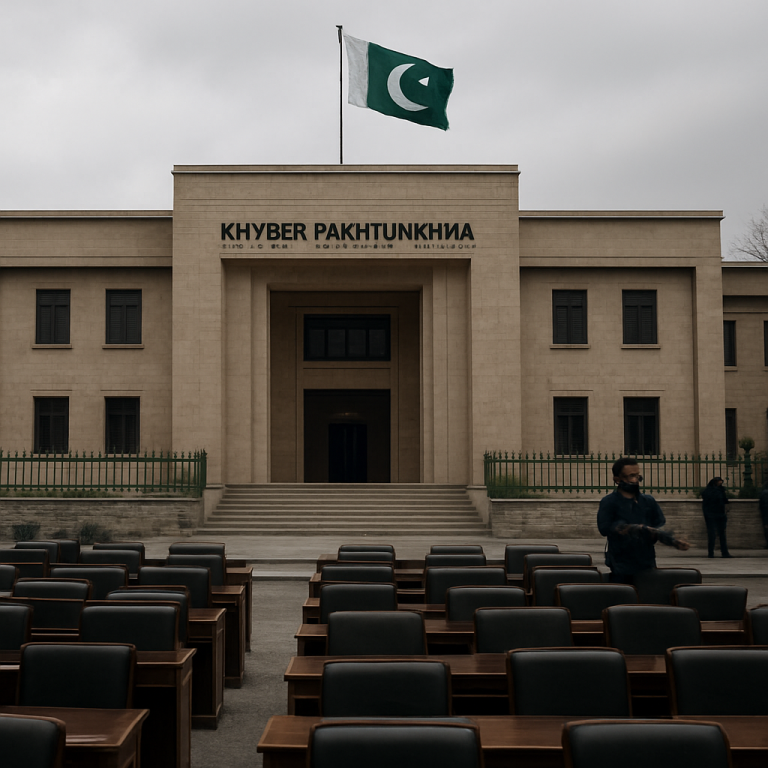
Azma Bukhari dismissed claims that “Apni Chhat, Apna Ghar” was initiated by the former government, noting that even the PTI-led Khyber Pakhtunkhwa government had not implemented a similar programme. She referenced the previous administration’s unfulfilled promises, including one crore jobs, 50 lakh houses, and the Billion Tree initiative, which remain unachieved and a source of embarrassment for its supporters.
Bukhari highlighted the fundamental difference between the two housing models: the previous government’s reliance on mortgages versus the current scheme’s provision of interest-free loans to landowners. She added that the earlier government had planned large-scale high-rise apartments through public-private partnerships, but these projects never materialized. In contrast, Punjab’s model empowers individuals to build homes their preferences on their own land.
She also mentioned that other provinces are seeking to replicate Punjab’s “Suthra Punjab” initiative, reflecting Maryam Nawaz’s growing reputation through her development projects. Bukhari criticized detractors unhappy with the positive developments in the province.
Yasin reiterated that the praise for Maryam Nawaz and the Punjab government stems from their performance rather than inflammatory rhetoric or protest politics. He also condemned PTI’s political strategies, suggesting that after 14 years of shaping public opinion, the party’s approach no longer yields benefits.
Azma Bukhari underscored the significance of the UN-Habitat award as an international accolade rather than recognition from a minor non-governmental organisation. She emphasized that the award followed a rigorous, competitive selection process based on established global criteria, further validating Punjab’s housing programme and its impact.















Leave an opinion