


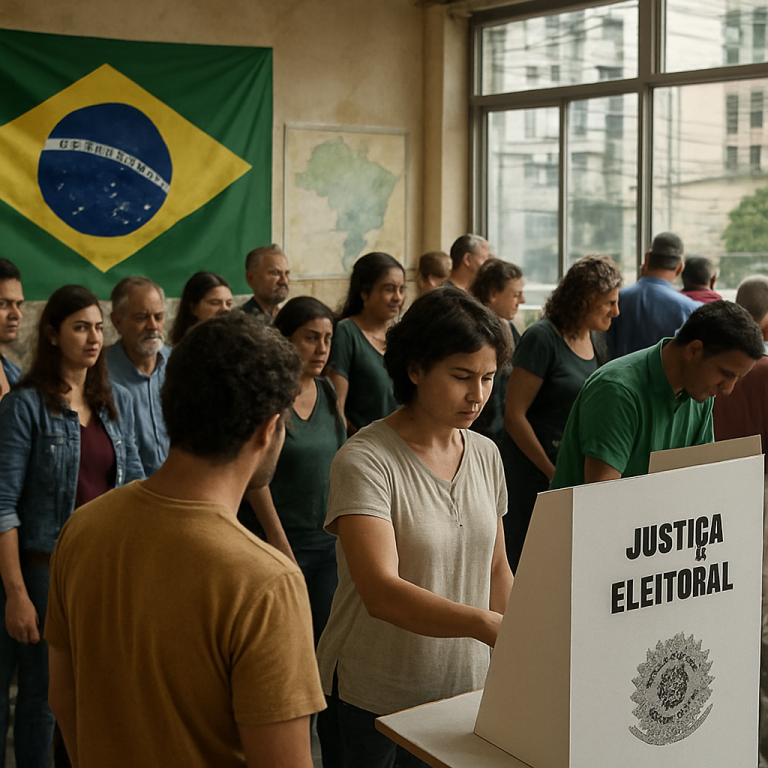
Brazil is witnessing an intense presidential election as the leftist incumbent, Luiz Inácio Lula da Silva, campaigns for an unprecedented fourth term. Lula, who has previously served as president from 2003 to 2010, is striving to regain leadership amid a politically polarized environment. His main challenger is Senator Flavio Bolsonaro, representing the right-wing faction and son of former President Jair Bolsonaro, who remains a significant figure in Brazilian politics. This election is critical as it will determine the country’s direction on economic policies, social programs, and international relations.
Meanwhile, the contest between Lula and Flavio Bolsonaro reflects broader ideological divisions within Brazil, where voters are split over issues such as economic inequality, corruption, and environmental policies. Lula’s leftist platform emphasizes social welfare expansion and poverty reduction, while Bolsonaro’s campaign focuses on conservative values, security, and economic liberalization. The narrow margin between the candidates highlights the electorate’s uncertainty and the potential for a highly competitive runoff.
In a significant development, the outcome of this election could influence Brazil’s role on the global stage, especially regarding climate change commitments and trade partnerships. Lula’s previous administrations were noted for social reforms and international diplomacy, whereas Bolsonaro’s tenure was marked by controversial stances on environmental protection and governance. As the nation awaits final results, the election’s impact will resonate beyond Brazil, affecting regional stability and global economic trends.












Leave an opinion