

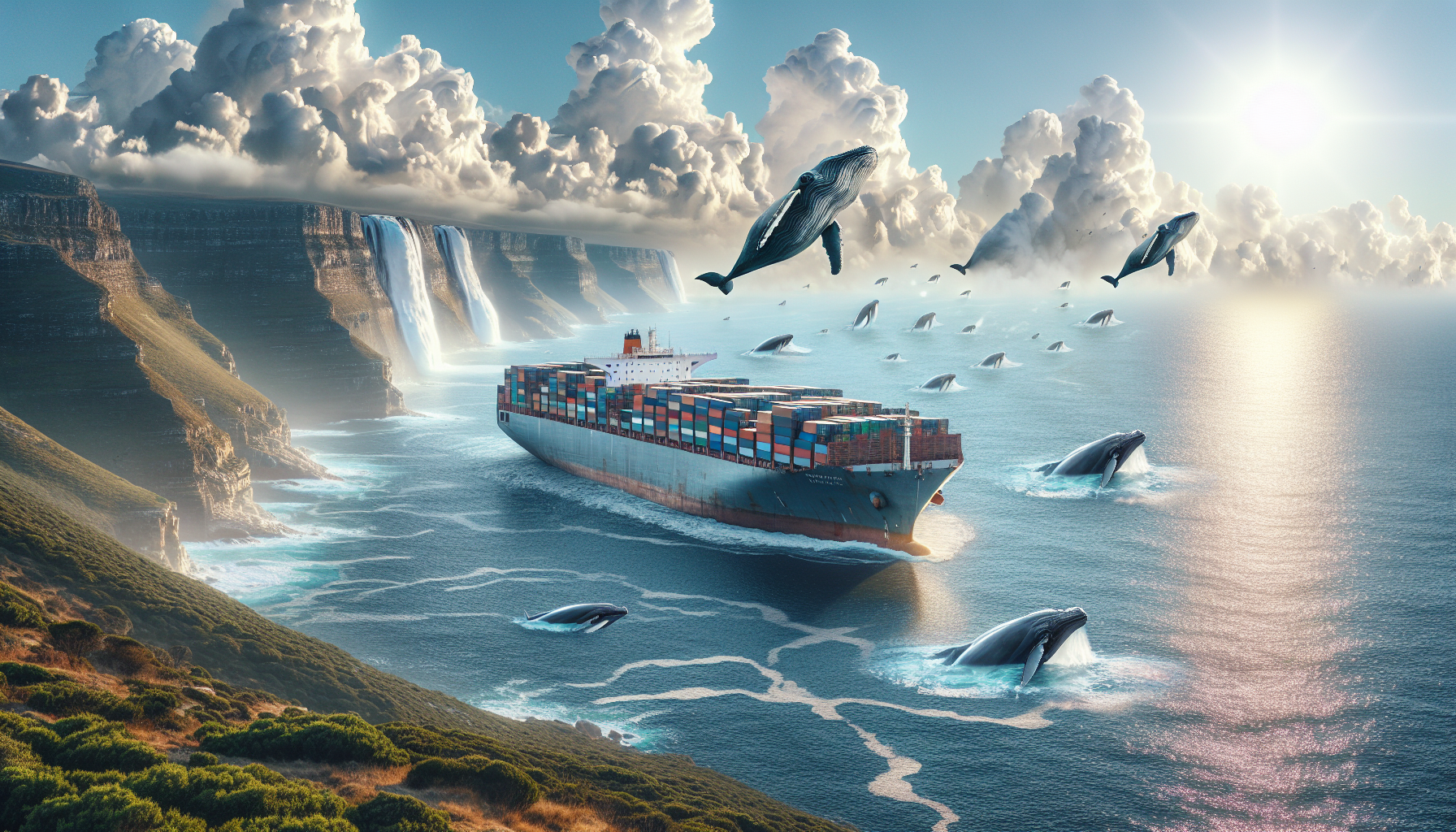
In a significant development, maritime vessels have increasingly altered their traditional routes by navigating around the Cape of Good Hope since 2023. This shift is primarily driven by the need to avoid conflict zones in the Middle East, which pose risks to shipping safety and logistics. The rerouting has led to a substantial increase in maritime traffic along this southern African passage, a region known for its rich marine biodiversity. Experts are now raising alarms about the unintended consequences this change may have on local whale populations.
Marine scientists emphasize that the Cape of Good Hope is a critical habitat for several whale species, including migratory routes essential for their breeding and feeding. The surge in ship movements heightens the risk of ship strikes, noise pollution, and habitat disruption, all of which can severely impact whale health and behavior. This concern comes amid growing global awareness of the threats posed to marine mammals by expanding human activities in the oceans. Conservationists argue that without proper management, these changes could lead to long-term ecological damage.
Meanwhile, the shipping industry faces the challenge of balancing operational safety with environmental stewardship. The rerouting around the Cape of Good Hope, while mitigating geopolitical risks, introduces new environmental dilemmas that require urgent attention. Policymakers and maritime authorities are urged to collaborate on strategies that minimize harm to marine life, such as implementing speed restrictions and designated shipping lanes. This situation underscores the complex interplay between global security issues and environmental conservation in international waters.
