

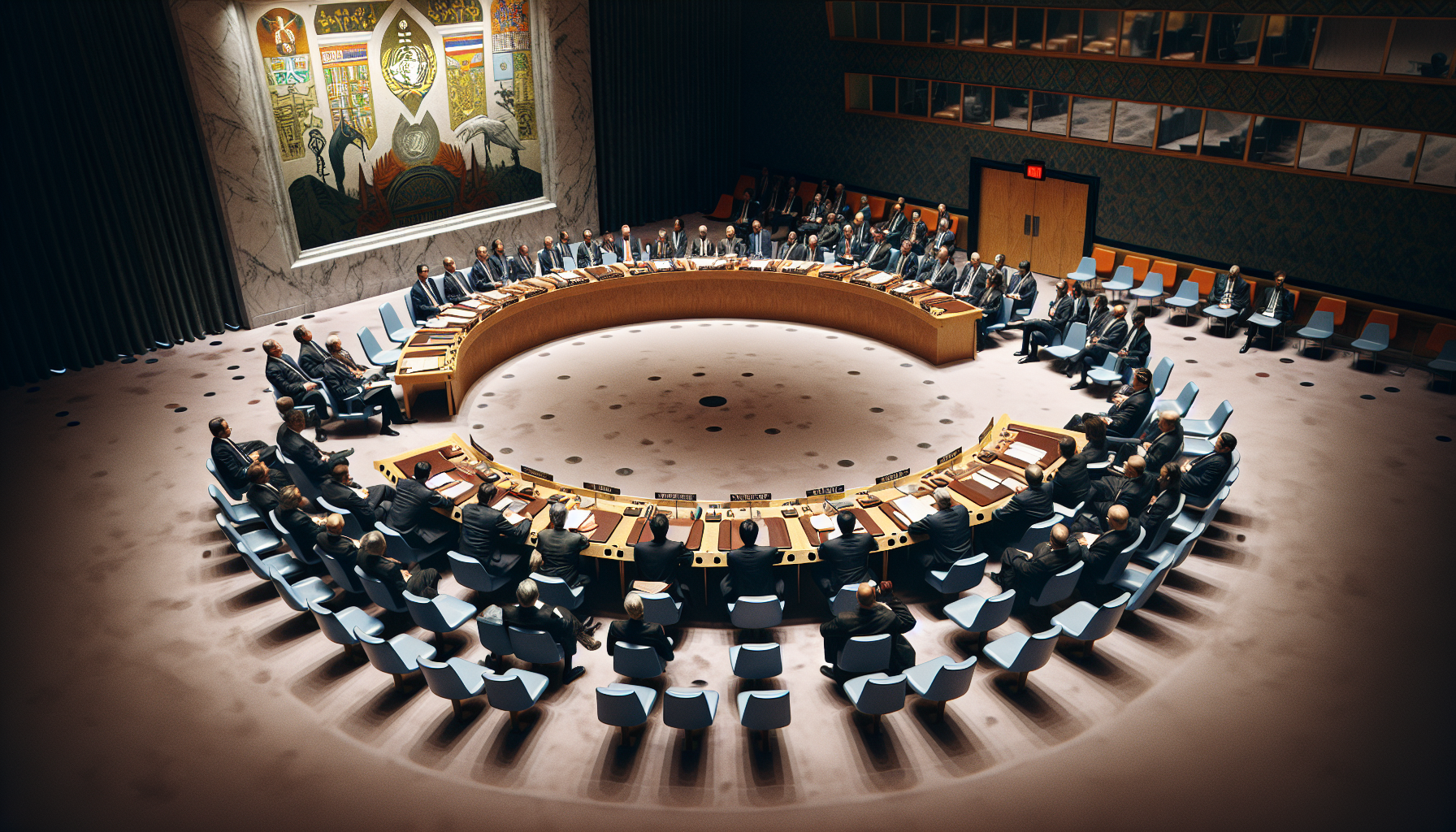
Washington has moderated its latest United Nations resolution targeting Iranian actions in the Strait of Hormuz, although diplomats caution that this adjustment is unlikely to prevent renewed opposition from China and Russia in the Security Council.
The revised draft, circulated to Security Council members on Thursday, follows an earlier US attempt to authorize military measures that was promptly blocked by Moscow and Beijing. This diplomatic effort comes as President Donald Trump prepares for a critical visit to China next week, where regional security will be a key topic.
In a notable concession to international concerns, the updated text removes a reference to Chapter VII of the UN Charter, which grants the Security Council authority to impose sanctions or authorize military intervention. By eliminating this clause, Washington seems to be seeking a compromise that recognizes the seriousness of the mining incidents and attacks in the Strait without immediately activating enforcement mechanisms.
However, this gesture may be more symbolic than substantive. Despite the removal of Chapter VII, the draft maintains firm language toward Tehran. It explicitly states that if Iran does not comply with the demand to cease attacks, the Council would be required to reconvene to consider “effective measures,” a phrase widely interpreted as a precursor to future sanctions.
The main point of contention for Russia and China remains the resolution’s ambiguous stance on the use of force. While the text stops short of explicitly authorizing combat, it reaffirms the right of member states to defend their vessels against attacks and threats. This wording is perceived by Moscow and Beijing as a potential loophole that could enable the US and its ally Bahrain to escalate naval confrontations into broader conflict under the pretext of protecting navigation rights.
Diplomatic sources indicate that the original resolution, co-drafted by the US and Bahrain earlier this week, faced immediate and strong resistance. Although the US has softened the legal language, its core demand that Iran halt maritime operations remains firm.
With no vote date scheduled, the Security Council remains deadlocked, caught between Washington’s push for accountability and the strategic interests of China and Russia.
