

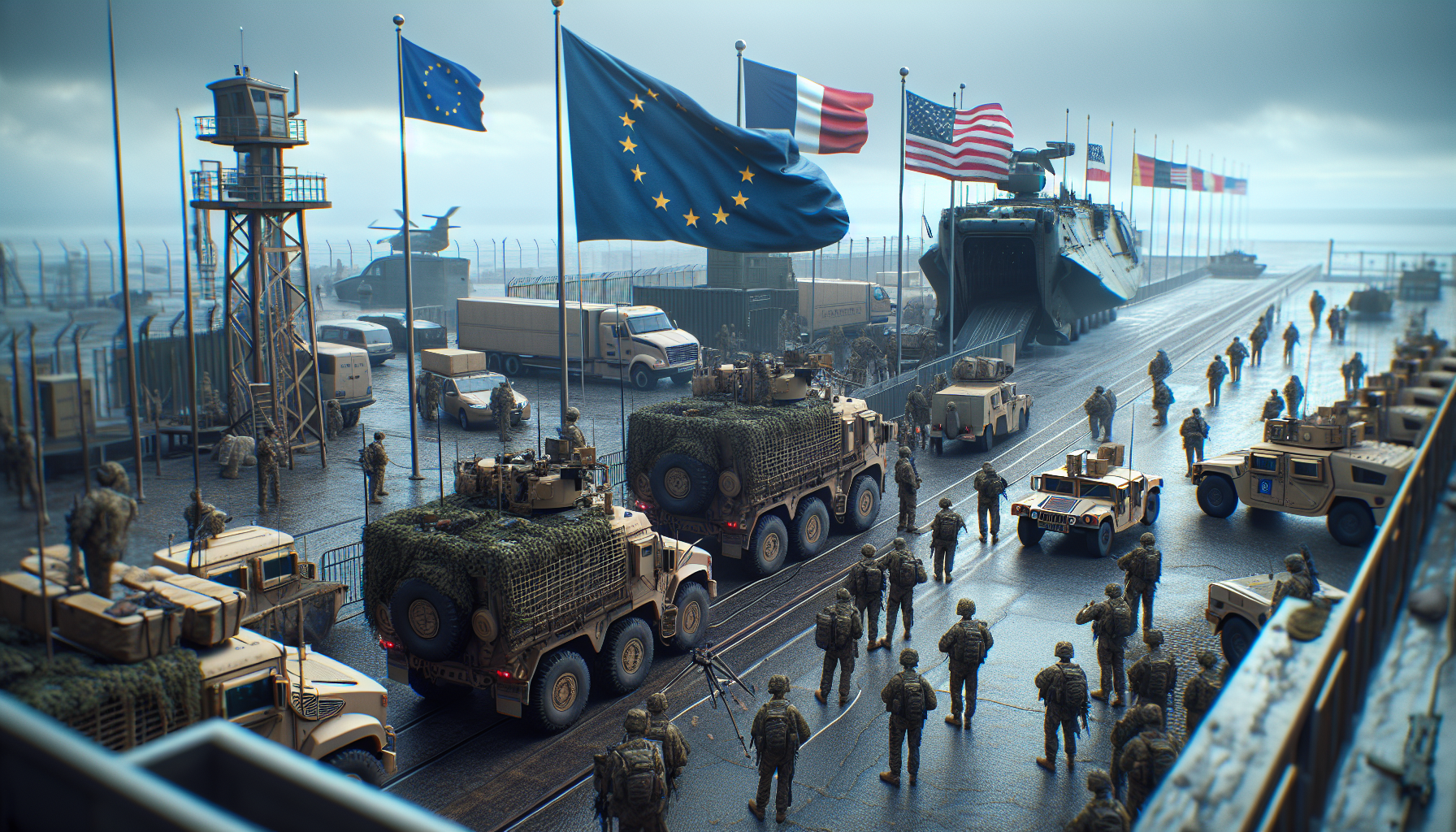
European efforts to secure continued US commitment to NATO face renewed challenges following President Donald Trump’s announcement to withdraw an American brigade from Germany. This brigade, consisting of approximately 5,000 troops, has been a key element of the US military presence in Europe.
European officials have been striving to maintain strong US support for NATO despite escalating tensions linked to the ongoing Iran conflict. However, Trump’s abrupt decision has raised alarm across Europe regarding the reliability of longstanding defense agreements.
NATO representatives were not taken aback by the scale of the troop reduction, as European allies have already agreed to assume greater responsibility for their own security. Nonetheless, the manner in which the withdrawal was communicated—suddenly and with minimal consultation—shocked European governments.
German authorities expressed particular concern, especially after the US administration also canceled plans to deploy Tomahawk missiles to Germany. While this cancellation was somewhat anticipated, it added to the uncertainty surrounding future US defense commitments on the continent.
Siemtje Moeller, a senior German lawmaker, emphasized that the issue extends beyond troop numbers to the erosion of trust in long-term partnerships, warning that such unpredictable decisions undermine alliance cohesion.
The troop pullback followed Trump’s criticism that NATO members are not contributing sufficiently to US-led operations related to the Iran conflict. Additionally, he has questioned certain aspects of NATO’s mutual defense clause under Article 5.
Tensions within the alliance intensified further after Trump hinted at potential actions involving Greenland, a Danish territory and NATO member area. Although NATO Secretary General Mark Rutte helped to calm the situation, significant disagreements remain unresolved.
Attention now turns to the NATO summit scheduled for July in Ankara, where leaders are expected to engage in challenging discussions about the alliance’s future trajectory.
Despite these strains, cooperation persists. Several European nations have granted US forces access to their bases and airspace during the Iran campaign, although some governments have been hesitant to publicly acknowledge their involvement due to domestic opposition. Spain notably declined to allow use of its bases, while countries such as Britain, Germany, France, and Italy reportedly support US operational needs.
European governments are also reinforcing their arguments for sustained US engagement by highlighting shared security interests and increased European defense spending.
However, the situation has exposed divisions within NATO regarding the Iran war. Western European countries have been more critical of the conflict, whereas some Eastern members emphasize the importance of maintaining close ties with Washington, largely due to concerns about Russia.
NATO Secretary General Mark Rutte has called for unity, cautioning that public disputes could weaken the alliance. He also noted that several European countries are preparing naval support missions in the Gulf region, potentially linked to safeguarding the Strait of Hormuz.
Diplomats indicate that the coming months will be pivotal as NATO seeks to manage internal disagreements while ensuring continued US participation in the alliance.
