

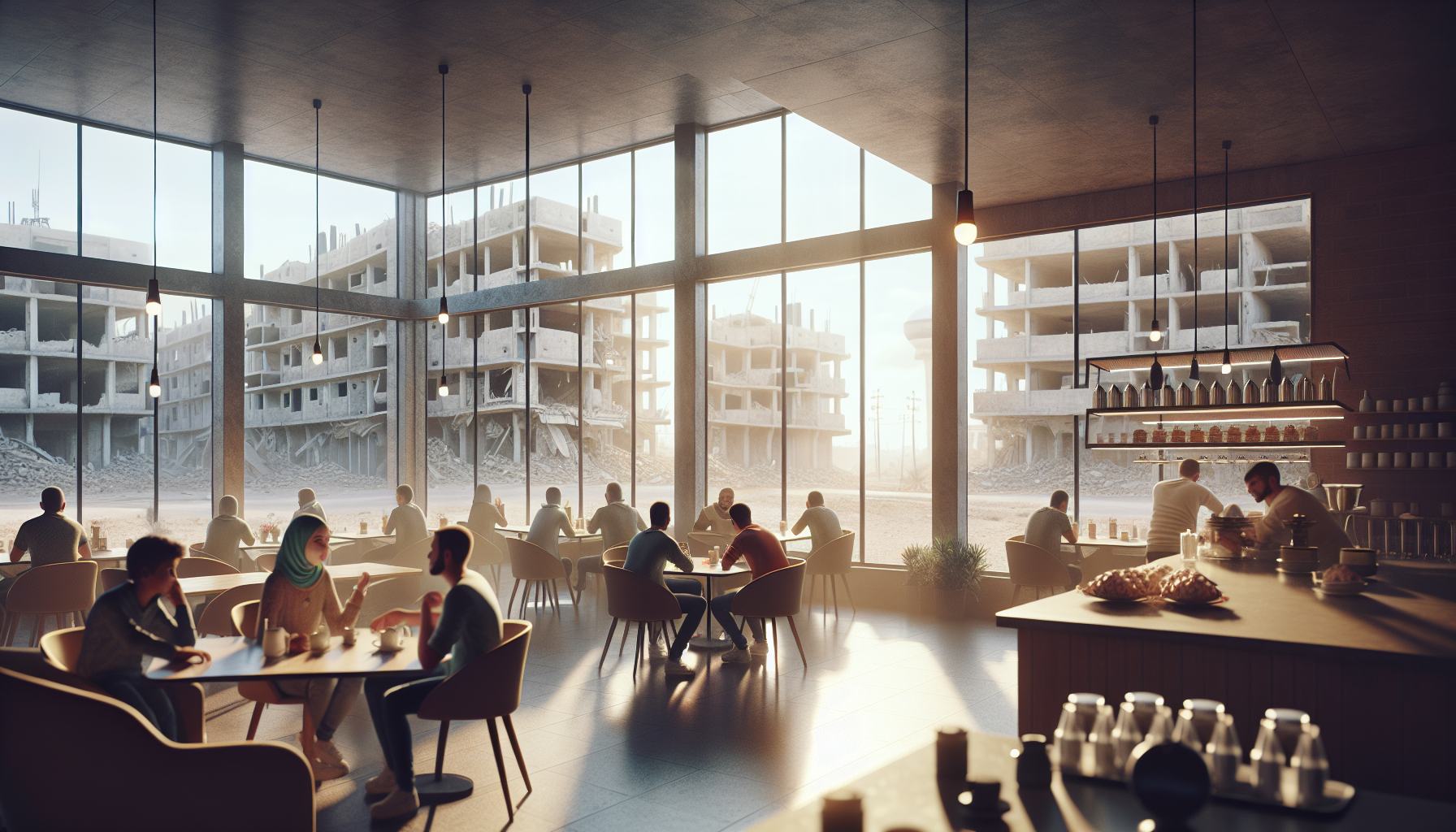
In the midst of Gaza’s widespread destruction, a surprising trend has emerged with the opening of new cafes and restaurants. These establishments, often seen as symbols of normalcy and leisure, contrast sharply with the harsh realities faced by the local population. The Strip, long battered by conflict and economic hardship, now witnesses a complex social dynamic where these venues serve as both refuges and reminders of ongoing struggles.
Meanwhile, the rise of these upscale spots underscores a disturbing backdrop of violence and suffering. The term “genocidal reality” points to the severe humanitarian crisis and the persistent threat to civilian life in the region. These new businesses, while providing some economic activity and social spaces, also highlight the resilience of Gaza’s residents amid adversity and the stark inequalities that persist.
In a significant development, the juxtaposition of luxury and devastation in Gaza’s urban landscape reveals the multifaceted impact of prolonged conflict. The cafes and restaurants symbolize not only survival but also the deep scars left by war and blockade. Their presence invites reflection on the broader political and humanitarian issues shaping Gaza’s future and the urgent need for lasting peace and reconstruction.
