



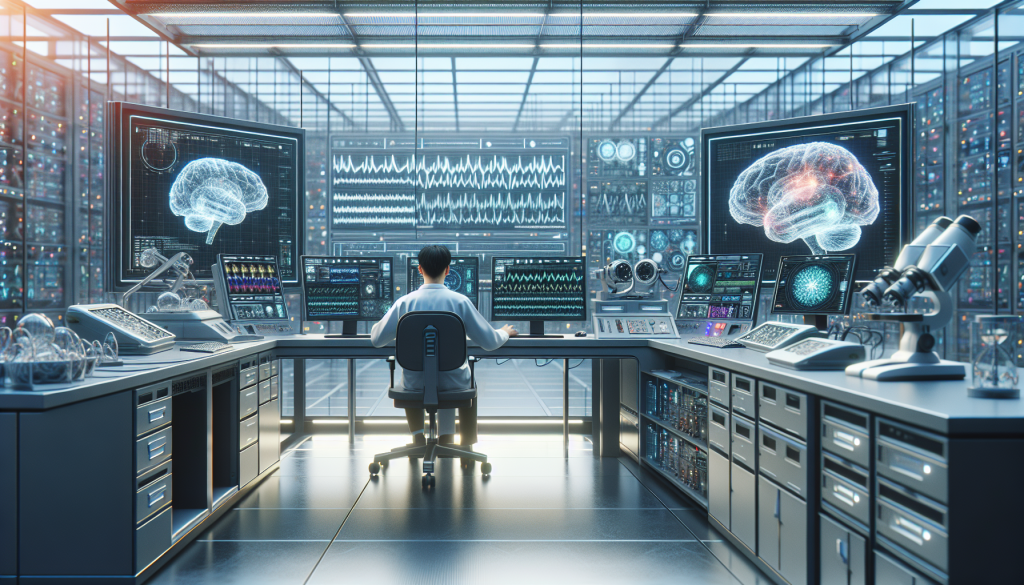
A former scientist from Harvard University has undertaken the significant task of rebuilding a brain-computer interface (BCI) laboratory in China. This development marks a notable step in advancing the country’s capabilities in neurotechnology and brain research. The lab focuses on integrating neuroscience with computer science to create systems that can interpret brain signals for various applications.
Brain-computer interface technology has gained global attention for its potential to revolutionize medical treatments, including restoring mobility to paralyzed patients and enhancing cognitive functions. By reestablishing this lab, the scientist is contributing to China’s growing emphasis on cutting-edge scientific research and innovation in artificial intelligence and neural engineering. This move also facilitates international knowledge exchange and collaboration in a highly specialized field.
In a broader context, the reconstruction of this lab could accelerate breakthroughs in brain-machine communication and neuroprosthetics, impacting healthcare and technology sectors worldwide. It also reflects China’s strategic investment in high-tech research infrastructure to compete on the global stage. The scientist’s expertise and leadership are expected to drive forward pioneering projects that blend neuroscience with computational methods, fostering new opportunities for scientific discovery and practical applications.

Leave an opinion