
Close Menu
Global Hub News
    What's Hot

    US Supreme Court Ruling Impacts Voting Rights Act and Redistricting

    April 30, 2026

    Indonesian Soldiers Accused in Acid Attack Amid Military Repression Concerns

    April 30, 2026

    US Loses $2.8 Billion in Military Aerial Equipment in Iran Conflict

    April 30, 2026
    Facebook X (Twitter) Instagram Threads
    Trending
    • US Supreme Court Ruling Impacts Voting Rights Act and Redistricting
    • Indonesian Soldiers Accused in Acid Attack Amid Military Repression Concerns
    • US Loses $2.8 Billion in Military Aerial Equipment in Iran Conflict
    • Qurbani Animals Arrive at Choro Mandi and ARY Cattle Farm for 2026
    • Transport Subsidy Extended to Shield Consumers from Rising Costs
    • Pakistan Urges Swift Reopening of Strait of Hormuz Amid Ongoing Mediation
    • US-China Rivalry Escalates Over Strategic Panama Canal Control
    • Pakistan’s Total Liquid Foreign Reserves Reach $21.27 Billion by April 24
    Facebook X (Twitter) Instagram
    Global Hub NewsGlobal Hub News
    Subscribe
    Thursday, April 30
    • Home
    • World
    • Pakistan
    • Politics
    • Sports
    • Technology
    • Health
    • Entertainment
    • Business
    Global Hub News
    Home » India’s Plan to Use Crocodiles at Border Sparks Human and Ecological Outcry
    World

    India’s Plan to Use Crocodiles at Border Sparks Human and Ecological Outcry

    Web DeskBy Web DeskApril 30, 2026No Comments2 Mins Read
    Share
    Facebook Twitter LinkedIn Pinterest Email

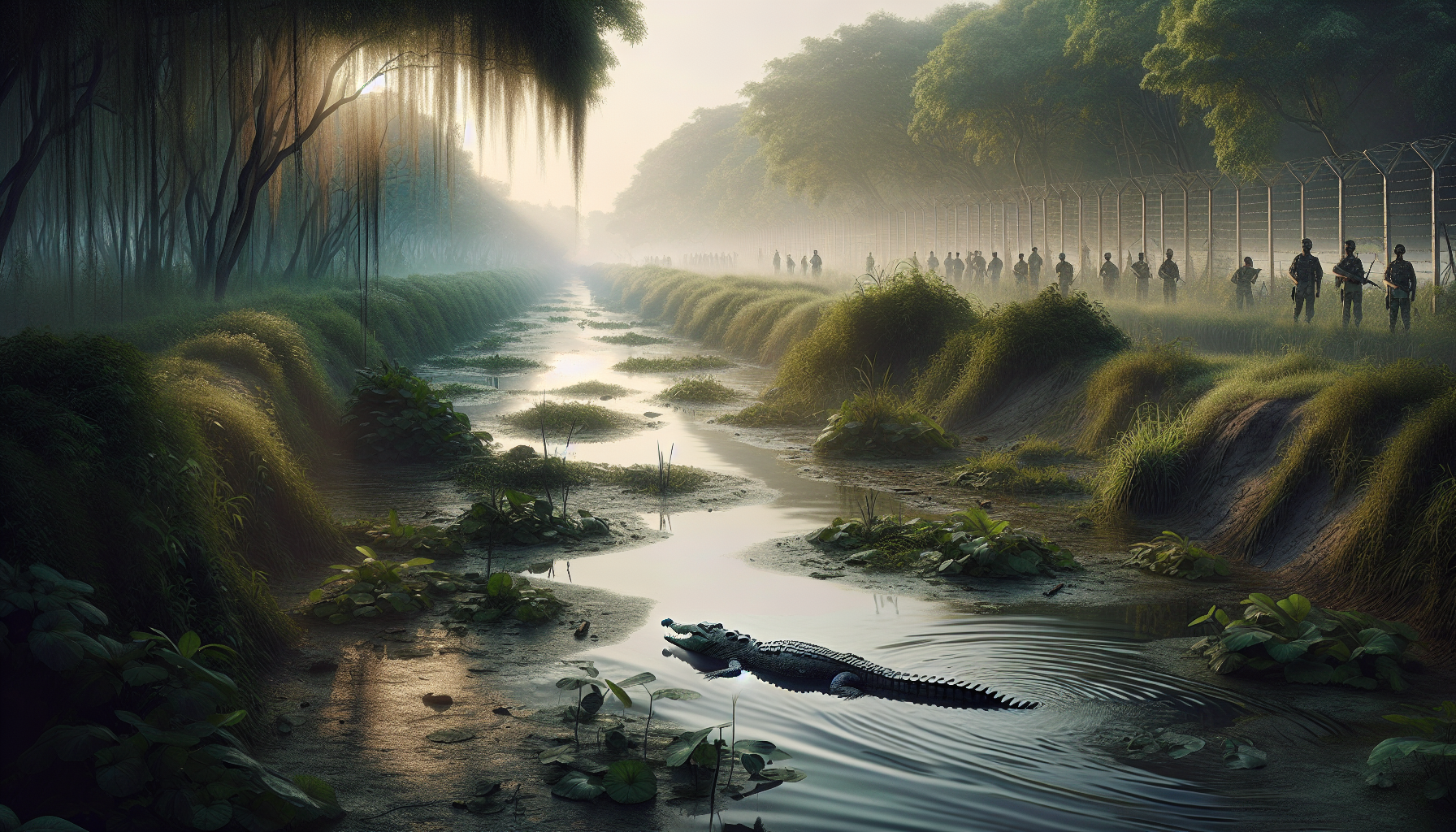
    The Indian government is encountering intense criticism from human rights advocates and environmentalists after revelations that the Border Security Force (BSF) is considering deploying apex predators, such as crocodiles and venomous snakes, in riverine areas along the Bangladesh border to prevent undocumented crossings.

    An internal BSF directive dated 26 March instructed its eastern and northeastern commands to assess the “feasibility of deploying reptiles” in vulnerable border sections where conventional fencing is impractical due to marshy terrain. The BSF is responsible for securing the extensive 4,096-kilometer (2,545-mile) frontier.

    This proposal has provoked shock and condemnation, with critics labeling it a “weaponization of nature” and a disturbing intensification of border security measures. Analysts argue that this approach constitutes a form of “biopolitical violence,” indiscriminately affecting migrants, smugglers, and the indigenous populations living along these riverbanks on both sides of the border.

    Experts warn that introducing dangerous wildlife into these shared waterways could pose deadly risks to local communities. Unlike physical barriers, predators such as crocodiles and venomous snakes do not recognize political boundaries or legal distinctions. Conservationists, including Rathin Barman from the Wildlife Trust of India, emphasize that many of these riverine stretches are not natural habitats for these species, risking ecological disruption and harm to the animals themselves.

    Moreover, the region’s susceptibility to seasonal flooding raises concerns that rising waters could carry these predators into nearby villages, threatening fishers and farmers who depend on the river for their livelihoods.

    Politically, the plan emerges amid increasingly stringent border policies under Prime Minister Narendra Modi’s administration, which has often portrayed undocumented migration as a demographic threat. Human rights defenders like Harsh Mander view this strategy as an extension of “extrajudicial methods” targeting religious minorities, particularly Bengali Muslims.

    Critics argue that instead of engaging in formal legal processes or diplomatic dialogue with Dhaka, the Indian government is resorting to extreme measures marked by “peak cruelty.” While some have drawn parallels to the controversial “Alligator Alcatraz” detention site in the United States, experts note there is no precedent for using natural predators as a border deterrent, describing the BSF’s plan as both irrational and dehumanizing.

    Share. Facebook Twitter Pinterest LinkedIn WhatsApp Reddit Tumblr Email
    Web Desk

    Related Posts

    US Supreme Court Ruling Impacts Voting Rights Act and Redistricting

    April 30, 2026

    Indonesian Soldiers Accused in Acid Attack Amid Military Repression Concerns

    April 30, 2026

    US Loses $2.8 Billion in Military Aerial Equipment in Iran Conflict

    April 30, 2026
    Leave A Reply Cancel Reply

    Latest Posts

    US Supreme Court Ruling Impacts Voting Rights Act and Redistricting

    April 30, 2026

    Indonesian Soldiers Accused in Acid Attack Amid Military Repression Concerns

    April 30, 2026

    US Loses $2.8 Billion in Military Aerial Equipment in Iran Conflict

    April 30, 2026

    Qurbani Animals Arrive at Choro Mandi and ARY Cattle Farm for 2026

    April 30, 2026

    Transport Subsidy Extended to Shield Consumers from Rising Costs

    April 30, 2026

    Pakistan Urges Swift Reopening of Strait of Hormuz Amid Ongoing Mediation

    April 30, 2026
    Don't Miss
    World

    US Supreme Court Ruling Impacts Voting Rights Act and Redistricting

    By Web DeskApril 30, 20260

    The US Supreme Court decision, hailed by Trump, affects Louisiana’s redistricting and signals broader consequences for voting rights nationwide.

    Indonesian Soldiers Accused in Acid Attack Amid Military Repression Concerns

    April 30, 2026

    US Loses $2.8 Billion in Military Aerial Equipment in Iran Conflict

    April 30, 2026

    Qurbani Animals Arrive at Choro Mandi and ARY Cattle Farm for 2026

    April 30, 2026
    Facebook X (Twitter) Instagram Pinterest
    • Home
    • Buy Now
    © 2026 NewsOra24

    Type above and press Enter to search. Press Esc to cancel.