

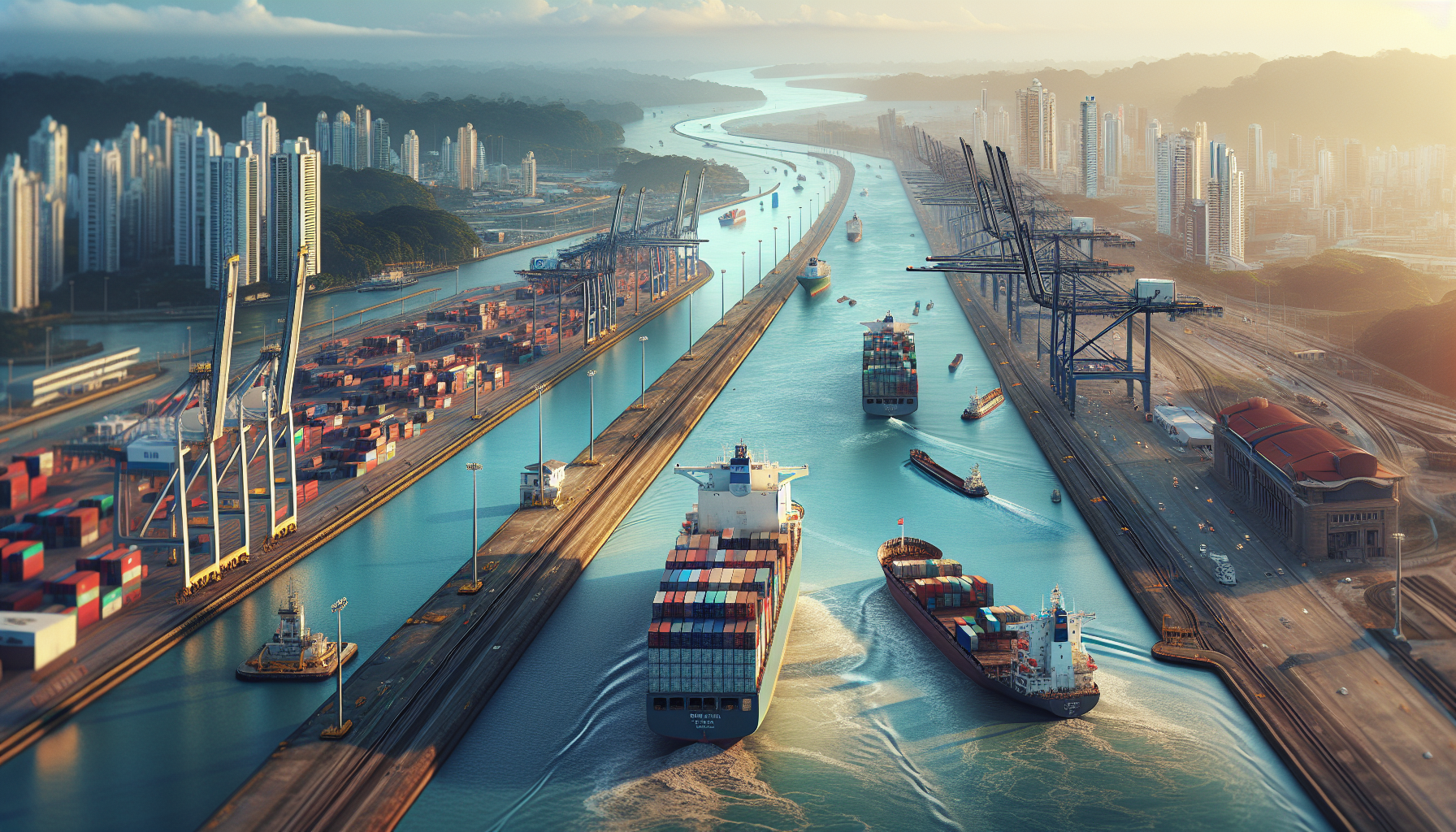
The United States has established a coalition of six countries aimed at pressuring China to relinquish its strategic stakes in two key Panama Canal ports. This development marks a notable escalation in regional tensions, with Washington accusing Beijing of violating Panamanian sovereignty and politicizing vital global trade routes.
China has rejected these accusations, labeling them as unfounded and a misrepresentation of facts, intensifying the geopolitical struggle over one of the Western Hemisphere’s most critical maritime passages.
This initiative aligns with the broader US strategy to diminish Chinese influence in Latin America. It supports a National Security Strategy focused on preventing non-Western powers from controlling essential infrastructure. This diplomatic push follows statements by former US President Donald Trump, who claimed China was effectively managing the canal and hinted at the possibility of the US reclaiming control.
On Tuesday, the US State Department, alongside Bolivia, Costa Rica, Guyana, Paraguay, and Trinidad and Tobago, released a joint statement emphasizing that any actions undermining Panama’s sovereignty pose a collective threat to the region’s inviolable freedom.
China responded sharply, with Foreign Ministry spokesperson Lin Jian accusing the US of launching a smear campaign and excessively securitizing commercial port activities.
The dispute centers on a January ruling by Panama’s Supreme Court, which invalidated contracts held by a subsidiary of Hong Kong-based CK Hutchison Holdings for the Balboa and Cristobal ports. The US supports Panama’s decision to remove the company after nearly three decades of operation, while the Chinese firm has initiated international arbitration proceedings.
Claiming illegal expropriation, CK Hutchison Holdings is seeking over $2 billion (£1.58 billion) in compensation, adding complexity to the ongoing legal and diplomatic conflict.
