

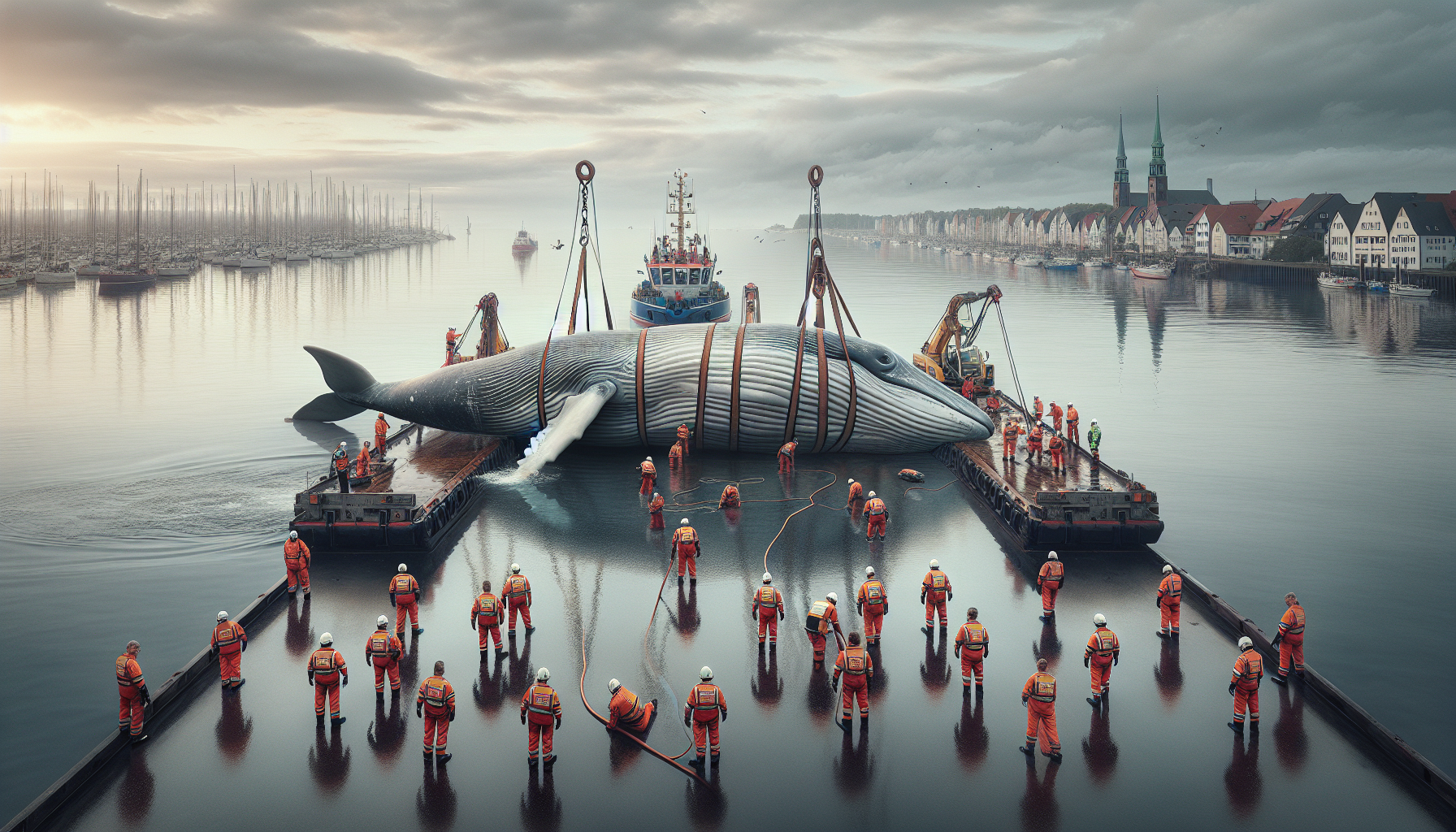
In a significant development, a stranded whale in German waters has been successfully transported out by barge following several unsuccessful rescue attempts. The operation marks the culmination of extensive efforts by marine rescue teams to save the large marine mammal, which had been trapped and unable to return to deeper waters on its own. Earlier attempts to free the whale had not succeeded, prompting authorities to resort to this more complex and resource-intensive method.
The rescue effort drew considerable attention from environmentalists and the public alike, emphasizing the challenges involved in marine animal conservation and rescue operations. Whales stranded in shallow or confined waters face numerous risks, including injury, dehydration, and stress, making timely intervention critical. The use of a barge to transport the whale reflects the increasing reliance on innovative techniques to manage such emergencies effectively.
Meanwhile, this event underscores the broader significance of protecting marine wildlife and the ecosystems they inhabit. It also highlights the need for continued investment in rescue infrastructure and expertise to respond to similar incidents worldwide. The successful relocation of the whale not only spares the animal but also raises awareness about the delicate balance of marine environments and the human role in preserving them.
