

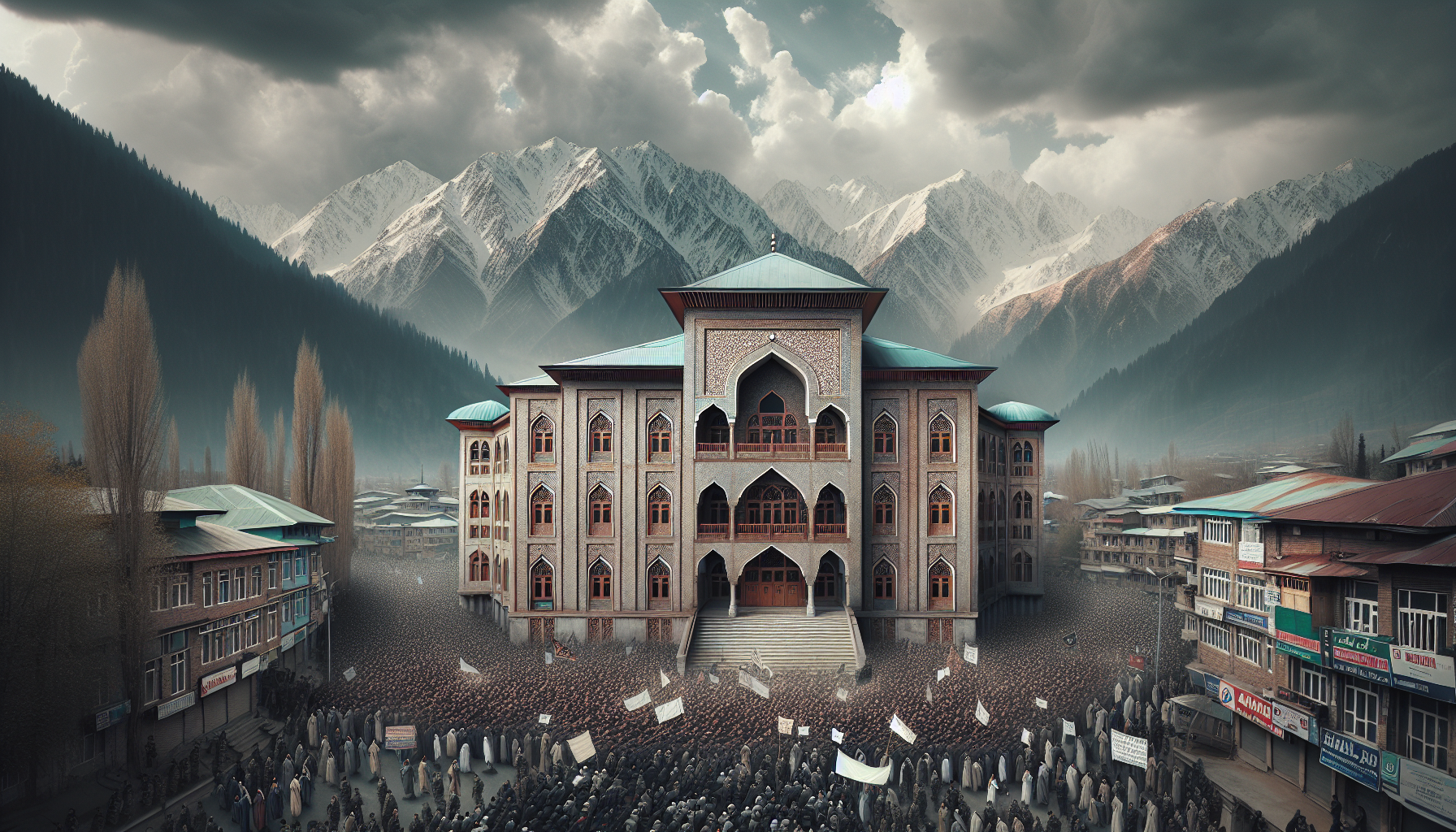
The government’s recent decision to declare a major seminary in Kashmir unlawful under anti-terrorism laws has ignited widespread criticism among local political and religious leaders. This move is viewed by many as an extension of New Delhi’s stringent policies in the region, which have long been a source of tension. The seminary, known for its religious and educational activities, now faces closure and legal restrictions that could impact its operations significantly.
Notably, this action comes amid a broader context of heightened security measures and political crackdowns in Kashmir, where authorities have frequently used anti-terror laws to curb dissent. The designation of the seminary as unlawful is perceived by critics as part of a systematic effort to suppress voices that challenge the central government’s narrative. This development has further strained relations between Kashmir’s local leadership and New Delhi, exacerbating existing grievances.
Meanwhile, the declaration has sparked protests and vocal opposition from various segments of Kashmiri society, who argue that such measures undermine religious freedom and educational rights. The international community continues to watch the situation closely, as Kashmir remains a flashpoint in South Asian geopolitics. The long-term impact of this decision could influence the region’s stability and the prospects for dialogue between conflicting parties.
