

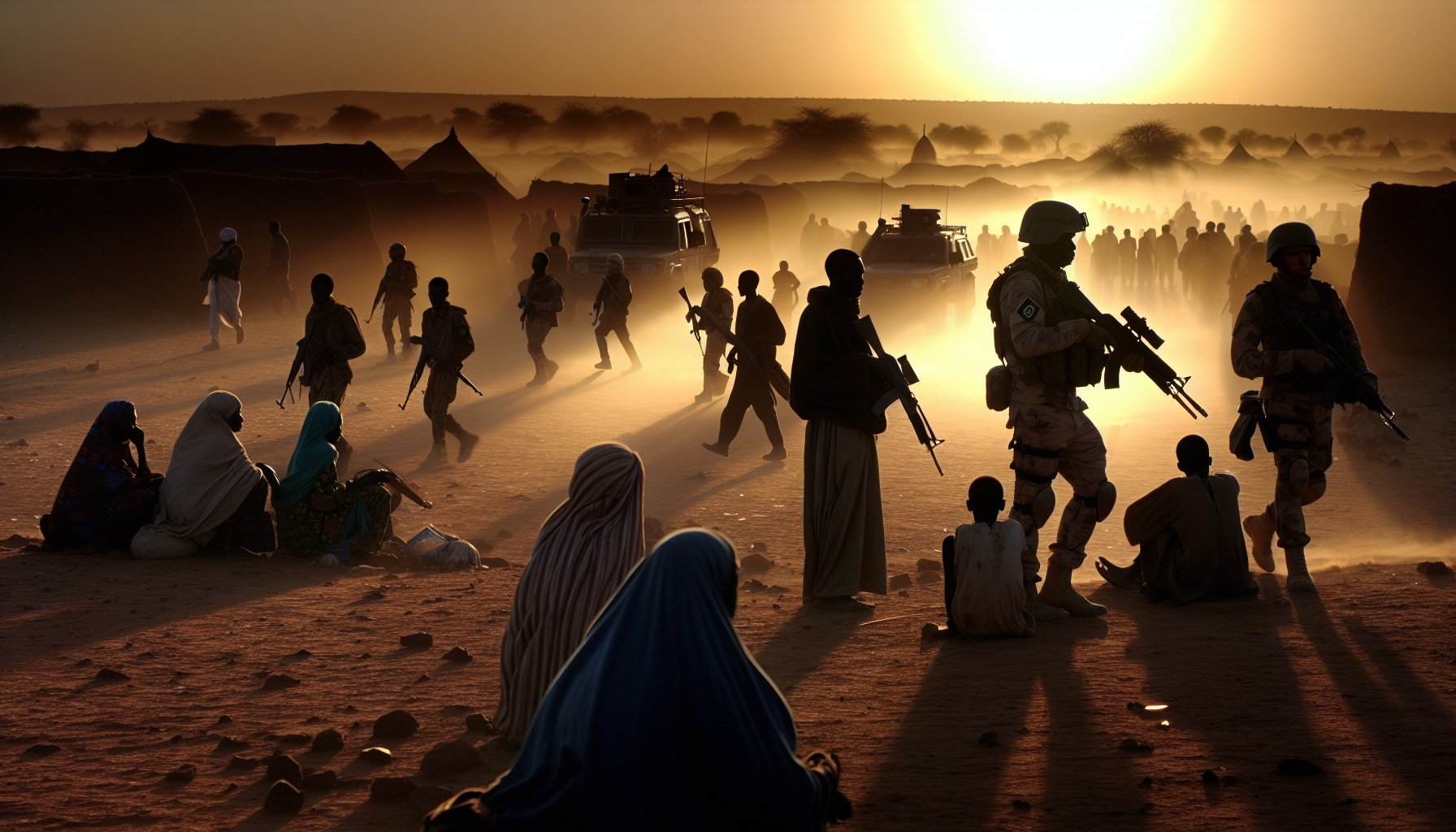
In recent months, Mali has witnessed a surge in coordinated attacks by various armed groups, signaling a troubling shift in the dynamics of the ongoing conflict. These factions, which have historically operated independently, are now reportedly joining forces to amplify their impact and challenge the Malian government and international peacekeeping efforts. This alliance among militant groups complicates the security landscape, making it harder for authorities to contain violence and protect civilians.
The roots of this collaboration stem from shared interests and common enemies, including government forces and rival militias. The convergence of these groups not only escalates the frequency and scale of attacks but also undermines regional stability in West Africa. The situation poses significant challenges for the United Nations Multidimensional Integrated Stabilization Mission in Mali (MINUSMA), which has been deployed to restore peace and security since 2013.
In a significant development, the growing cooperation among armed factions threatens to derail ongoing peace negotiations and humanitarian efforts. The intensification of violence has led to increased displacement and suffering among local populations, drawing international concern. Addressing this complex security challenge requires coordinated regional and global responses to prevent further destabilization of Mali and its neighboring countries.
