

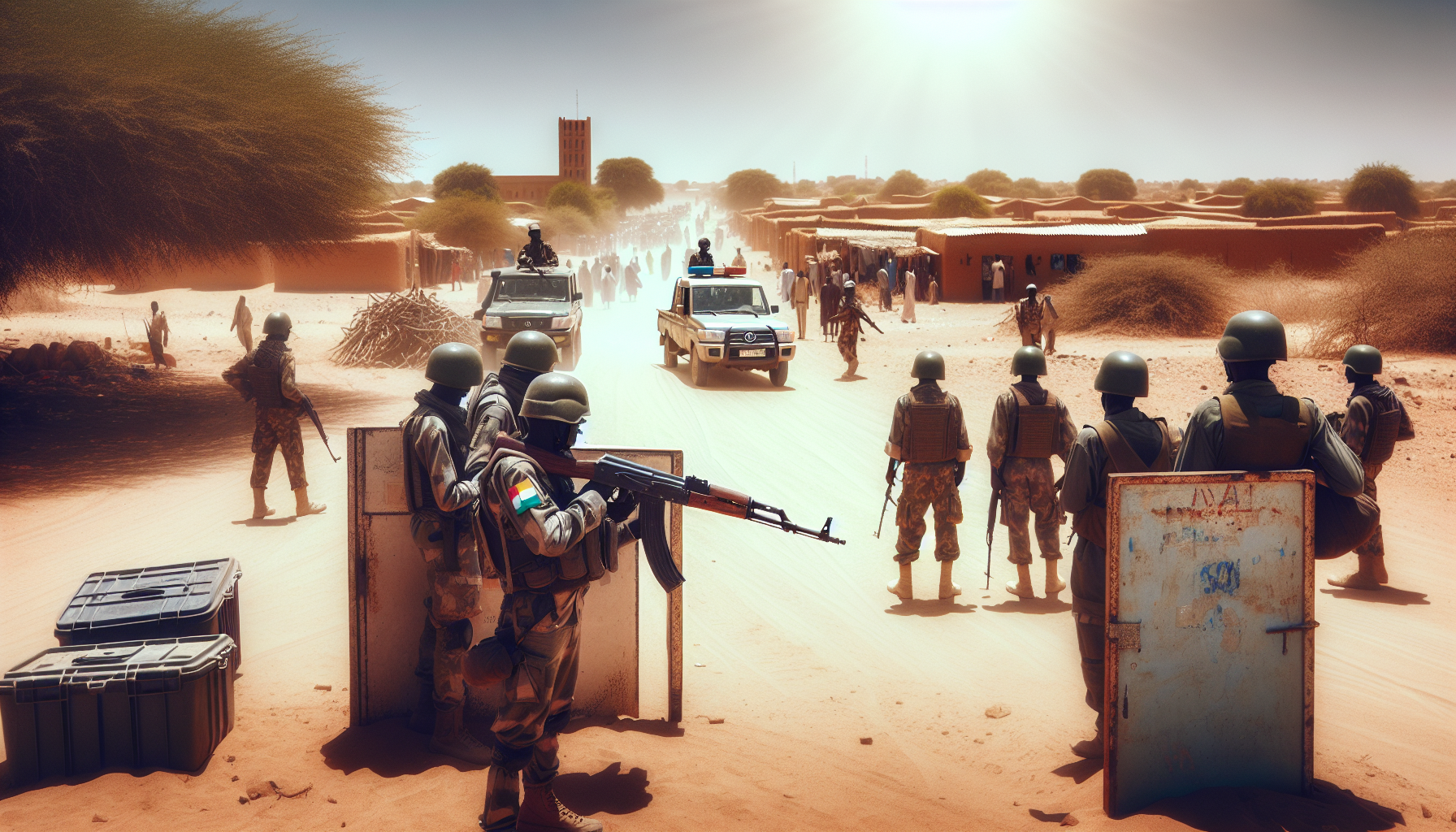
Mali has experienced a significant decline in security over recent years, marked by a surge in coordinated attacks by various armed factions. These assaults have targeted both military and civilian areas, exacerbating the country’s ongoing conflict and humanitarian challenges. The instability has hindered development efforts and displaced thousands of people, deepening the crisis. Mali’s government and international partners continue to seek solutions to restore peace and order.
In a significant development, the rise of militant groups in Mali is part of a broader pattern affecting the Sahel region, where extremist organizations exploit weak governance and porous borders. These groups often collaborate across national lines, complicating counterterrorism efforts. Meanwhile, the local population bears the brunt of violence, facing threats to their safety, livelihoods, and access to basic services. The international community remains concerned about the potential for further regional destabilization.
Efforts to address Mali’s security challenges include military operations and peacekeeping missions, but progress has been slow and uneven. The persistence of armed attacks underscores the need for comprehensive strategies that combine security measures with political dialogue and development initiatives. Notably, the situation in Mali serves as a critical test for regional cooperation and international support aimed at curbing extremism and fostering stability in West Africa.
