



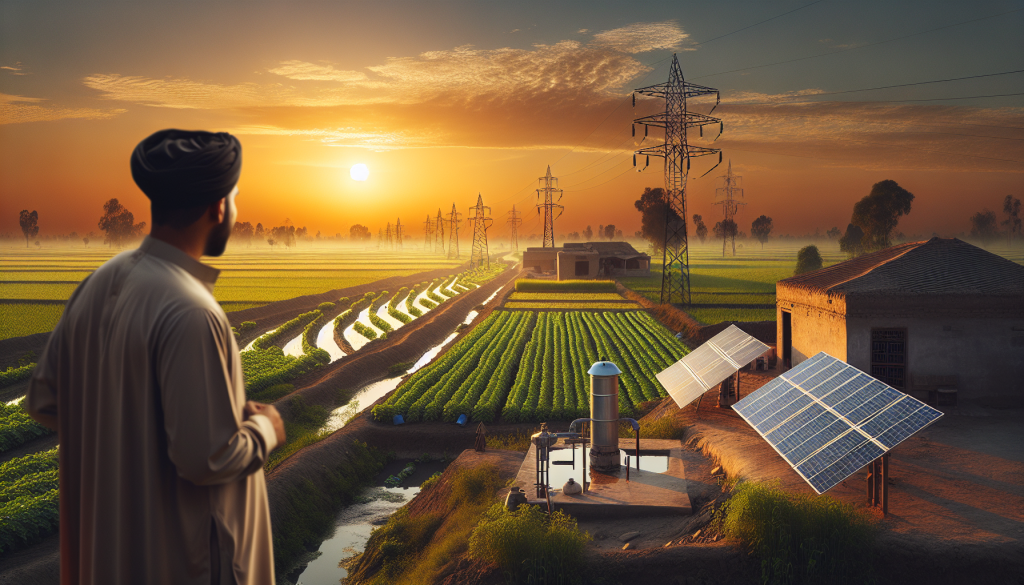
A widespread misconception suggests that solar photovoltaics are a luxury reserved for urban elites, detached from the realities of rising tariffs and inconsistent energy supply. However, the situation on the ground tells a very different story.
The government’s decision to impose an 18% sales tax on imported solar panels for FY2025–26, later reduced to 10% following public opposition, has placed Pakistan at a pivotal moment in its energy transition. Despite the reduction, the tax increase has made solar installations unaffordable for many households. As preparations for the FY2026–27 budget continue, the debate has shifted from fiscal concerns to a structural question: can Pakistan afford to tax what has become its most dependable energy safeguard?
“It makes a huge difference… a one-time expense that brings lasting peace of mind,” says Ilyas, a farmer from Punjab, describing how solar panels have transformed his village. For household needs, he notes, two panels suffice to power a small motor, cutting electricity bills by nearly half—from Rs4,000–4,800 down to approximately Rs1,700–2,200 monthly—significantly easing household finances.
Gas is not an option in his underdeveloped area, forcing families to rely on firewood, a labor-intensive process often involving women and children. In this context, solar power does more than provide electricity; it reduces physical strain, frees up time, and quietly enhances access to education and overall wellbeing.
The importance of this shift becomes clearer against the backdrop of Pakistan’s deepening energy crisis, shaped by both global disruptions and domestic vulnerabilities. The ongoing conflict involving Iran, the United States, and Israel has disrupted shipping through the Strait of Hormuz, a critical route for global oil and gas supplies. For Pakistan, heavily reliant on imported fuel, this has resulted in immediate and severe price shocks.
Diesel prices surged sharply in 2026, increasing by Rs55 before Eid and then by an additional Rs184.49, pushing rates above Rs520 per litre. Given that high-speed diesel powers tractors, irrigation pumps, and tube wells—the backbone of agricultural productivity—these hikes have profound implications. A diesel tube well typically consumes about five litres daily per acre, meaning small farmers face soaring input costs that further squeeze already narrow profit margins.
Reflecting on the price surge, Ilyas remarks, “It’s beyond what one can imagine… it feels like the world’s life has been drained.” Meanwhile, solar power is beginning to cushion this impact. Farmers using solar-powered tube wells not only reduce their own expenses but also sell water to neighbors at lower rates, spreading benefits throughout communities. This shared resilience highlights that solar adoption is far from isolated.
Pakistan’s agrarian economy has long been vulnerable to price volatility, but solar energy is introducing much-needed predictability. Unlike diesel, whose cost fluctuates with global markets, solar energy stabilizes operational expenses once installed. For smallholders, this financial stability is crucial, enabling them to plan for the season without fearing that fuel costs will wipe out profits. This predictability is especially valuable amid erratic rainfall and climate shocks threatening crop yields.
Solar energy is no longer a supplementary option; it is becoming essential for agricultural survival.
Pakistan’s dependence on imported fuel has historically exposed it to global shocks. The current crisis, worsened by Middle Eastern disruptions, underscores this vulnerability but also highlights the quiet gains from distributed solar generation. The country’s expanding solar capacity has acted as a buffer, mitigating the impact of rising fuel prices and easing pressure on the national grid. In contrast, countries without similar solar adoption have faced more severe tariff hikes and supply disruptions.
This trend aligns with Pakistan’s broader energy goals emphasizing diversification and resilience. The present situation serves as a real-world validation of these strategies. However, taxing solar imports threatens to undermine this progress by increasing upfront installation costs and slowing adoption precisely when expansion is most critical.
Research underscores what is at stake. A study by Renewables First estimates Pakistan has saved over $12 billion in fuel imports since 2018 due to increased solar capacity, with projected savings of $6.3 billion in 2026 alone. Other analyses recommend reducing taxes, stabilizing import duties, and even waiving GST on solar equipment to accelerate energy security gains. In contrast, taxing solar risks exacerbating the very problems it aims to solve, increasing long-term energy costs and contributing to circular debt through continued reliance on imported fuels.
The perception that solar energy primarily benefits the wealthy overlooks its broader social impact. For lower-income households, the monetary savings may be smaller but the improvements in daily life are profound. Reduced energy costs translate into tangible benefits such as keeping children in school, improving healthcare access, and easing daily labor burdens. In rural areas with limited alternatives, these changes are transformative.
Making solar less accessible through taxation risks reversing these gains and disproportionately affects those who stand to benefit the most.
Pakistan’s energy challenges are deeply structural, rooted in import dependence and vulnerability to external shocks. Solar photovoltaics have emerged as a rare counterbalance—a decentralized, resilient system empowering households and communities alike. Yet this lifeline remains fragile. Fiscal decisions in the upcoming budget will determine whether it is strengthened or constrained.
Promoting solar adoption through tax relief and stable policies is not only an environmental choice but an economic and social necessity. As global uncertainties continue to influence domestic realities, Pakistan’s future energy security may hinge on whether it chooses to support or tax its most accessible form of energy independence.

Leave an opinion