

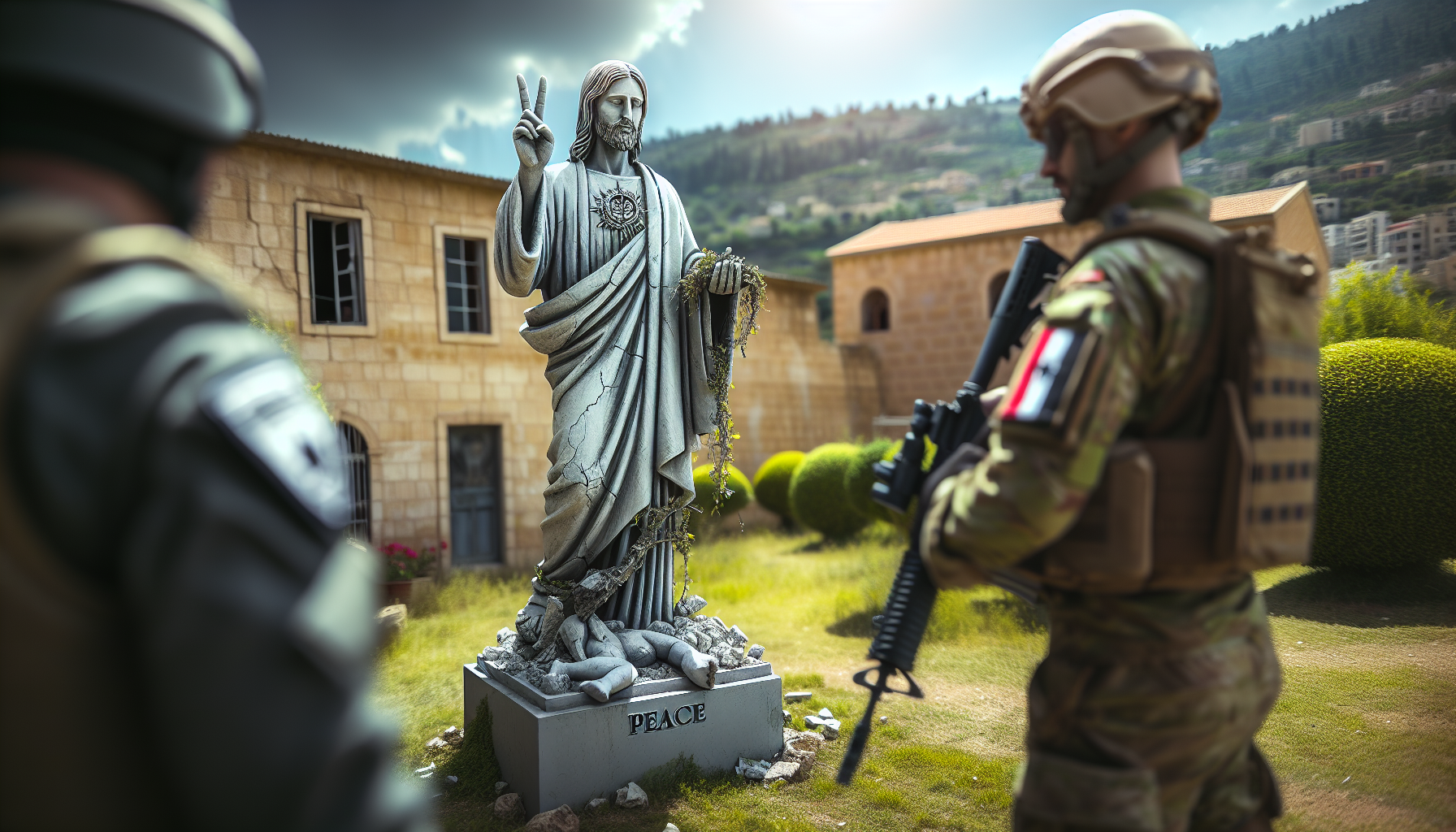
In a controversial incident that has drawn widespread attention, an Israeli soldier was seen destroying a statue of Jesus in Lebanon, provoking significant backlash. The act has been strongly condemned by some of Donald Trump’s former MAGA allies, who viewed the destruction as a disrespectful affront to Christian religious symbols. This event has intensified existing tensions in the region, where religious and political sensitivities are deeply intertwined. The desecration has sparked debates about the conduct of military personnel and the broader implications for interfaith relations in the Middle East.
Notably, the involvement of former MAGA supporters in denouncing the incident highlights the complex intersection of American political factions with international religious issues. Their vocal criticism underscores a rare moment of unity across political lines in defense of religious respect and tolerance. Meanwhile, the incident has drawn attention to the fragile state of peace and coexistence in Lebanon, a country with a diverse religious population that has often been caught in the crossfire of regional conflicts. The destruction of the statue is seen by many as a symbolic attack that could exacerbate sectarian divides.
In a significant development, this episode has prompted calls for accountability and restraint from various quarters, emphasizing the need to protect religious heritage sites and symbols. The controversy also raises questions about the rules of engagement and the behavior of soldiers in conflict zones, particularly regarding respect for cultural and religious artifacts. As the story unfolds, it may influence diplomatic dialogues and efforts aimed at fostering mutual respect among different communities in the Middle East. The incident serves as a reminder of the powerful role that religious symbols play in shaping political narratives and public sentiment.
