

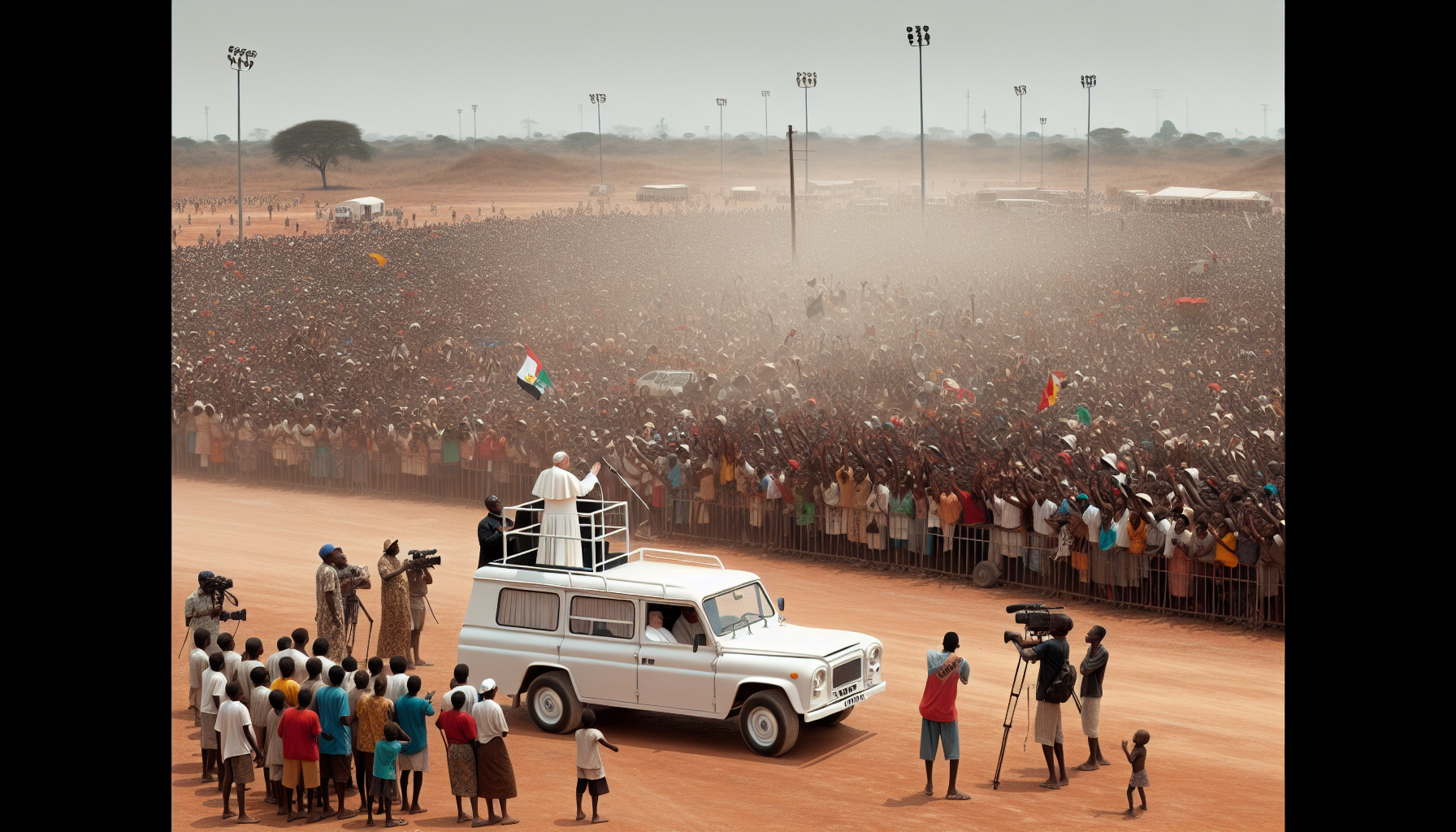
Pope Leo III delivered a powerful address to an audience of nearly 100,000 people in Luanda on Sunday, urging Angolans to move beyond longstanding divisions and embrace peace after decades of civil war. The Mass took place in a dirt field near the capital, where the pope described Angola as a “beautiful yet wounded country,” alluding to the 27-year civil conflict that spanned from 1975 to 2002.
He called on the nation to unite in building a future free from hatred and violence, emphasizing the need to overcome old divisions once and for all. This gathering was among the largest events of his four-nation tour across Africa, with thousands of faithful arriving before dawn at Kilamba despite the hot and humid weather. The crowd responded with cheers, dancing, and singing as the pope passed by in his white popemobile.
In a significant development, Pope Leo extended his message beyond Angola at the conclusion of the Mass, appealing for an end to ongoing global conflicts. He specifically called for an immediate cessation of hostilities in Ukraine, stressing that “weapons must fall silent” and that dialogue should take precedence. He also welcomed the recent ceasefire between Israel and Lebanon as a hopeful sign for peace.
Throughout his visit, the pope has taken a firm stance on issues of inequality and governance. In a speech delivered to political leaders the previous day, he condemned the exploitation of Africa’s natural resources and criticized “despots and tyrants” who promise prosperity but instead bring suffering to their people. He urged these leaders to prioritize the well-being of their citizens over corporate interests, warning that history will ultimately judge their actions.
Angola, one of sub-Saharan Africa’s leading oil producers, continues to grapple with economic difficulties, with a large segment of its population living in poverty. With over half of the population identifying as Catholic, the pope’s visit holds particular significance for the country.
For many attendees, the pope’s call for unity and reflection struck a deep chord. Worshippers expressed hope that his message would inspire meaningful change and help guide Angola toward lasting peace and reconciliation.
