

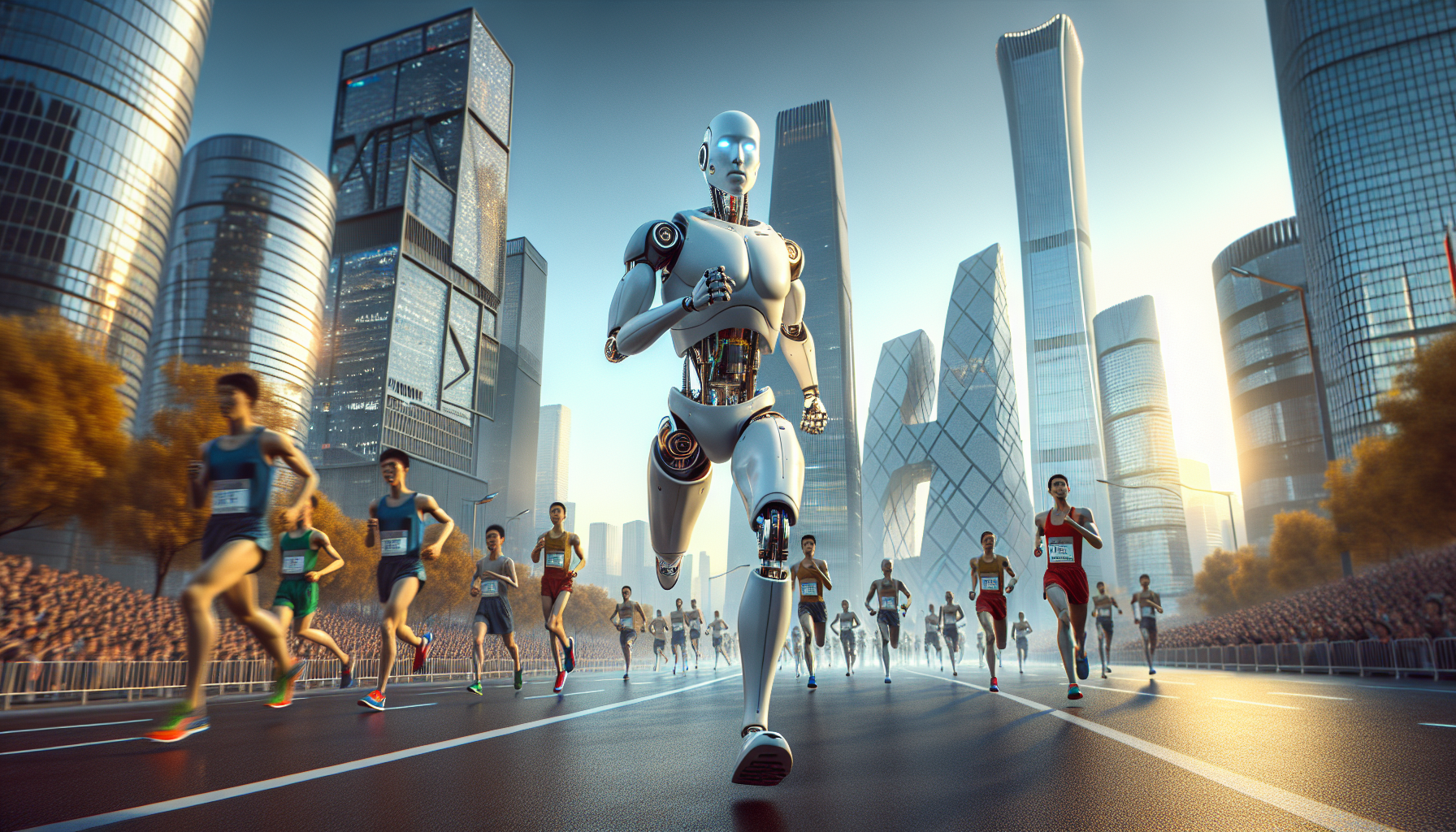
In a groundbreaking event held in Beijing on Sunday, robots took part in a half marathon race alongside human runners. This competition highlighted the rapid progress in robotics and artificial intelligence, as the winning robot outperformed all human participants by a significant margin. The race attracted attention for blending technology with traditional athletic competition, pushing the boundaries of what machines can achieve in endurance sports.
Such events are significant as they demonstrate the increasing capabilities of autonomous machines in real-world scenarios, including navigation, speed, and stamina. The success of the robot in this race reflects advancements in engineering and AI algorithms that enable machines to compete in physically demanding tasks. Meanwhile, this development raises questions about the future of sports and the potential integration of robots in various competitive fields.
Notably, the Beijing half marathon served as a platform to showcase innovation in robotics on a global stage, inspiring further research and development. The event also sparked discussions about the ethical and practical implications of robots competing with humans in sports. As technology continues to evolve, such competitions may become more common, influencing both the sports industry and technological progress worldwide.
