

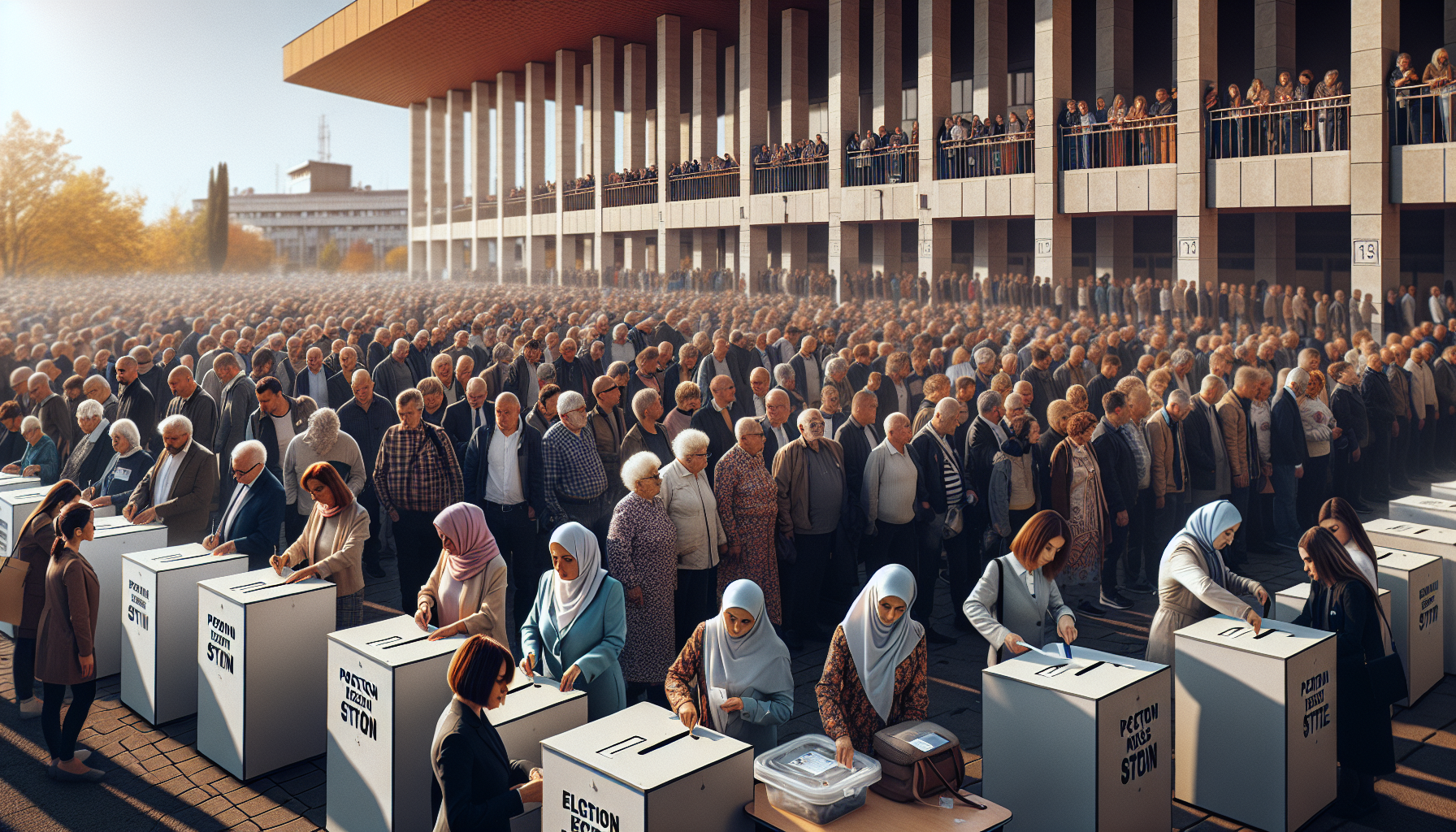
Bulgaria is holding its eighth parliamentary election in just five years, reflecting ongoing political instability in the country. This election follows a wave of mass protests that led to the collapse of the previous government in December. The frequent elections highlight deep divisions and challenges within Bulgaria’s political landscape, complicating efforts to form a stable administration. Voter turnout and public sentiment will be closely watched as citizens seek a government capable of addressing pressing economic and social issues.
In a significant development, the repeated electoral cycles underscore the difficulties Bulgaria faces in achieving political continuity and effective governance. The protests that triggered the December government’s downfall were driven by widespread dissatisfaction with corruption and economic stagnation. Meanwhile, political parties are vying to capitalize on public frustration, promising reforms and transparency. The outcome of this election could determine whether Bulgaria moves toward greater stability or continues its cycle of political upheaval.
Notably, Bulgaria’s political uncertainty has broader implications for its role within the European Union and regional stability. As a member state, Bulgaria’s governance challenges may affect its ability to implement EU policies and attract foreign investment. The international community is observing the election closely, given Bulgaria’s strategic position in Southeast Europe. Ultimately, the election results will be pivotal in shaping the country’s future trajectory both domestically and within the European framework.
