

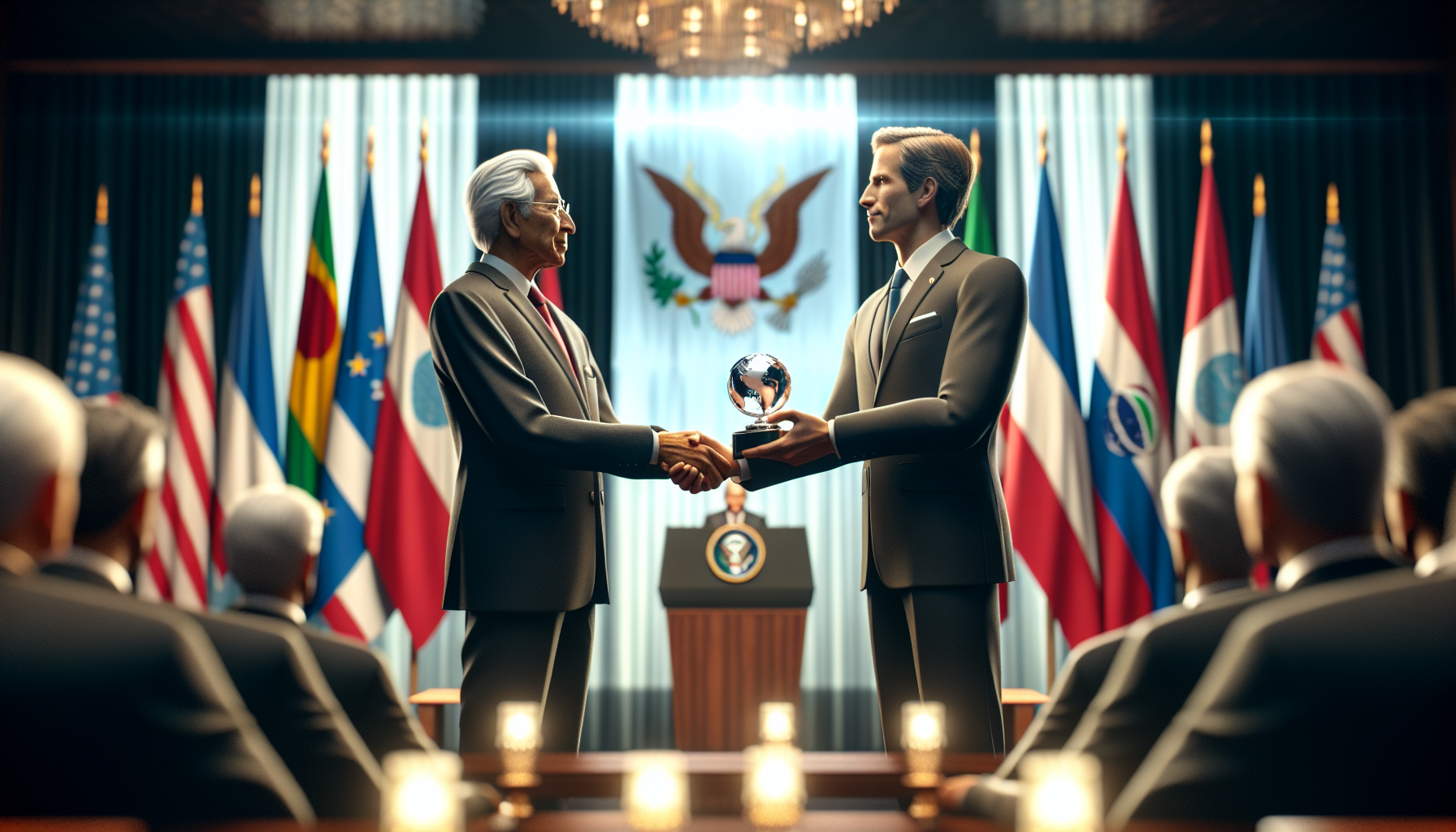
Maria Corina Machado, a prominent Venezuelan opposition figure, has publicly defended her controversial decision to present her Nobel Peace Prize medal to former US President Donald Trump. This gesture followed Trump’s involvement in the capture of Nicolás Maduro, Venezuela’s embattled leader, marking a significant moment in the country’s ongoing political crisis. Machado’s action symbolizes her support for international efforts to challenge Maduro’s regime, which has faced widespread criticism for authoritarianism and economic mismanagement.
In a significant development, Machado’s decision has sparked intense debate both within Venezuela and internationally. Supporters view it as a bold statement endorsing Trump’s role in promoting democracy and justice in Venezuela, while critics argue it politicizes the Nobel accolade. This event highlights the complex interplay between global diplomacy and domestic political struggles in Latin America, where external influence often shapes internal outcomes.
Meanwhile, the capture of Nicolás Maduro represents a pivotal turning point in Venezuela’s turbulent history, potentially opening pathways for political transition and economic recovery. Machado’s endorsement of Trump’s involvement underscores the broader geopolitical stakes, as the US and other nations seek to influence Venezuela’s future. The incident continues to reverberate across diplomatic circles, illustrating the enduring impact of leadership decisions on international relations and human rights advocacy.
