



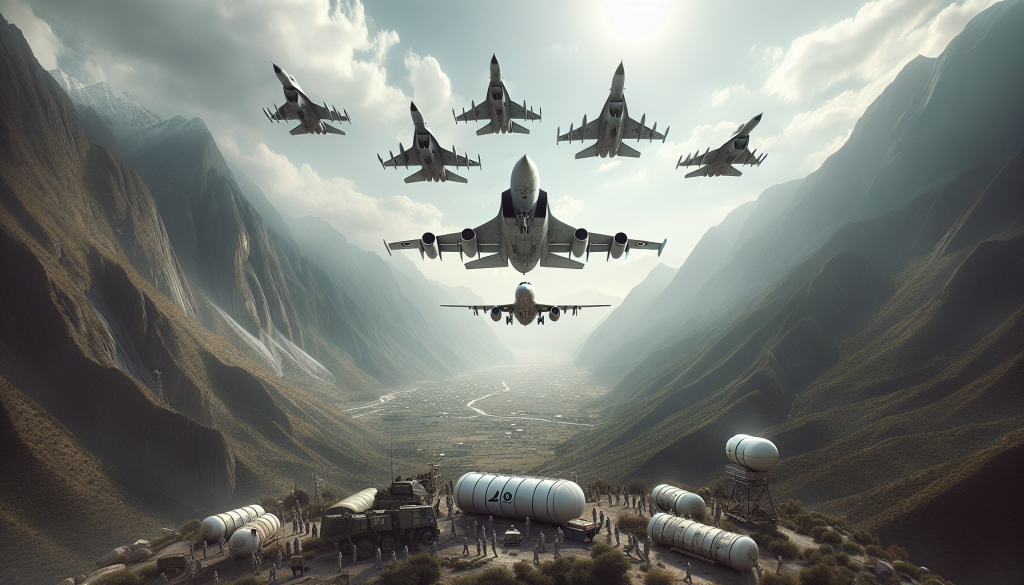
The Pakistan Air Force (PAF) conducted a significant operation last weekend by escorting Iranian negotiators back home following inconclusive peace talks with the United States. This mission was launched after Iran expressed concerns that Israel might attempt to assassinate its delegation, involving around two dozen jets and the PAF’s Airborne Warning and Control System for aerial surveillance to secure their safe return from Islamabad.
Two Pakistani sources familiar with the operation confirmed the deployment, noting that similar security measures would be extended for future negotiations if requested by the Iranian side. Otherwise, Pakistani aircraft would simply receive the delegation within Pakistan’s airspace. Meanwhile, preparations are underway for another round of talks expected as early as this weekend.
A regional diplomat briefed by Tehran indicated that Pakistan insisted on providing the escort after Iranian delegates raised the possibility of a threat, though it was described as hypothetical. This is the first time the discussions about potential threats during travel and the Pakistani air escort into Iran have been publicly disclosed.
Requests for comments from the Israeli prime minister’s office, Iran’s permanent mission in Geneva, Pakistan’s air force and military, as well as the US embassy in Islamabad, went unanswered.
One security source explained that the Iranians became cautious after the talks failed, suspecting they might be targeted. The operation was described as massive from a pilot’s perspective, involving responsibility for the delegation’s safety and providing air cover with advanced fighter jets capable of countering any threat.
The highest-level engagement between the two countries since the 1979 Islamic Revolution was confirmed by a source involved in the talks, who revealed that the escort extended all the way to Tehran, with Pakistan assuming responsibility for the delegation’s security beyond their stay in Pakistan.
The mission on Sunday included Chinese-made J-10 aircraft, the PAF’s premier jet, an official. The Iranian delegation was led by Foreign Minister Abbas Araqchi and Parliament Speaker Mohammad Baqer Qalibaf, a former military officer and certified pilot, who requested the enhanced security escort, exceeding normal protocol.
The regional diplomat noted that while the Iranians did not formally request the escort, they did not dismiss the possibility of an Israeli strike on the aircraft, prompting Pakistan to insist on providing protection. The delegation did not land in Tehran, though the exact drop-off location was not disclosed.
Israel had reportedly placed Araqchi and Qalibaf on its strike list until Pakistan intervened through Washington to have them removed, emphasizing the necessity of their presence for ongoing negotiations related to the conflict initiated by the US and Israel on February 28.
Last month, Israeli Prime Minister Benjamin Netanyahu remarked, “I wouldn’t issue life insurance policies on any of the leaders,” referring to Iran, while withholding details on planned actions. Shortly before a ceasefire agreement last week, US President Donald Trump posted ominously on social media about the potential destruction of an entire civilization, though he expressed reluctance for such an outcome.
Despite the failure of talks in Pakistan, led by US Vice President JD Vance and the Iranian delegation, dialogue remains active. Trump indicated on Thursday that the war “should be ending pretty soon” and suggested that further discussions could take place in Islamabad this weekend.

Leave an opinion