

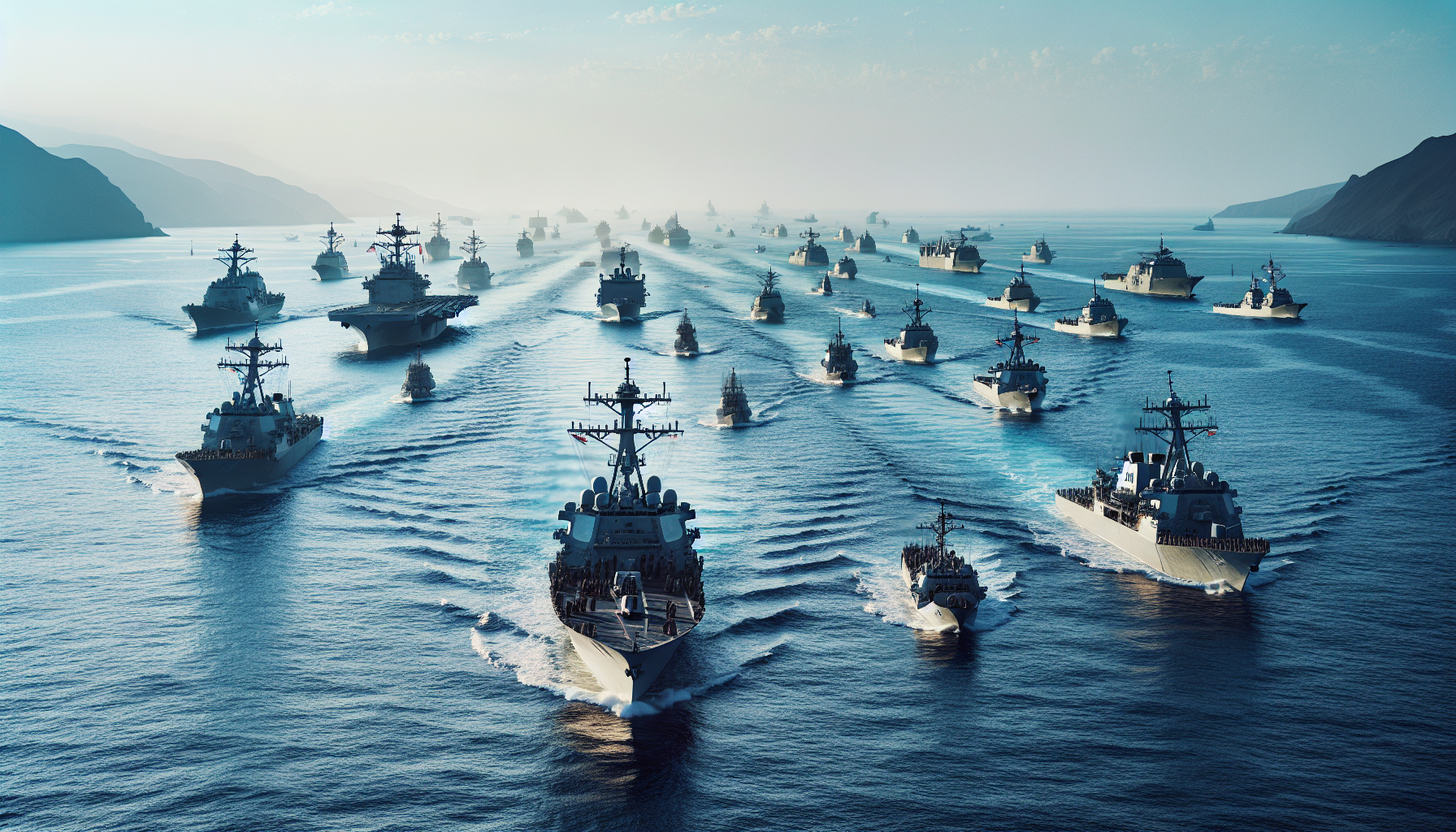
The United States has commenced a naval blockade against Iran in the strategically crucial Strait of Hormuz, a vital artery for global shipping. This operation began on Monday at 10 a.m. Eastern Time, taking place in international waters, military officials.
General Caine, Chairman of the US Joint Military, stated that American forces are actively intercepting vessels suspected of transporting weapons to Iran. The narrowness of the strait complicates the situation, increasing risks for both military maneuvers and commercial navigation. Despite these challenges, US agencies maintain vigilant surveillance over maritime traffic in the region.
At least 13 ships have already reversed course after receiving warnings from US forces. Vessels approaching the blockade are issued clear verbal instructions via loudspeakers, cautioning them to avoid the restricted route. A recorded message warns, “The Strait of Hormuz has been blocked by US forces. Please avoid using this route, otherwise force may be used.”
A military official involved in the mission described the strait as an extremely sensitive area that demands precise navigation and stringent control measures. US naval forces are utilizing advanced techniques to maintain dominance and ensure operational safety.
Approximately 50,000 personnel have been deployed for this mission, supported by allied forces. Coordination with international partners continues to regulate maritime traffic effectively in the strait.
The official also revealed that over 1,300 strikes have been executed, demonstrating the use of sophisticated technology during these operations. US forces remain ready to carry out targeted strikes on key Iranian assets if necessary.
Recent activities have involved multiple naval units, including three from the United States and one from an allied nation, as regional tensions escalate.
Meanwhile, US Defense Secretary Pete Hegseth reported that troop morale is high, despite concerns within Iran amid its aggressive rhetoric. He emphasized that US operations are strictly focused on military objectives and that Washington’s goal is to bring Iran to the negotiating table.
Hegseth also noted that all decisions are being made independently by former President Donald Trump, without external influence.
A US Navy official highlighted the military’s commitment to honoring fallen soldiers, sharing that he personally visited personnel wounded during Iranian retaliatory attacks and witnessed their resilience and bravery firsthand.
