



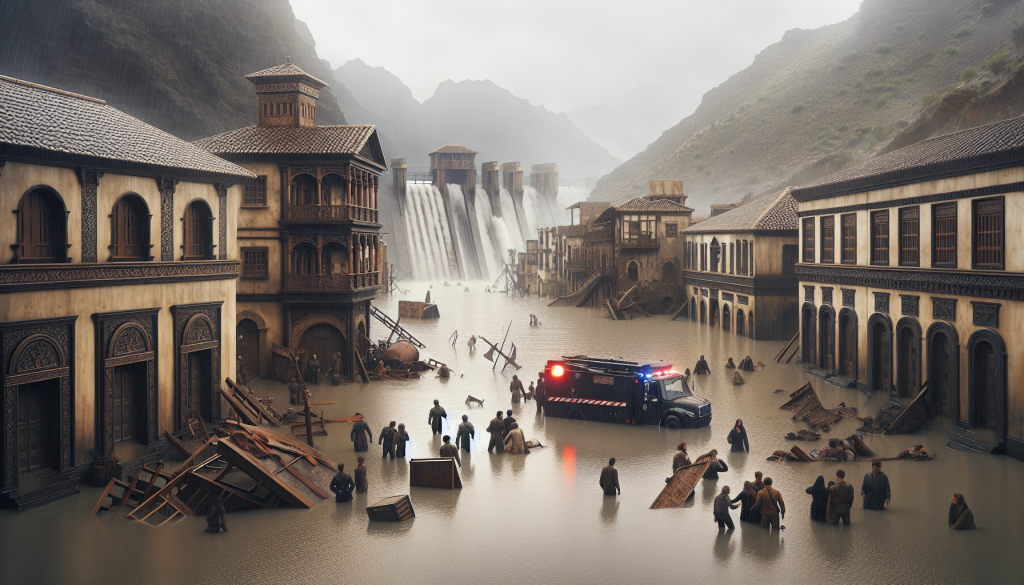
Filming for the second season of A Knight of the Seven Kingdoms, the Game of Thrones prequel, encountered a significant obstacle when Storm Therese caused historic flooding in Gran Canaria, Spain. Production was suspended at the Las Niñas Dam site, where elaborate sets had been constructed to represent a drought-affected Westeros.
The storm brought unprecedented rainfall to the Canary Islands, forcing the evacuation of over 3,000 residents and prompting HBO to halt filming temporarily. The Las Niñas Dam overflowed dramatically, submerging key set pieces and damaging equipment essential to the production. This flooding reached water levels not seen in 15 years, triggering red-level danger warnings across multiple islands.
Despite these setbacks, HBO remains confident that the series will meet its planned 2027 premiere. To keep the project on track, the production team is relocating to alternative filming locations, aiming to resume work by mid-May. The delay will test the extended 14-week shooting schedule allocated for Season 2, which is longer than the three-month filming period of Season 1.
Season 1 of A Knight of the Seven Kingdoms debuted in January 2026 to critical acclaim, earning an 8.7 out of 10 rating on IMDb. The series, inspired by George R.R. Martin’s novella The Sworn Sword from the Dunk and Egg Tales, follows Ser Duncan the Tall, played by Peter Claffey, and his squire Egg, portrayed by Dexter Sol Ansell. Initial filming took place in Belfast, Northern Ireland, before moving to Gran Canaria for specific scenes.
Unlike the original Game of Thrones timeline, this prequel is set centuries earlier during a period of relative peace in Westeros, focusing on Duncan’s travels and adventures. Season 2 was greenlit in November 2025, making it one of HBO’s fastest renewals for a fantasy series, with back-to-back filming for Seasons 2 and 3 planned to accelerate production.
In a significant development, HBO has reiterated that the flooding-related interruption will not affect the overall production timeline. The relocation strategy is designed to minimize disruption and ensure post-production deadlines are met, keeping the 2027 release date intact despite the natural disaster’s impact.

Leave an opinion