

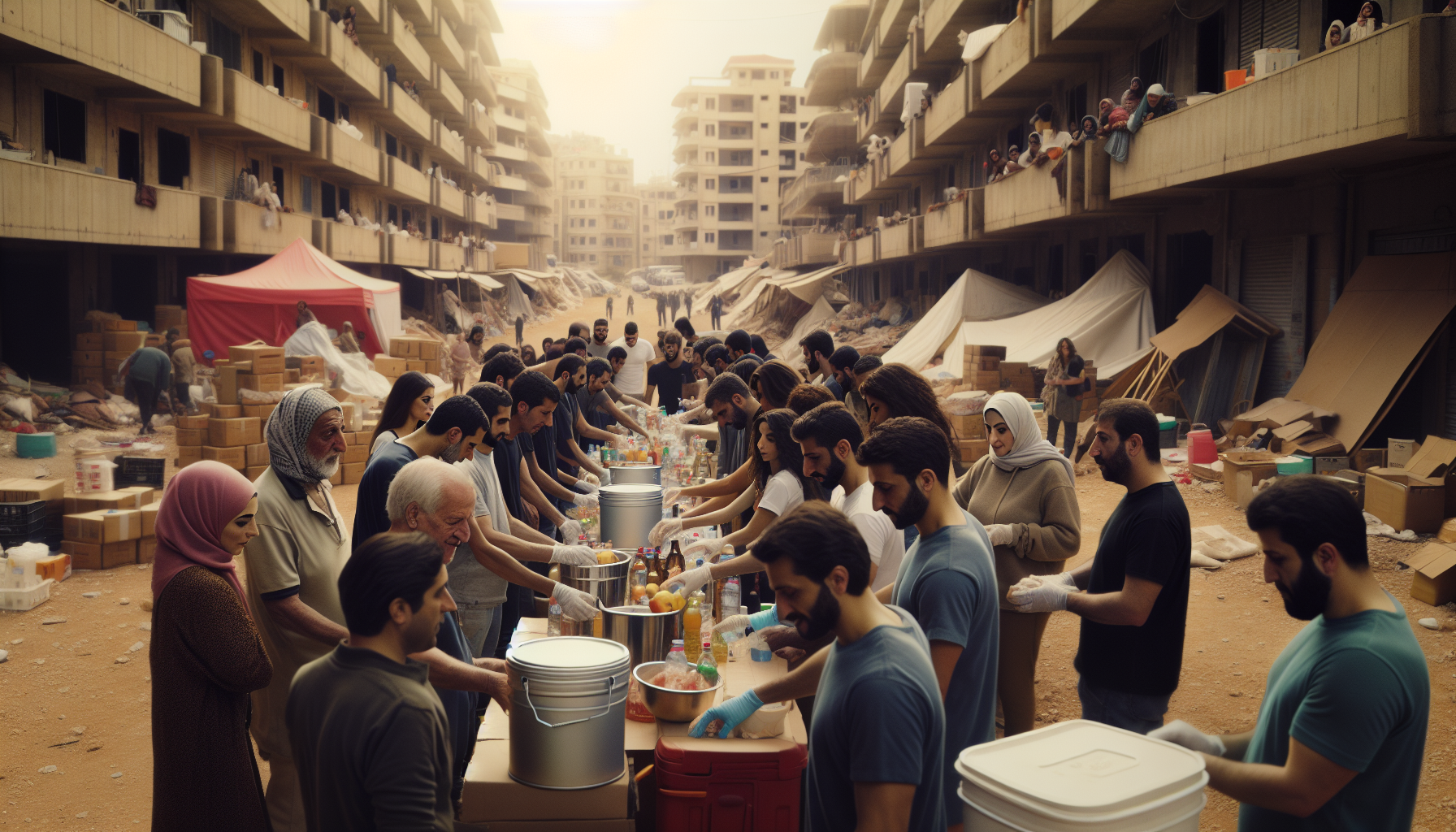
In Lebanon, a country grappling with economic and political instability, the migrant community has emerged as a critical support system for those displaced by ongoing conflicts. Often marginalized and overlooked, these migrants have taken on the responsibility of providing food to vulnerable populations, filling gaps left by the struggling state infrastructure. Their efforts underscore the essential role of food as a means of unity and survival in a fractured society.
Lebanon hosts a diverse migrant population, many of whom face their own hardships yet continue to contribute significantly to humanitarian efforts. By organizing food distribution and community kitchens, these groups foster solidarity among displaced families and local residents alike. This grassroots response not only alleviates immediate hunger but also strengthens social bonds during a period of widespread displacement and uncertainty.
In a significant development, the migrant community’s role in feeding the war-displaced highlights broader issues of state capacity and social cohesion in Lebanon. Their actions demonstrate resilience and compassion, serving as a reminder of the power of communal support in times of crisis. Meanwhile, their contributions call attention to the need for more inclusive policies that recognize and empower migrant populations as vital actors in Lebanon’s social fabric.
