



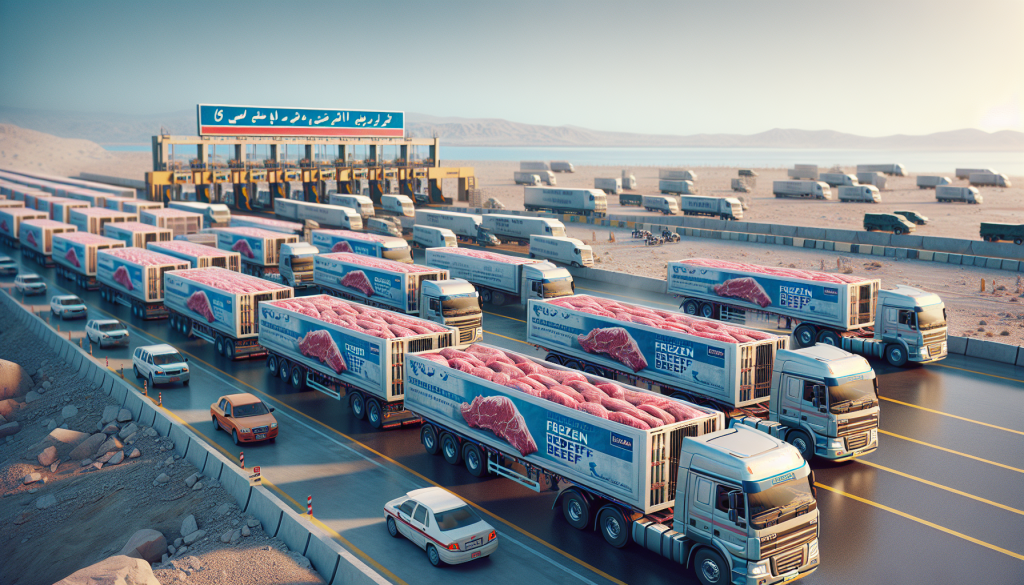
Pakistan has achieved a major breakthrough in its regional trade connectivity by dispatching its first export shipment to Uzbekistan through a newly established transit corridor via Iran. This initiative aims to overcome traditional logistical challenges by opening an alternative land route.
A convoy of refrigerated trucks loaded with frozen beef departed from Karachi and crossed the Gabd-Rimdan border into Iran. The shipment is currently on its way to Tashkent under the Transports Internationaux Routiers (TIR) convention, an international customs transit system that facilitates smooth cross-border movement of goods with minimal regulatory hurdles.
This newly operational land route marks a strategic shift in Pakistan’s trade policy, offering a dependable alternative to the frequently unstable routes passing through Afghanistan. By leveraging the Gabd-Rimdan crossing near the deep-sea port of Gwadar, Pakistan is effectively connecting its maritime infrastructure with the landlocked Central Asian markets.
Trade experts highlight that this corridor will be crucial for exporting perishable products like meat and agricultural goods, which require rapid and efficient transportation. Additionally, the route enhances the commercial significance of both Karachi and Gwadar ports, establishing them as key gateways for regional trade.
In a significant development, this initiative aligns with Pakistan’s broader economic vision under the China-Pakistan Economic Corridor (CPEC) framework, aiming to position the country as a regional integration hub. Access to a Central Asian market exceeding 70 million consumers will enable Pakistan to diversify its export base and reduce reliance on conventional shipping routes.
The successful launch of this inaugural shipment is expected to boost bilateral trade volumes and strengthen diplomatic and economic relations between Islamabad, Tehran, and Tashkent. It also promises more cost-effective transit solutions for Pakistan’s expanding export sector, reinforcing the country’s role in regional commerce.

Leave an opinion