

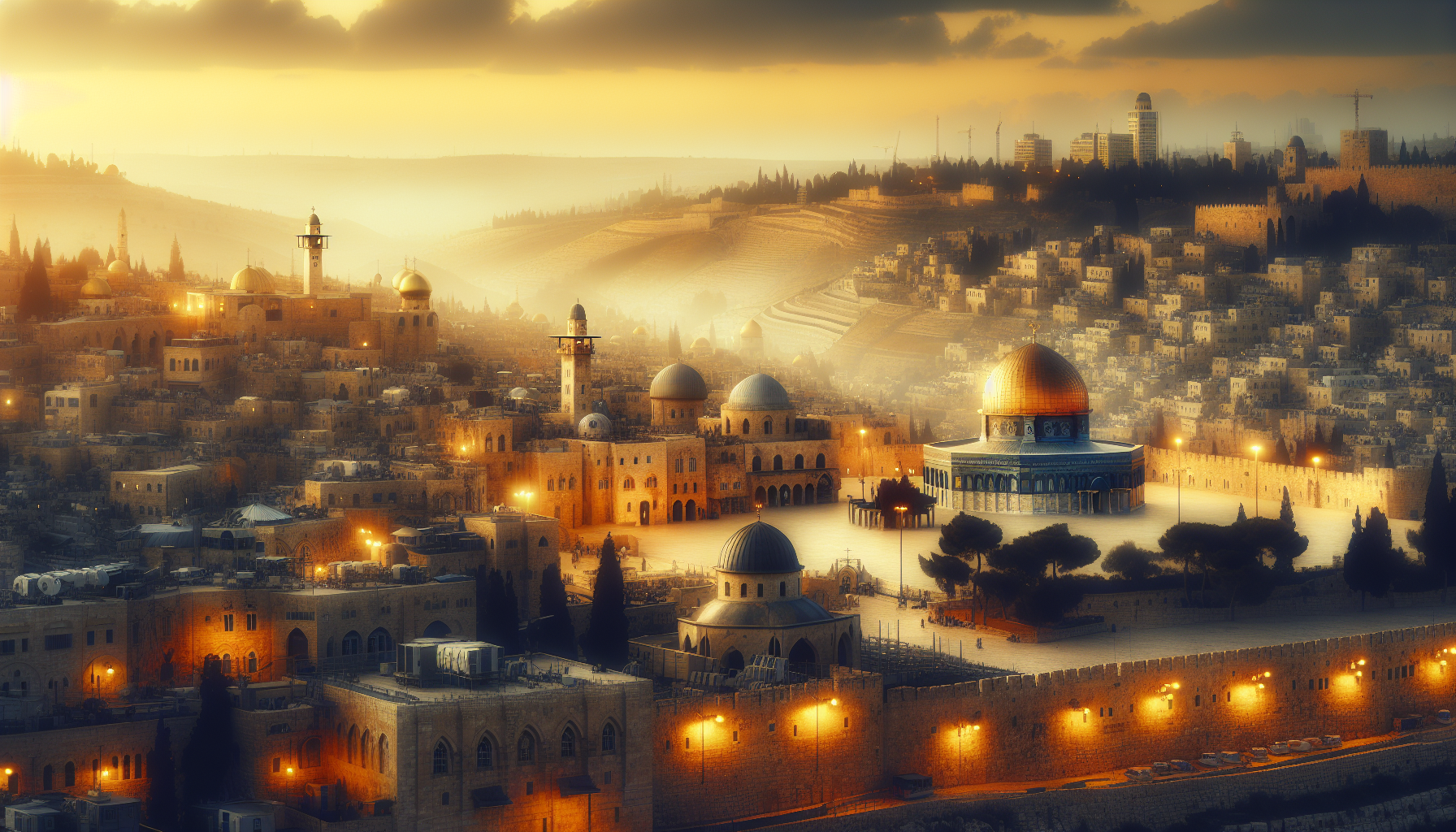
In a significant development, Israel is actively working to modify the established Status Quo governing religious practices in Jerusalem. This move aims to consolidate full authority over the Muslim and Christian religious activities at the city’s sacred sites, which have historically been managed under a delicate balance. The Status Quo, a set of understandings dating back to the Ottoman era, has long preserved the rights and privileges of various religious communities in Jerusalem, particularly at sites such as the Al-Aqsa Mosque and the Church of the Holy Sepulchre.
These changes have profound implications for the religious and political landscape of Jerusalem, a city sacred to Judaism, Islam, and Christianity alike. By attempting to redefine control, Israel is challenging the centuries-old arrangements that have prevented unilateral dominance over these contested spaces. This shift risks escalating tensions among religious groups and could provoke wider regional unrest, given the centrality of Jerusalem in Middle Eastern geopolitics.
Meanwhile, the international community has expressed concern over the potential erosion of religious freedoms and the impact on interfaith relations. The alteration of the Status Quo threatens to undermine the fragile coexistence that has been maintained through negotiated agreements. As Jerusalem remains a focal point of religious devotion and political conflict, these developments underscore the ongoing struggle over sovereignty and identity in one of the world’s most contested cities.
