



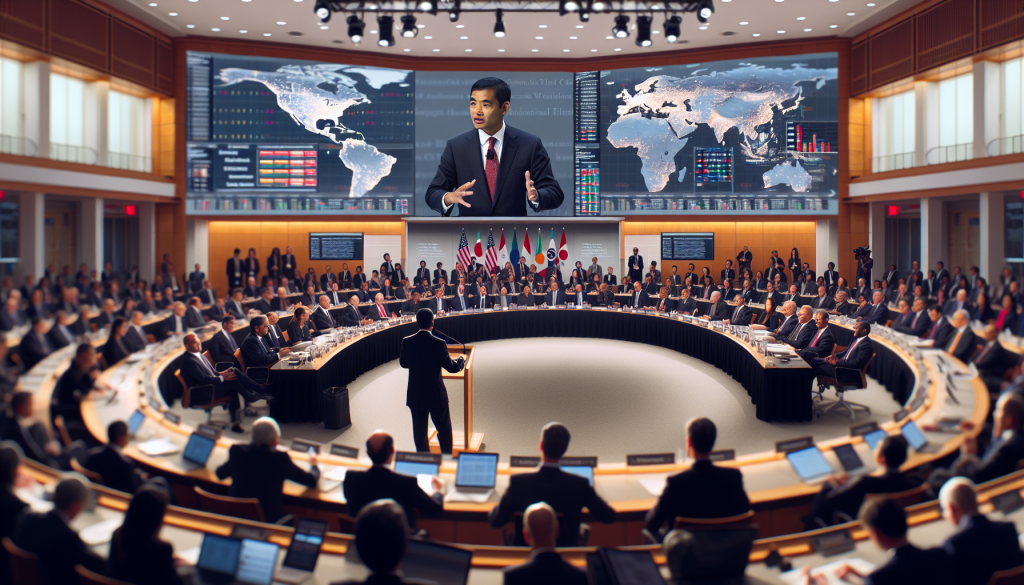
Federal Minister for Finance and Revenue, Senator Muhammad Aurangzeb, addressed Pakistan’s economic priorities during a prominent panel discussion at Harvard University on Monday. The event, titled “Pakistan’s Economic Agenda: Stability, Reform and What Comes Next,” was part of the Pakistan Conference 2026.
He characterized the ongoing Middle East conflict as one of the most profound supply shocks the global economy has faced in recent years, demanding prudent and nuanced policy responses. Aurangzeb explained that Pakistan’s foremost concern over recent weeks was to maintain uninterrupted energy supplies across critical sectors despite limited strategic reserves. This was achieved through close coordination among various ministries and institutions.
The finance minister detailed how the government initially implemented a broad subsidy to protect the public from rising energy prices. This approach has since evolved into a system of full price transmission complemented by targeted subsidies, aligned with the country’s fiscal capacity. He stressed that Pakistan’s management of the crisis has been comparatively effective, avoiding major supply disruptions and preserving social stability.
On external financial matters, Aurangzeb highlighted strong debt management, describing the recent Eurobond repayment as a “non-event.” He expressed confidence in Pakistan’s ability to meet upcoming external debt obligations promptly. Notably, he pointed to emerging economic opportunities amid the crisis, including a remarkable surge in transit traffic through Karachi Port, which recently surpassed the entire volume recorded in 2025 within just a few weeks. Progress is also underway to fully operationalize Gwadar Port.
In addition, the minister cited a record monthly inflow in March through the Roshan Digital Account initiative, interpreting it as a sign of growing confidence among overseas Pakistanis. However, he cautioned that while remittances remain vital, they cannot be relied upon as a sustainable long-term growth strategy. Instead, Aurangzeb emphasized the importance of export-led growth and expanding trade in services as more robust foundations for economic resilience.
He remarked that Pakistan has long understood the objectives and rationale behind necessary economic reforms, but the critical challenge lies in execution—specifically, ensuring timely decision-making and effective implementation. Historically, delays in making difficult but essential decisions have impeded progress, leading to recurring economic cycles and repeated dependence on IMF programs.
Reaffirming the government’s commitment to structural reforms, Aurangzeb highlighted ongoing efforts to enhance tax administration, widen the tax base, and raise the tax-to-GDP ratio. Although progress has been made, these targets remain below expectations. He also described ongoing transformations within the Federal Board of Revenue, focusing on digitization, automation, and data-driven processes to reduce human discretion and boost efficiency.
The minister underscored the need to move away from a model of continuous subsidies for industry, advocating instead for competitiveness and export-driven growth. In this context, he pointed to recent trade liberalization measures, including tariff rationalization, designed to improve efficiency and foster deeper integration into global markets.

Leave an opinion