



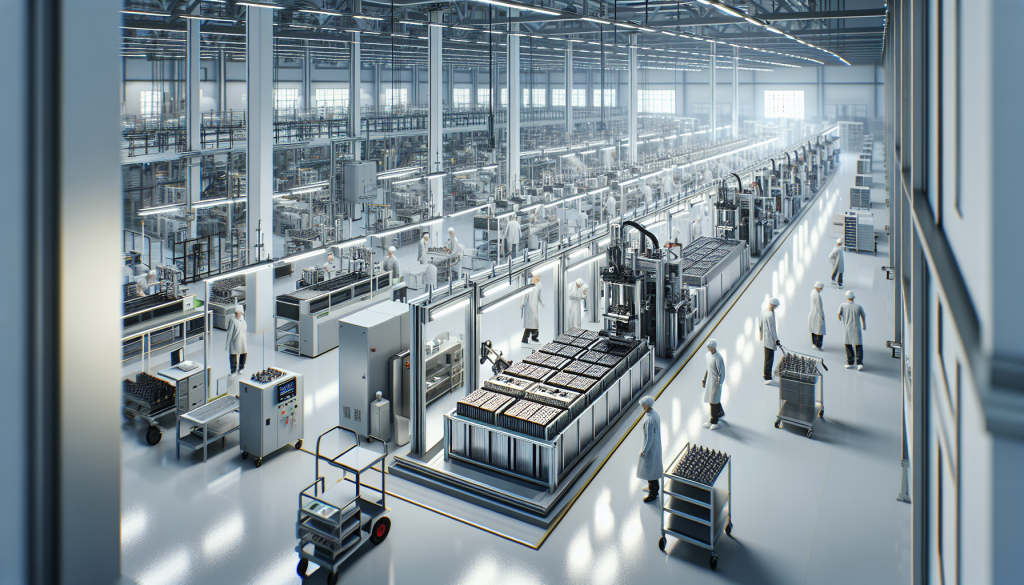
Pakistan is on the verge of approving its first national lithium-ion battery manufacturing policy for 2026–31, marking a significant step toward local production. Concurrently, the country’s first lithium battery manufacturing plant is poised to begin operations in Karachi in the near future.
The Pakistan Solar Association (PSA) has committed to the Engineering Development Board (EDB) that the new facility will initially focus on producing batteries for electric bikes, e-scooters, and electric vehicles (EVs). During a stakeholders’ meeting, EDB Chief Executive Hammad Mansoor revealed that the draft policy has been submitted to the Ministry of Industries and Production and will soon be reviewed by the National Tariff Board (NTB). This policy aims to streamline duties on imported components essential for lithium battery manufacturing and assembly.
Once the NTB grants approval, the policy will be forwarded to the prime minister and federal cabinet for final endorsement. The Ministry of Finance is expected to announce its implementation in the 2026–27 federal budget. The policy is designed to encourage domestic battery production and reduce dependence on completely built-up (CBU) imports.
“The future of energy hinges on effective storage solutions, making local manufacturing crucial to meet the rising demand from solar power systems and EVs,” Mansoor emphasized. At present, imported lithium batteries dominate the market, particularly in EVs and as backup power sources for critical infrastructure such as banks.
Meanwhile, Karachi-based engineering firm EV Technologies has submitted plans to produce lithium battery cells locally. CEO Huma Khattak stated that the plant has already been ordered and is expected to commence production within two to three months. Located in the Korangi Industrial Area, the facility will have an initial capacity of 4 megawatts, sufficient to supply batteries for approximately 2,000 e-bikes and e-scooters monthly.
Industry analysts highlight that Pakistan’s swift transition to solar energy is significantly boosting demand for lithium battery storage solutions across both residential and commercial sectors, underscoring the importance of this development.

Leave an opinion