

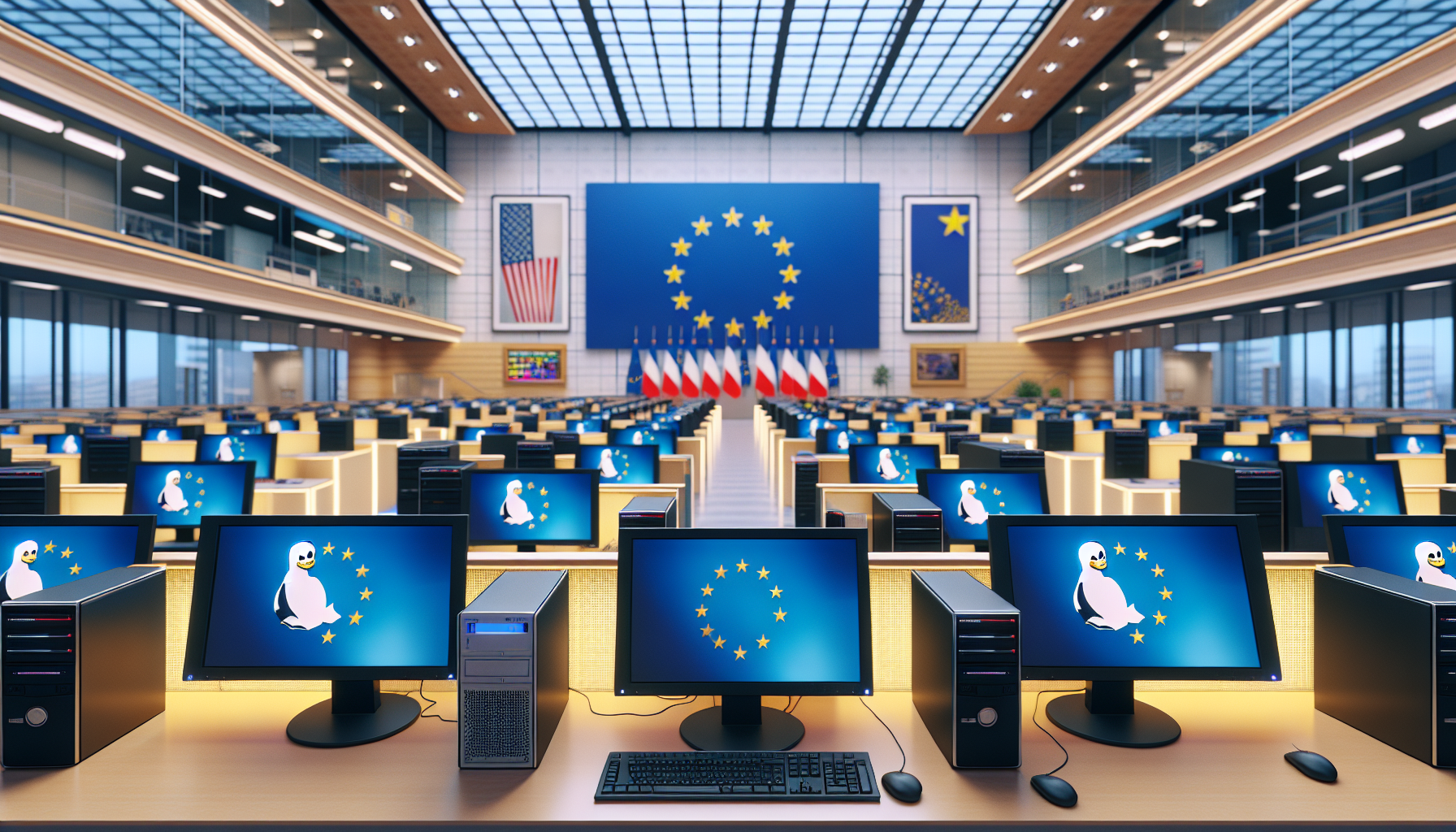
France has announced its intention to replace Microsoft Windows with the open-source Linux operating system on government workstations. This decision forms part of a wider European initiative aimed at achieving digital sovereignty by minimizing dependence on foreign technology providers, particularly those from the United States and China.
Earlier this year, France took steps to substitute popular videoconferencing tools Zoom and Microsoft Teams with Visio, a platform developed domestically. Additionally, the country aims to migrate its health data to a new platform by 2026, further emphasizing its commitment to technological independence.
These moves come amid ongoing tensions caused by former US President Donald Trump, whose administration has frequently criticized European tech regulations and employed tariffs and other measures to pressure European nations into easing restrictions on American technology companies. In August, Trump vowed to defend US tech firms against what he described as unfair attacks by other countries, labeling EU regulations such as the Digital Services Act as forms of censorship and taxation.
Despite this pressure, Europe has maintained a firm stance. European Commission President Ursula von der Leyen underscored the importance of digital sovereignty at the Munich Security Conference in February, highlighting Europe’s longstanding tradition of free speech and its historical role in the Enlightenment.
Christian Kroll, CEO of the German search engine Ecosia, predicted that following Trump’s 2024 reelection, Europe would need to ensure it cannot be blackmailed by foreign powers. He illustrated the risks by noting that if the US were to cut off access to search results, Europeans might have to revert to outdated methods like phone books. While Kroll’s perspective is influenced by his promotion of a European search engine, his comments underscore the urgency of the issue.
Policy fellow Giorgos Verdi from the European Council on Foreign Relations highlighted the potential for the US to leverage its dominance in AI chips, cloud services, and AI systems to exert pressure on Europe. He stressed that for Europe to build resilience, it must foster its own technological innovations and reduce reliance on external powers.
