

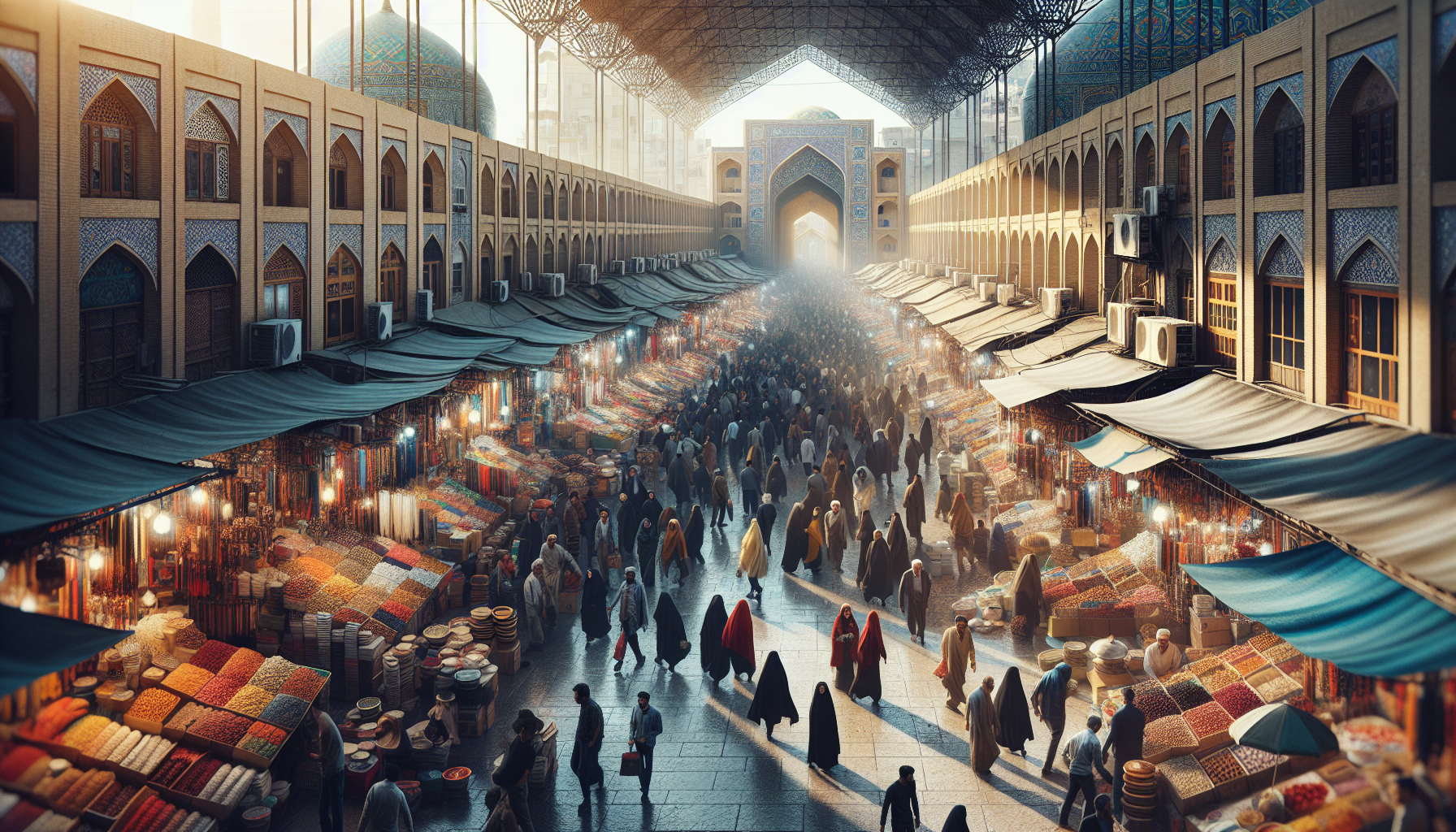
Following the recent ceasefire, Tehran’s Grand Bazaar has experienced a noticeable increase in foot traffic and commercial activity compared to the period before the truce. This uptick suggests a temporary easing of tensions that had previously disrupted daily life and trade in the Iranian capital. However, despite the improved atmosphere, many vendors continue to face slow sales, reflecting deeper economic issues that have not been resolved by the ceasefire alone.
Iran’s economy has been under significant strain due to a combination of international sanctions, inflation, and domestic challenges, which continue to impact consumer purchasing power and business confidence. The Grand Bazaar, a historic and vital commercial hub, often serves as a barometer for the broader economic health of the country. The current slow sales indicate that while peace has brought some relief, economic recovery remains fragile and uncertain.
In a significant development, the ceasefire has provided a window of opportunity for merchants and shoppers to resume activities with less fear of conflict-related disruptions. Nonetheless, experts warn that sustainable economic improvement will require comprehensive policy measures and international cooperation. Meanwhile, the people of Tehran remain cautiously optimistic, hoping that the ceasefire will eventually translate into more stable economic conditions and improved livelihoods.
