

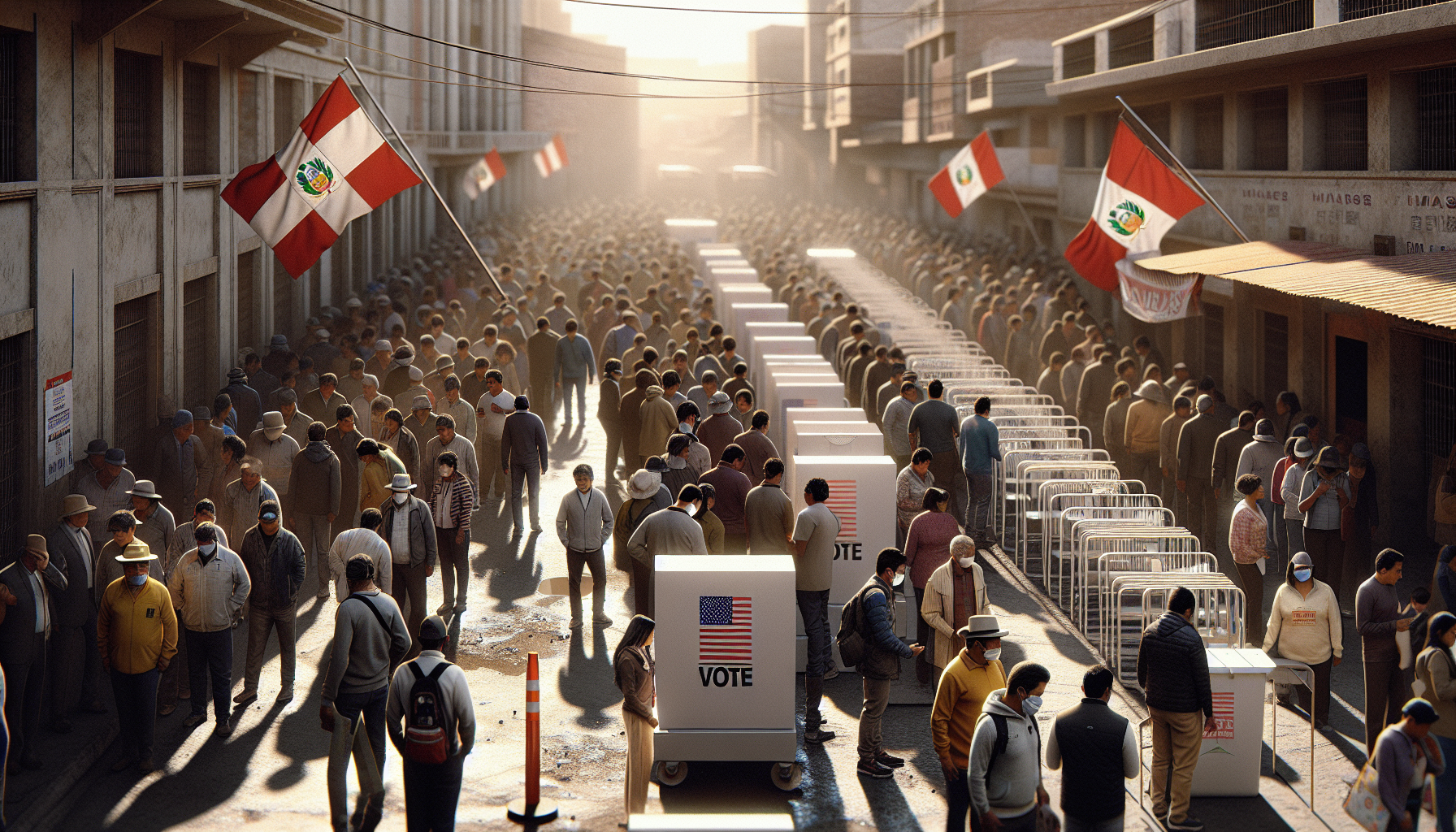
Peru is currently holding a presidential election amid a backdrop of significant political instability that has defined the country over the past ten years. During this period, the nation has experienced the rapid turnover of nine presidents, highlighting deep-rooted challenges within its political system. This frequent change in leadership has contributed to widespread public frustration and skepticism about governance and institutional effectiveness.
In a significant development, this year’s election is seen as a critical moment for Peru to potentially restore political stability and public trust. The repeated shifts in power have often been accompanied by social unrest, corruption scandals, and economic uncertainty, which have all influenced voter sentiment. Candidates are campaigning with promises to address these issues and bring long-term reforms to the country’s governance framework.
Meanwhile, the international community is closely watching Peru’s electoral process, recognizing its importance for regional stability in South America. The outcome of this election could set the tone for Peru’s political trajectory in the coming years, impacting not only domestic policy but also its relations with neighboring countries. The election underscores the urgent need for durable political solutions after a decade marked by turmoil and leadership changes.
