

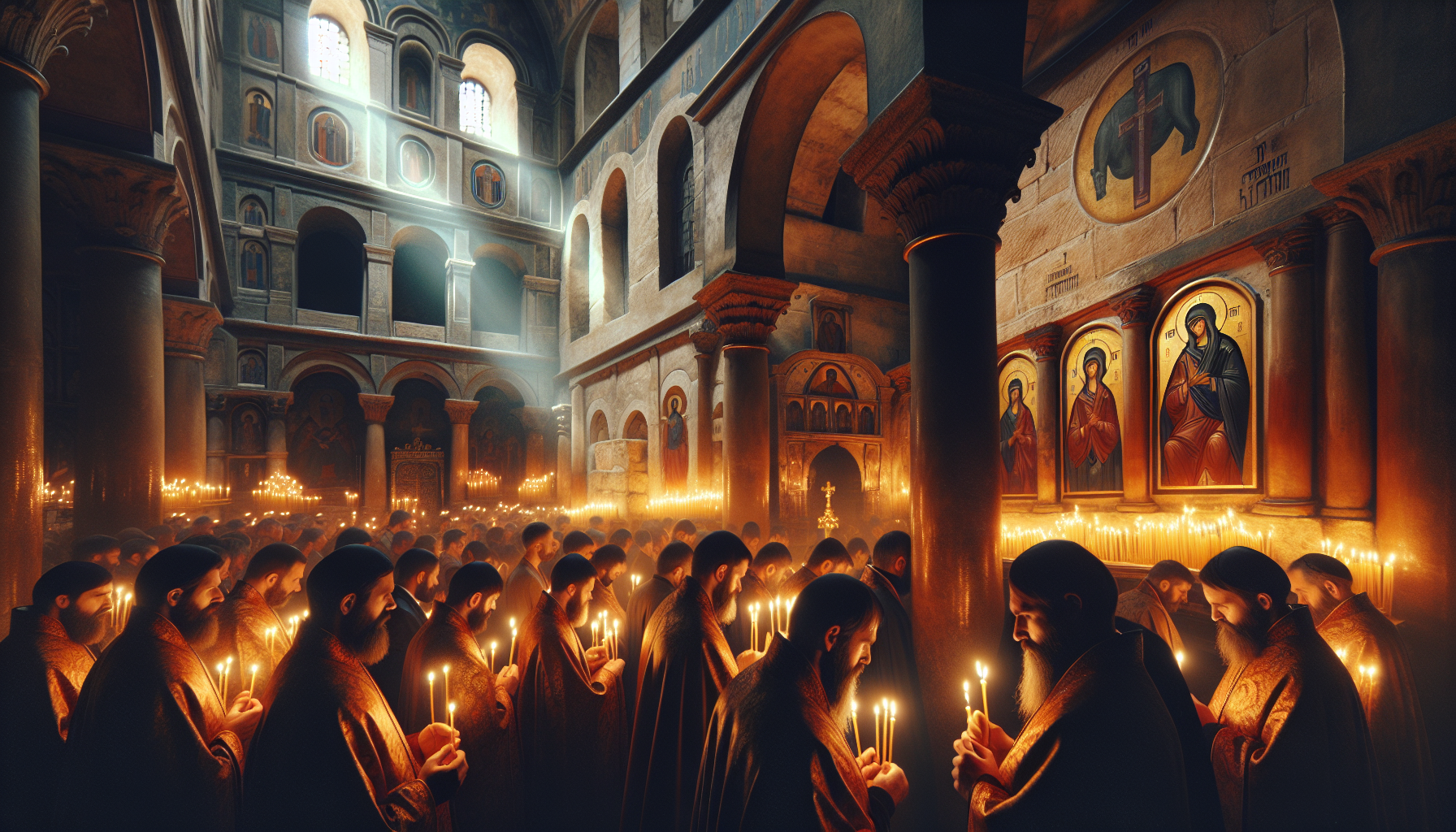
Orthodox Christian worshippers returned to Jerusalem’s Church of the Holy Sepulchre to observe the traditional Easter Holy Fire ceremony, marking a significant moment as Israel eased pandemic-related restrictions. This event, deeply rooted in Christian heritage, symbolizes the resurrection of Jesus Christ and draws pilgrims from around the world. The Holy Fire ceremony is one of the most important rituals in Orthodox Christianity, attracting thousands of faithful annually.
In a significant development, Israel’s decision to relax limitations on religious gatherings has allowed the faithful to participate in this centuries-old tradition with greater freedom. The easing of restrictions comes after a period of stringent measures aimed at curbing the spread of COVID-19, which had previously limited access to holy sites and reduced the scale of religious ceremonies. This move has been welcomed by religious communities, as it restores a sense of normalcy and spiritual fulfillment during the Easter celebrations.
Meanwhile, the return of pilgrims to the Holy Sepulchre also holds broader cultural and economic importance, as religious tourism is a vital component of Jerusalem’s local economy. The ceremony not only reinforces the city’s status as a key spiritual center but also fosters interfaith dialogue and unity among diverse religious groups. The successful conduct of the Easter Holy Fire event under eased restrictions signals hope for continued reopening and recovery in the region’s religious and social life.
