



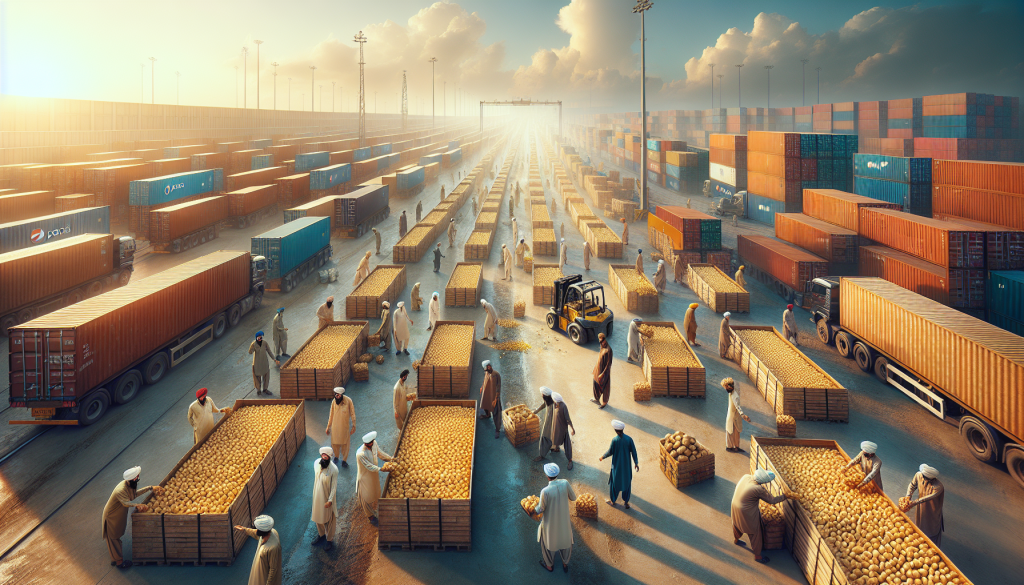
The Russian Federal Service for Veterinary and Phytosanitary Surveillance (Rosselkhoznadzor) has approved the import of potatoes from Punjab, Pakistan, into Russia effective April 8, 2026. This decision marks a significant advancement for Pakistan’s agricultural export sector, following the removal of phytosanitary restrictions that had been imposed since May 2025.
Initially, imports will be allowed from three Pakistani exporters: Chase International, Zahid Kinnow Grinding & Waxing Plant, and National Fruit. Shabana Aziz, head of Pakistan’s Trade Mission in Moscow, indicated that additional companies are expected to register soon to increase export volumes. She highlighted that, with the assistance of the Trade Development Authority of Pakistan (TDAP) and the Pakistan Horticulture Development and Export Company (PHDEC), virtual business-to-business meetings are being organized to help exporters capitalize on this new opportunity.
Pakistan is currently witnessing a bumper potato harvest, with production estimated at approximately 12 million tons. The opening of the Russian market is anticipated to alleviate the surplus supply, stabilize domestic prices, provide relief to farmers, and enhance foreign exchange earnings.
This development is the result of coordinated efforts involving the Ministry of National Food Security & Research, the Department of Plant Protection, TDAP, PHDEC, and Pakistan’s Trade Mission in Moscow. It also reflects the commitment of both federal and Punjab provincial authorities to diversify export markets and strengthen trade relations with Russia.
In a related move, the federal government has permitted Punjab farmers to export potatoes and kinnow through alternative routes. This decision follows appeals from Punjab’s potato growers for urgent government assistance, including subsidized exports, amid a production surplus coupled with weak domestic demand. The Punjab government has also urged the federal authorities to reduce freight charges for potato and kinnow exports, especially via Iran, to overcome logistical challenges faced by exporters.

Leave an opinion