

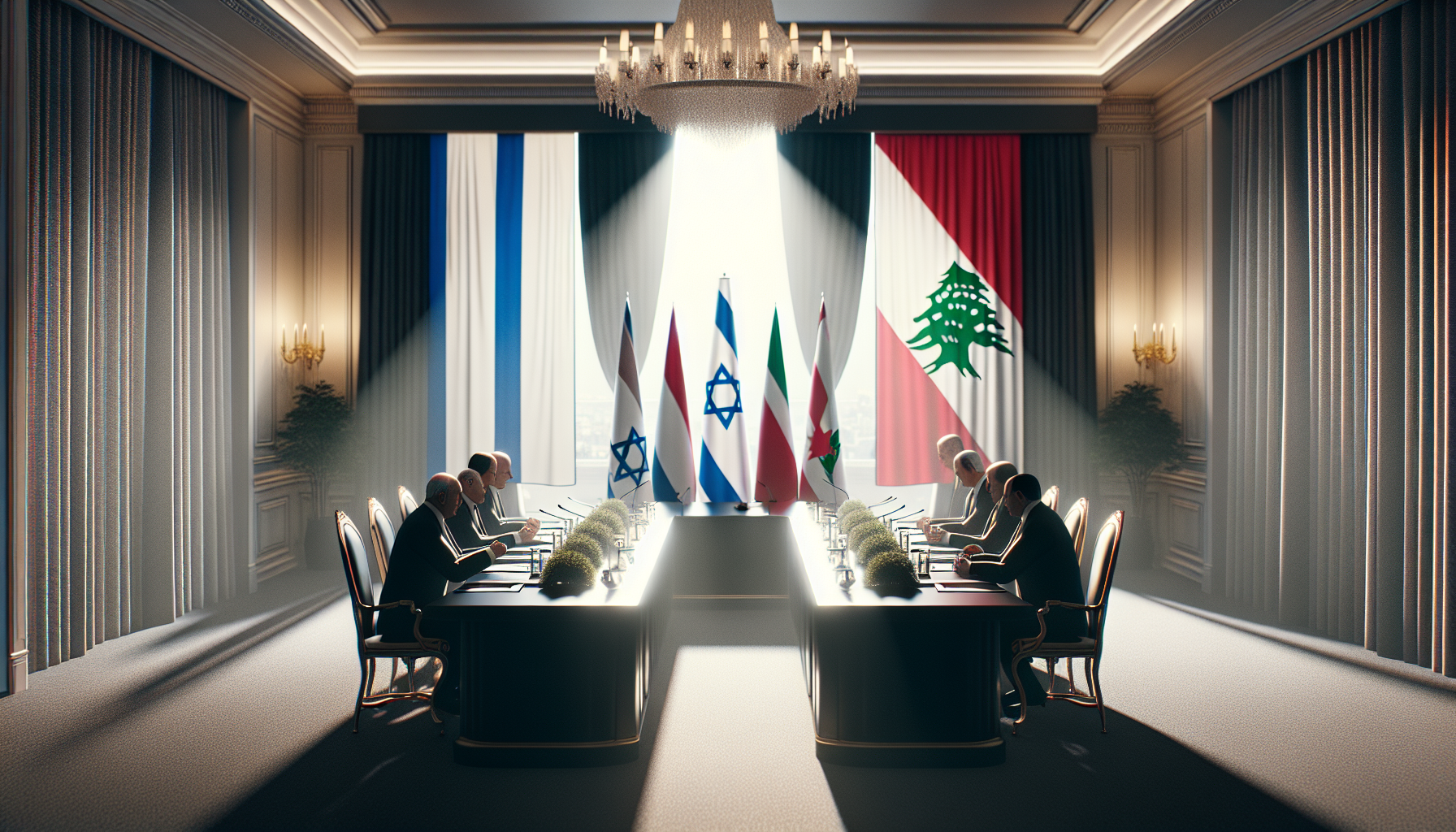
Israeli and Lebanese representatives are scheduled to convene in Washington on Tuesday as U.S. President Donald Trump works to de-escalate weeks of conflict between Israel and the Iran-backed Hezbollah militia. This fighting has threatened to unravel a delicate ceasefire between the U.S. and Iran. Both Israel and Lebanon face mounting pressure from Trump to halt hostilities, a key demand Iran has emphasized ahead of parallel talks planned for the weekend in Pakistan.
The conflict escalated after Hezbollah launched missile attacks on Israel on March 2, just days into the U.S.-Israeli campaign against Iran. Israel responded with intensified airstrikes and expanded a ground invasion into southern Lebanon, ordering hundreds of thousands of residents to evacuate areas identified as Hezbollah strongholds. The violence has resulted in at least 1,888 fatalities in Lebanon due to Israeli attacks, while Hezbollah rocket fire has killed at least two Israelis.
This confrontation follows a 2024 round of fighting, which concluded with a U.S.-brokered agreement aimed at disarming Hezbollah. Since then, Lebanon’s government has directed its army to assert control over arms within the country, a move Israel claims has been ineffective. Hezbollah refuses to disarm, viewing its weapons as essential to defending Lebanon against Israeli aggression. Despite the 2024 deal, Israel has continued targeting what it describes as Hezbollah arms depots and fighters.
In a significant development, Lebanon’s President Joseph Aoun expressed readiness to engage in direct negotiations with Israel to end the conflict, even suggesting the possibility of normalizing relations. Initially, Israel rejected this proposal, considering it too late and doubting Lebanon’s ability to act against Hezbollah without triggering internal strife. However, following a ceasefire agreement between the U.S. and Iran, Israel’s stance shifted. Trump reportedly urged Israeli Prime Minister Benjamin Netanyahu to reduce attacks on Hezbollah, leading Netanyahu to announce that Israel would commence negotiations with Lebanon.
The upcoming talks in Washington will involve Israeli Ambassador Yechiel Leiter and Lebanese Ambassador Nada Hamadeh Moawad. While Lebanon’s presidency indicated the discussions will focus on declaring a ceasefire and scheduling bilateral talks under U.S. mediation, Israel’s embassy described the meeting as the beginning of formal peace negotiations, denying any discussion of a ceasefire with Hezbollah. Netanyahu has appointed Ron Dermer, a former strategic affairs minister and close adviser, to lead future negotiations, though Dermer is not expected to attend the initial meeting. Lebanon has named Simon Karam, a former ambassador to the U.S., to head its broader delegation, but he also will not participate in the upcoming session.
Netanyahu has maintained that Israel will not cease operations against Hezbollah, emphasizing that negotiations aim to disarm the group and establish a peace treaty with Lebanon. Israeli officials have not clarified whether they would reduce ground operations or withdraw from occupied positions if talks progress. Israel continues to bomb Lebanese villages to create a buffer zone beyond its northern border. Ahead of the talks, a senior Israeli official indicated that attacks might be scaled back, while another suggested Israel would press Lebanon to remove Hezbollah ministers from its government.
Lebanon insists that a ceasefire is a prerequisite for further negotiations to achieve a comprehensive agreement with Israel. The decision to engage in talks reflects growing domestic opposition to Hezbollah’s armed status. In March, Lebanon banned Hezbollah’s military activities, but the group remains heavily armed and enjoys significant support within the Shi’ite Muslim community. Disarming Hezbollah presents a formidable challenge for Lebanon’s fragile state, which is navigating one of its most unstable periods since the civil war from 1975 to 1990.
Israel and Lebanon have no formal diplomatic relations and have technically been at war since Israel’s establishment in 1948. Israel’s history in Lebanon includes numerous military incursions and an 18-year occupation of southern Lebanon from 1982 to 2000, initially targeting Palestinian factions. More recently, U.S.-mediated talks in 2022 resulted in a maritime boundary agreement. In December 2025, indirect talks in Naqoura, southern Lebanon, aimed to solidify the 2024 ceasefire between Israel and Hezbollah.
