

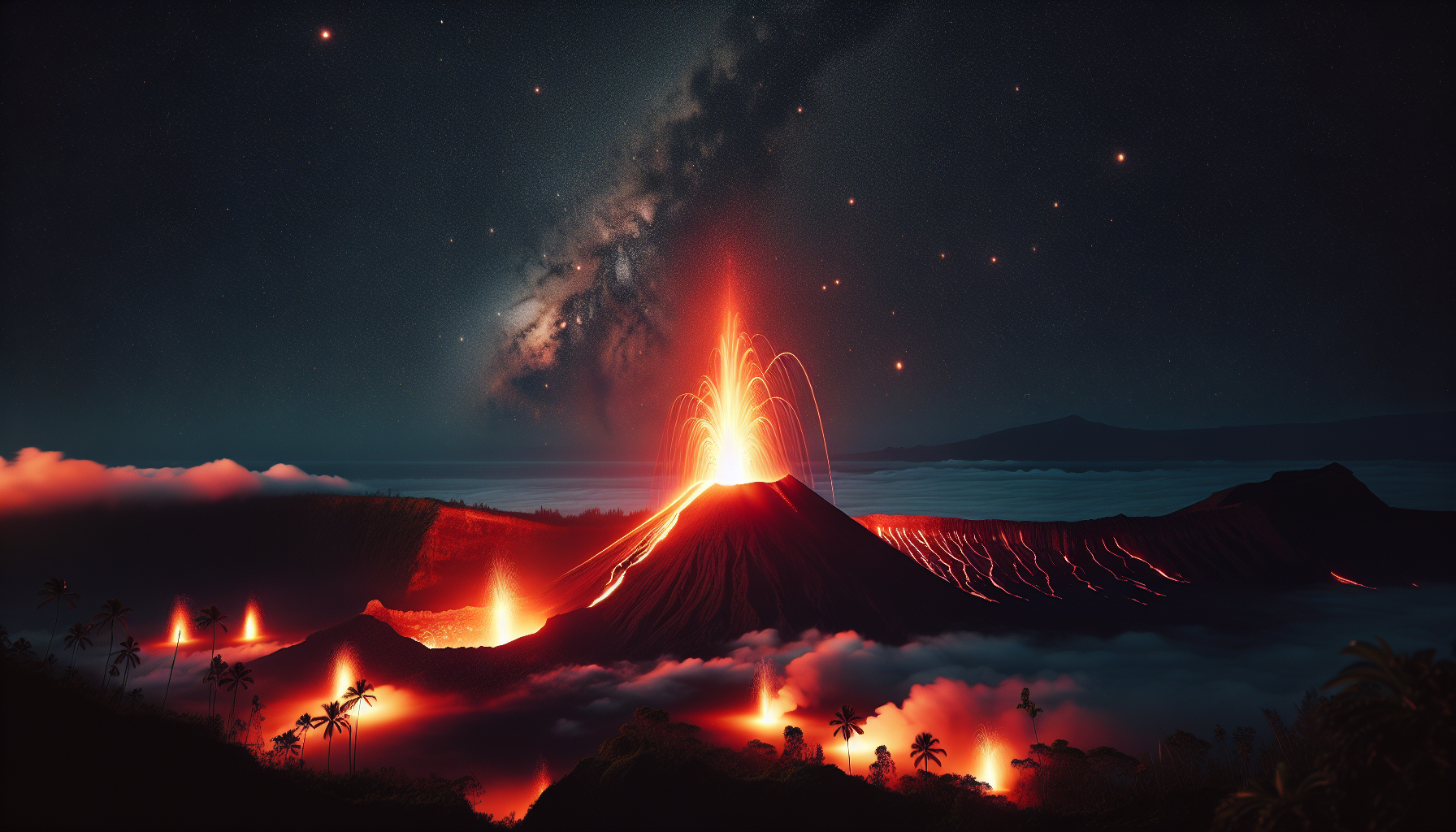
Hawai’i’s Kīlauea volcano erupted recently, sending spectacular lava fountains soaring into the night sky. This eruption illuminated the surrounding area with a fiery glow, captivating both locals and scientists. Kīlauea is one of the most active volcanoes on Earth, known for its frequent and dramatic eruptions that shape the island’s landscape. The current activity highlights the ongoing volcanic processes beneath the Hawaiian Islands.
In a significant development, this eruption serves as a reminder of the dynamic geological forces at work in the Pacific region. Kīlauea’s eruptions have historically caused both destruction and creation, reshaping land and affecting local communities. Monitoring efforts by volcanologists continue to provide critical data to predict future activity and ensure public safety. The event also draws attention to the importance of disaster preparedness in volcanic zones.
Meanwhile, the eruption has attracted interest from tourists and researchers alike, eager to witness the natural spectacle and study volcanic behavior. The glowing lava fountains not only offer a dramatic visual but also contribute to scientific understanding of magma dynamics and eruption patterns. As Kīlauea continues its activity, the balance between natural wonder and hazard remains a key focus for Hawaii’s residents and authorities.
