



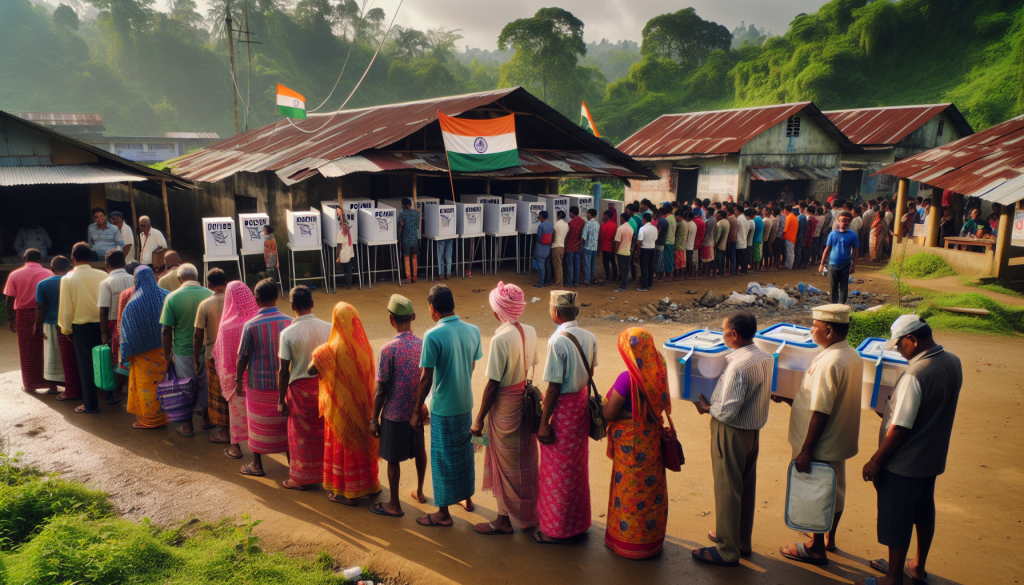
In a significant electoral exercise, the Indian states of Assam and Kerala have commenced voting for their respective legislative assemblies. These elections are crucial as they determine the political leadership and policy direction in two culturally and politically distinct regions. Assam, located in the northeast, faces issues related to immigration and ethnic identity, while Kerala in the south is known for its strong social welfare policies and high literacy rates. The outcomes here will influence local governance and could impact national politics given the states’ strategic importance.
Meanwhile, voting is also underway in the federal territory of Puducherry, a small enclave on the southeastern coast of India. Puducherry’s elections often attract attention due to its unique colonial history and diverse population. The simultaneous polling across these regions reflects the staggered nature of India’s state elections, which are held at different times to manage logistical challenges and political dynamics. These elections are closely watched for indications of shifting voter sentiments ahead of larger national contests.
Notably, the states of West Bengal and Tamil Nadu are scheduled to hold their legislative assembly elections later this month, completing a series of regional polls across India. Both states have significant political weight and vibrant party systems, making their upcoming elections highly anticipated. The results from Assam, Kerala, and Puducherry may set the tone for these subsequent contests, influencing party strategies and alliances. Overall, this phase of elections underscores the diversity and complexity of India’s democratic process.

Leave an opinion