

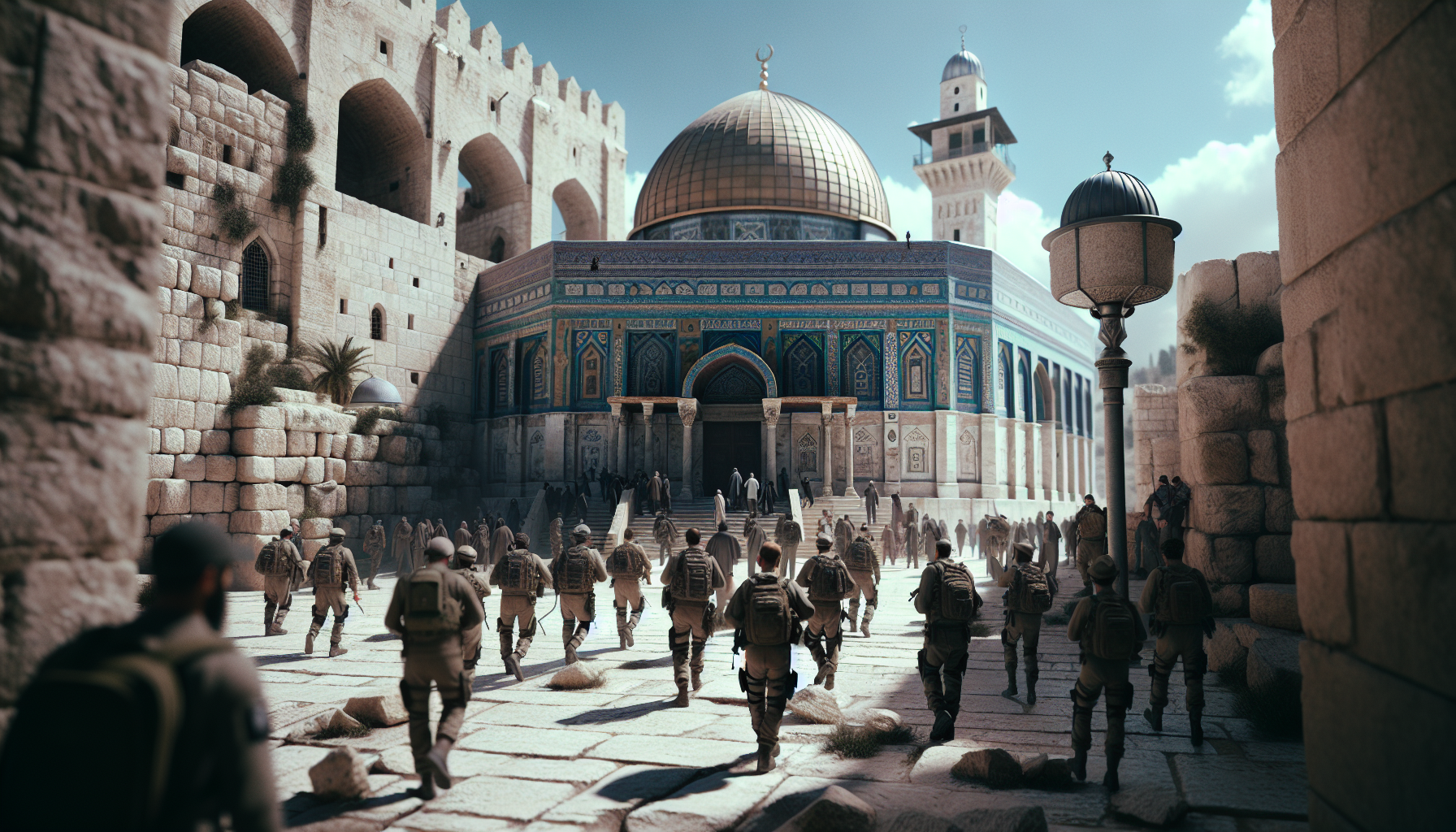
In a significant development, Israeli settlers entered the Al-Aqsa Mosque compound shortly after it was reopened. This site, located in Jerusalem, holds profound religious significance for both Muslims and Jews, making any activity there highly sensitive. The reopening followed a period of closure, which had been imposed due to security concerns and political tensions in the region. The presence of settlers in the compound often triggers unrest and is viewed as provocative by Palestinian worshippers and leaders.
The Al-Aqsa Mosque compound, also known as Haram al-Sharif, is one of the most contested religious sites in the world. It is revered by Muslims as the third holiest site in Islam and by Jews as the Temple Mount, the holiest place in Judaism. The compound has been a flashpoint for violence and political conflict, especially amid the ongoing Israeli-Palestinian dispute. The entry of settlers into the area is seen as a challenge to the status quo arrangements that govern access and control of the site.
Meanwhile, the incident has raised concerns about potential escalations in violence and further deterioration of relations between Israelis and Palestinians. International observers and regional actors often call for restraint and respect for the site’s sanctity to prevent outbreaks of conflict. The reopening and subsequent entry of settlers underscore the fragile nature of peace efforts and the deep-rooted sensitivities surrounding Jerusalem’s holy places.
