



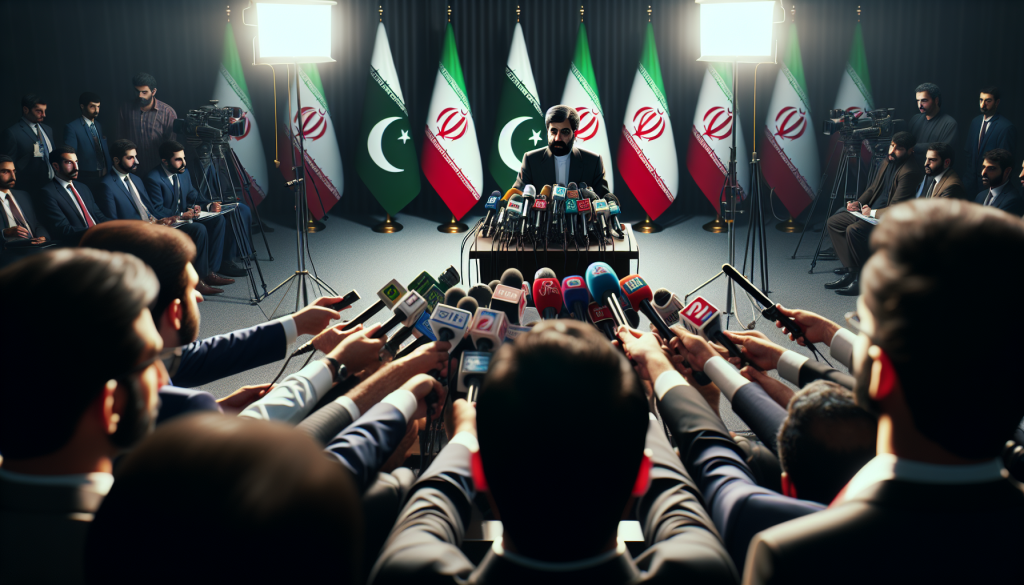
In Lahore, Iranian Consul General Mehran Mowahid Far addressed India’s involvement during the recent conflict between the United States, Israel, and Iran, which has resulted in over 3,000 fatalities, including the death of Supreme Leader Ayatollah Ali Khamenei. He highlighted that Iran closely monitors the actions of all nations, particularly noting India’s support for Israel as a matter that is carefully observed and remembered by the Iranian people.
He emphasized Iran’s strong ties with Pakistan, describing it as a brotherly nation whose support is highly valued. However, he also warned that any hostile actions by other countries against Iran would be met with appropriate responses. The consul general pointed out that these developments have significantly influenced public opinion, as evidenced by Iranian citizens demonstrating in the streets with Pakistani flags. He further remarked that his presence in Pakistan was crucial for his survival during these turbulent times.
Regarding negotiations with the United States, Mehran Mowahid Far recalled that issues such as uranium enrichment and Iran’s missile program had been contentious in the past. Tehran had rejected U.S. demands for the complete dismantling of its nuclear program even during peaceful periods, questioning how such demands could be accepted after the outbreak of war. He accused Israel of imposing strict censorship and hiding facts, asserting that Iranian forces controlled Israeli airspace and that over 1,000 casualties had occurred there. He also dismissed U.S. claims about a captured pilot, stating that Iranian military officials had not confirmed these reports. Additionally, he revealed that five U.S. aircraft had crashed in Isfahan.
When asked about U.S. threats, the consul general explained that Iran’s decentralized power grid makes a nationwide blackout impossible. He suggested that Iran has yet to reveal all its capabilities and expressed hope that U.S. President Donald Trump would refrain from escalating the conflict further. On the subject of missile technology, he credited Iran’s advancements to 47 years of sanctions and the efforts of young Iranian scientists, many in their twenties, emphasizing that the technology is now fully domestically developed despite some external influences decades ago. He also noted Iran’s agricultural self-sufficiency, producing 7% more food than required.
In terms of diplomacy, Mehran Mowahid Far acknowledged Pakistan’s role as a mediator aiming to bring the conflicting parties closer. He stressed that Iran does not wish to prolong the war but insists on guarantees to prevent future attacks before any cessation. He recognized support from neighboring countries such as Pakistan, Russia, Turkey, and Azerbaijan, particularly in supplying medical aid. The consul general rejected assertions that some Saudi officials desire the conflict to continue and reaffirmed Iran’s commitment to maintaining good relations with its neighbors.
He expressed frustration with Arab countries that have allowed their territories to be used for attacks against Iran, urging them to address their concerns directly with the United States and to prevent their lands from being exploited for aggression. He also clarified that a recent attack on water facilities in Kuwait was carried out by Israel but falsely attributed to Iran.
Expressing gratitude toward the Pakistani government and people for their support and condemnation of attacks on Iran, including those targeting schools, he noted that this solidarity is deeply appreciated in Iran. The consul general concluded by affirming Pakistan’s sincere efforts to end the war, mentioning ongoing communications between Iranian Foreign Minister Abbas Araghchi and Pakistan’s Foreign Minister Ishaq Dar. He stated that the next steps depend on the response of the United States to the diplomatic initiatives led by Pakistan and other nations.

Leave an opinion