

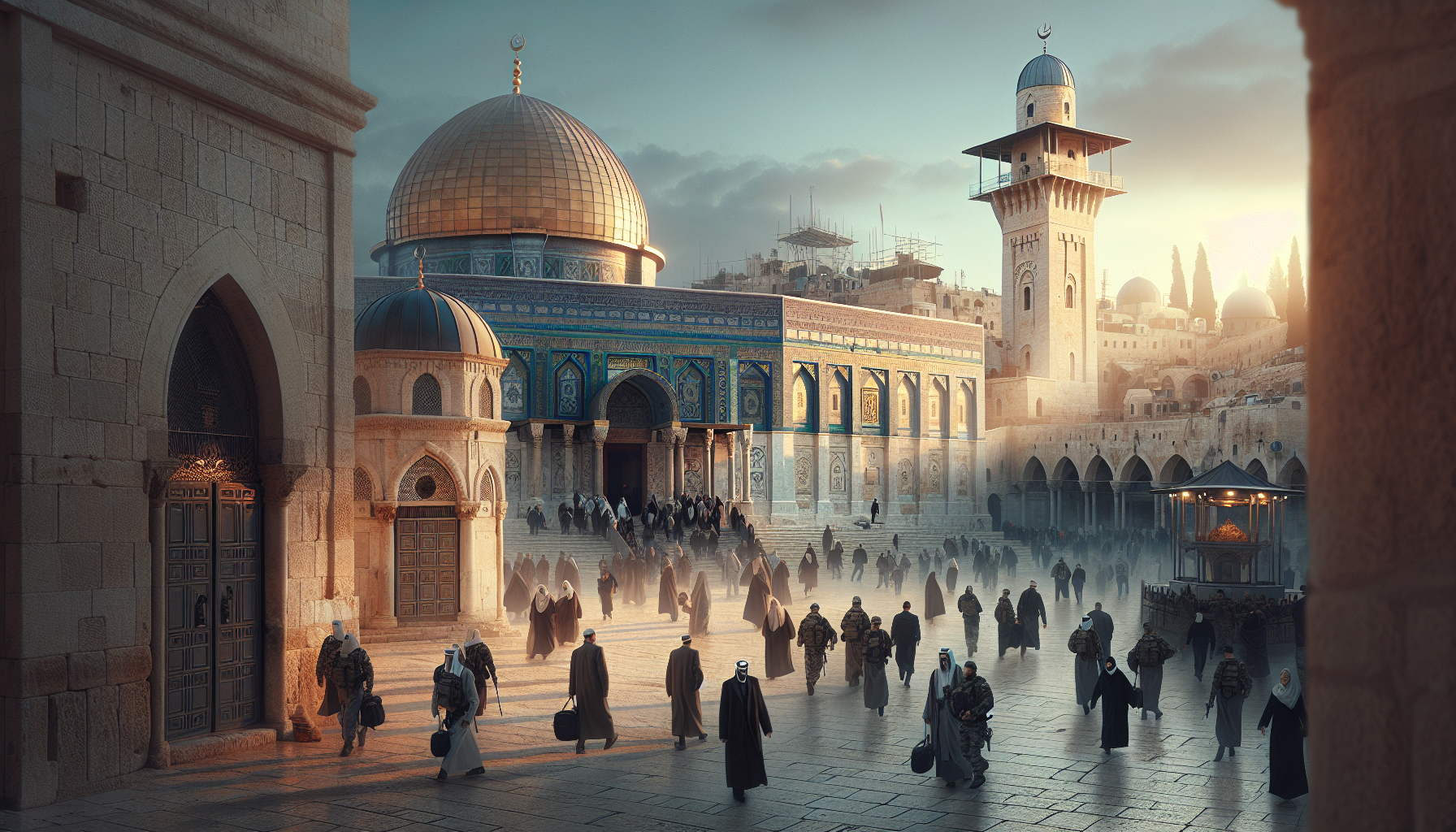
The Al-Aqsa Mosque compound and the nearby Church of the Holy Sepulchre in occupied East Jerusalem reopened to worshippers on Thursday, April 9, following a 40-day closure imposed by Israeli authorities amid ongoing regional conflict. This reopening marks a significant moment after restrictions had prevented access since late February.
Israeli police announced that the holy sites were accessible to worshippers and visitors starting Thursday morning, in line with updated directives from the Home Front Command. To ensure security, hundreds of police officers and border guards were stationed throughout Jerusalem’s Old City and along the routes leading to these sacred locations.
The Islamic Waqf, the Jordanian-administered body responsible for overseeing the Al-Aqsa Mosque, confirmed that the compound would open for dawn prayers and that all worshippers would be allowed entry, although further specifics were not disclosed. Early video footage captured thousands of worshippers entering the compound and participating in morning prayers, highlighting the significance of this reopening after a prolonged period of limited access.
The initial closure on February 28 was justified by Israeli authorities due to security concerns amid the ongoing conflict involving Israel, Iran, and their respective allies. The restrictions also disrupted religious observances, notably preventing Eid al-Fitr prayers at Al-Aqsa for the first time since Israel’s occupation of East Jerusalem in 1967, underscoring the conflict’s impact on religious life in the city.
Jerusalem’s holy sites, revered by Muslims, Christians, and Jews alike, have experienced increased security measures and intermittent closures in recent weeks, affecting major religious events such as Ramadan, Lent, and Passover. Israeli police emphasized that despite the reopening, security forces would remain heavily deployed to regulate access and maintain order.
In a related development, the reopening comes as Orthodox Christians prepare to celebrate Easter on Sunday, following weeks of tension and restrictions throughout the region. Historically, Israeli authorities have frequently limited Palestinian worshippers’ access to Al-Aqsa during periods of heightened political or security tensions, reflecting ongoing challenges in managing these sacred sites.
