

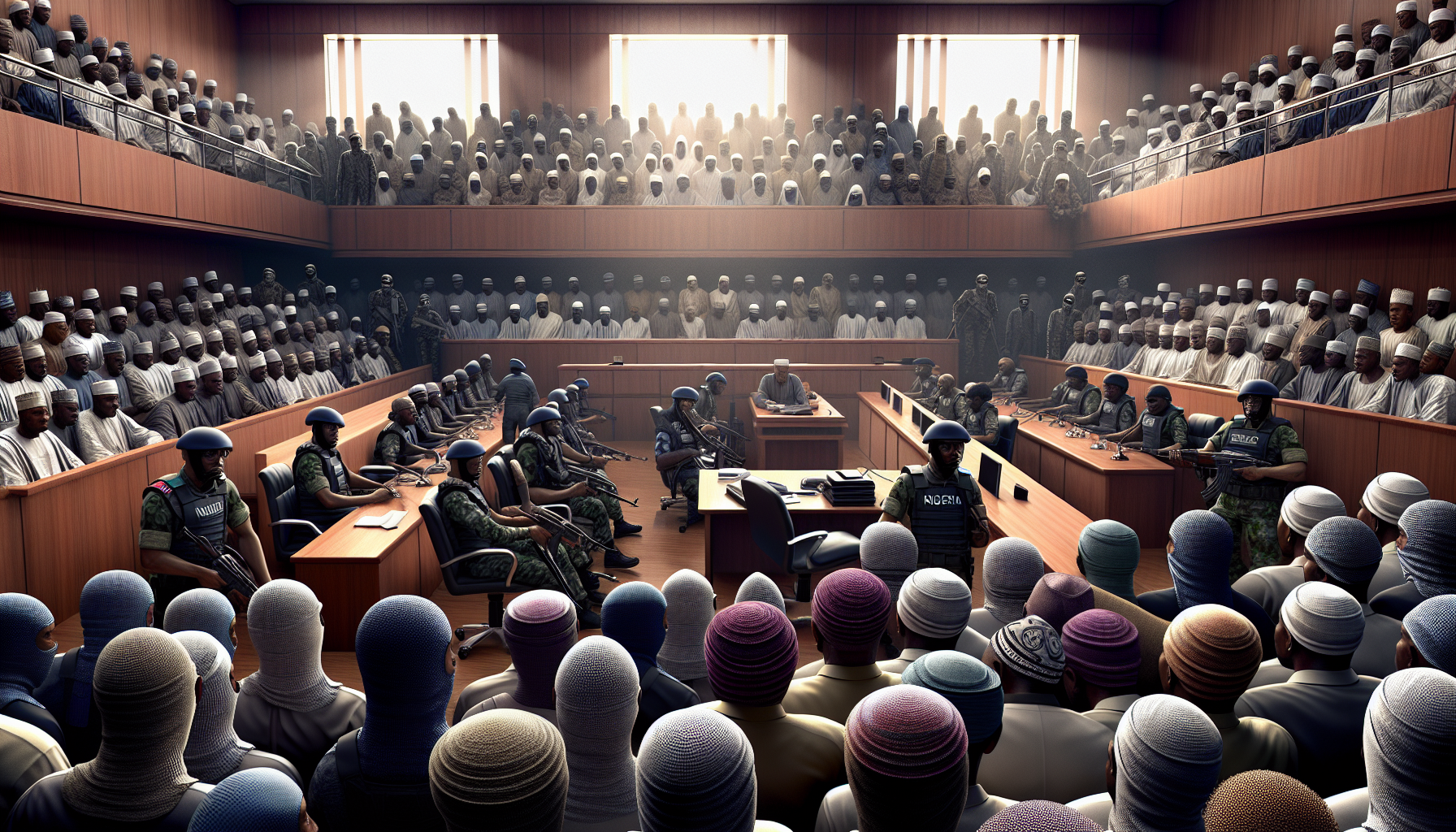
Nigeria has commenced a significant judicial process involving the mass trial of 500 individuals accused of terrorism-related offenses. This move marks a critical step in addressing the country’s ongoing struggle with militant violence and insurgency, particularly from groups such as Boko Haram. Historically, many suspects linked to terror attacks have been detained for extended periods without formal charges or trials, raising concerns about due process and human rights.
In a significant development, the mass trial aims to expedite justice and reduce the backlog of cases that have overwhelmed the Nigerian legal system. The government’s decision reflects increased pressure to hold perpetrators accountable and restore public confidence in the rule of law. Meanwhile, security forces continue to combat insurgent activities that have destabilized various regions, making the judicial process a crucial component of the broader counterterrorism strategy.
Notably, the trial’s outcome could set a precedent for how terrorism cases are handled in Nigeria, potentially influencing future legal and security policies. The mass prosecution also highlights the challenges faced by the judiciary in balancing national security concerns with the protection of individual rights. As the trial progresses, it will be closely watched by both domestic and international observers concerned with justice and stability in the region.
