

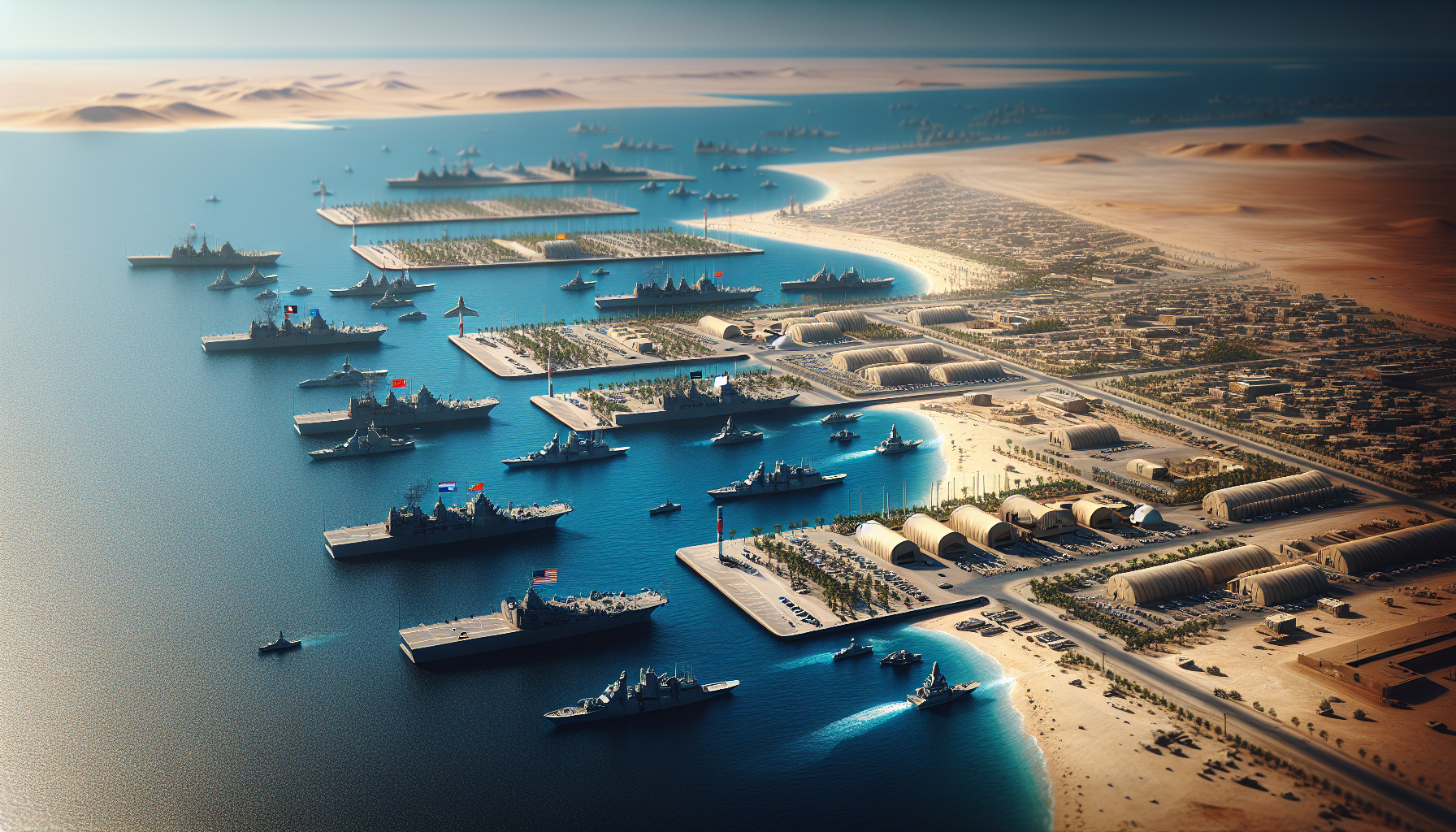
Djibouti’s unique geographic position at the southern entrance to the Red Sea has made it a critical hub for international military presence. The country hosts several foreign military bases, including those of the United States and China, situated just miles apart along its coastline. This proximity of rival powers underscores Djibouti’s importance in global maritime security and geopolitical strategy. Its location near the Bab-el-Mandeb Strait, a key chokepoint for global shipping, enhances its value as a military outpost.
In a significant development, Djibouti has leveraged its geography as a form of strategic capital, often referred to as its ‘oil,’ attracting foreign powers seeking influence in the Horn of Africa and beyond. The presence of these bases facilitates power projection, anti-piracy operations, and protection of vital sea lanes that connect Europe, Asia, and Africa. Meanwhile, the competition between the US and China in Djibouti reflects broader global rivalries playing out in this small but pivotal nation.
The impact of hosting multiple foreign military installations extends beyond security, influencing Djibouti’s economy and international relations. The country benefits from rental revenues and increased diplomatic leverage, while also navigating complex dynamics between competing global powers. As maritime trade continues to grow, Djibouti’s role as a strategic military and logistical hub is expected to remain crucial in maintaining regional stability and securing international shipping routes.
