

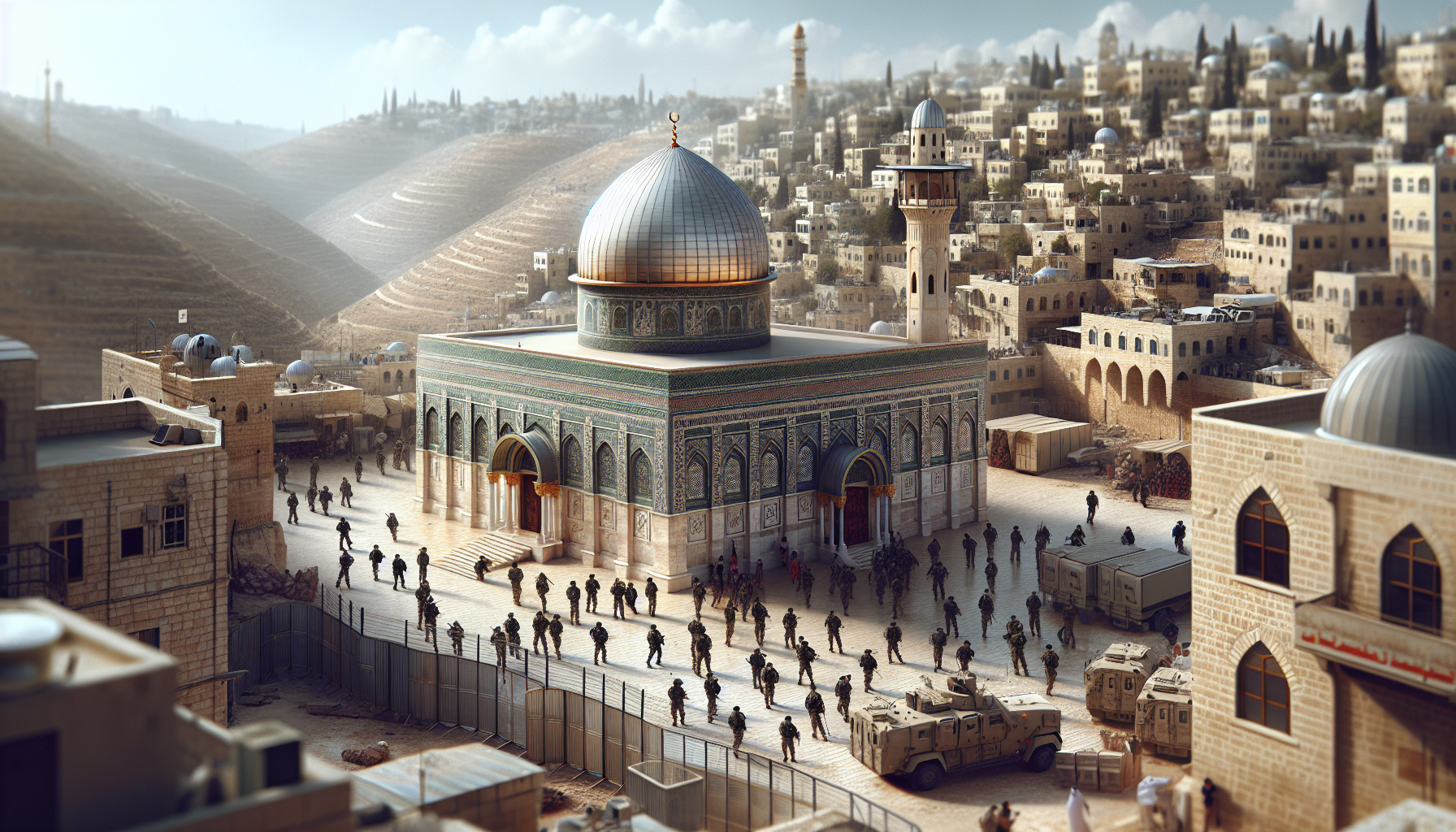
In a significant development, Israeli authorities have intensified their control over Hebron’s Ibrahimi Mosque, implementing stricter security protocols. These measures closely resemble those enforced at the Al-Aqsa Mosque in Jerusalem, a site of profound religious and political significance. The increased restrictions include tighter access controls and surveillance, impacting worshippers and local residents alike. This escalation reflects ongoing tensions in the region, where religious sites often become focal points of conflict.
Historically, the Ibrahimi Mosque holds immense importance for both Muslims and Jews, as it is traditionally believed to be the burial site of the patriarch Abraham. The mosque has been a flashpoint in the Israeli-Palestinian conflict, with previous incidents of violence and disputes over control. The recent tightening of Israeli measures is viewed by many as part of a broader strategy to assert authority over contested religious landmarks. Meanwhile, Palestinian communities have expressed concern over restricted access and the potential for further unrest.
The implications of these developments extend beyond Hebron, as they contribute to the fragile status quo surrounding holy sites in the region. The parallel drawn with Al-Aqsa Mosque, which has witnessed numerous confrontations, underscores the sensitivity of religious freedoms and political sovereignty. International observers warn that such actions could exacerbate tensions and hinder peace efforts. As the situation evolves, the balance between security and religious rights remains a critical challenge for all parties involved.
