

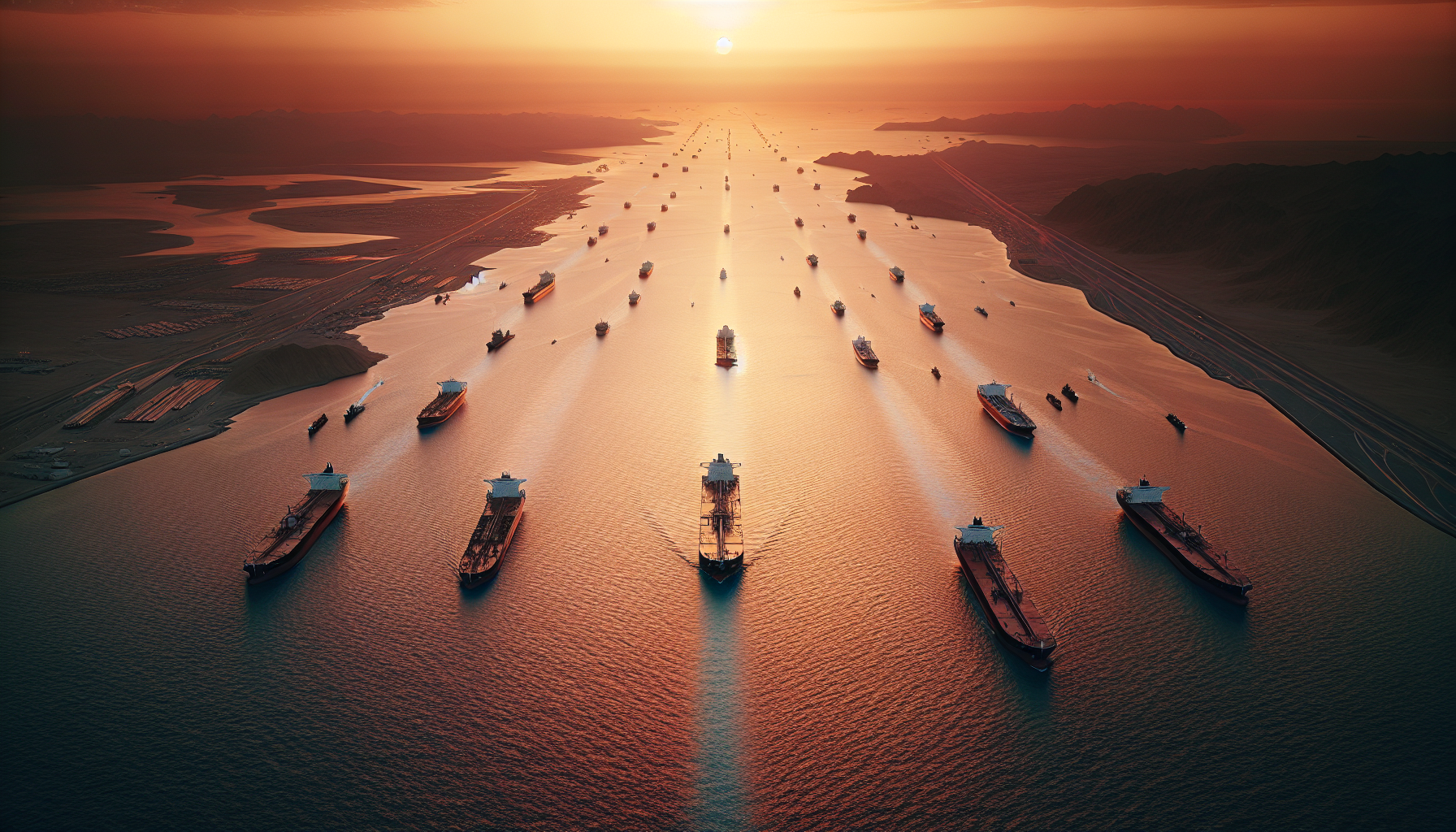
Recent intelligence from the United States indicates that Iran is unlikely to lift its control over the Strait of Hormuz in the near future. This strategic chokehold on one of the world’s most critical oil transit routes remains Tehran’s primary leverage against the United States, multiple informed sources. The assessment suggests that Iran may continue to restrict passage through the strait to sustain elevated energy prices, thereby pressuring US President Donald Trump to seek a swift resolution to the nearly five-week-long conflict, which has become increasingly unpopular among American voters.
In a significant development, the reports imply that the ongoing war, aimed at dismantling Iran’s military capabilities, might paradoxically enhance Tehran’s regional influence by demonstrating its capacity to threaten this vital waterway. President Trump has attempted to minimize the challenges involved in reopening the Strait of Hormuz, which facilitates about one-fifth of global oil trade. On Friday, he hinted at the possibility of ordering US forces to secure the passage, posting on his Truth Social platform, “With a little more time, we can easily OPEN THE HORMUZ STRAIT, TAKE THE OIL, & MAKE A FORTUNE.”
However, analysts have long cautioned that any military action against Iran, which controls one side of the strait, could be costly and risk entangling the US in a prolonged ground conflict. Ali Vaez, director of the Iran Project at the International Crisis Group, remarked that in trying to prevent Iran from acquiring weapons of mass destruction, the US inadvertently handed Tehran a powerful tool of disruption. Vaez emphasized that Iran’s ability to influence global energy markets through its control of the strait is even more formidable than a nuclear weapon.
President Trump’s position on US involvement in reopening the strait has been inconsistent. While he has made ending Iran’s blockade a condition for ceasefire talks, he has also urged Gulf nations and NATO allies to take the lead in reopening the waterway. A White House official, speaking anonymously, expressed confidence that the Strait of Hormuz would soon be accessible again and affirmed that Iran would not be permitted to regulate maritime traffic after the conflict. The official also noted that Trump believes other countries have more at stake in preventing Iran’s control than the US does.
Since the conflict began on February 28, Iran’s Islamic Revolutionary Guard Corps, despite being outgunned, has employed various tactics to make commercial navigation through the strait perilous and uninsurable. These include attacks on civilian vessels, deploying mines, and demanding passage fees. Such actions have effectively blocked traffic, driving global oil prices to multi-year highs and causing fuel shortages in countries dependent on Gulf oil and gas. The surge in energy costs threatens to exacerbate inflation in the US, posing a political challenge for Trump as he faces poor poll numbers and the Republican Party prepares for mid-term congressional elections in November.
Intelligence assessments warn that Iran is unlikely to relinquish this strategic advantage anytime soon. The sources declined to specify which agencies produced these evaluations but agreed that once Iran has experienced the power and leverage gained from controlling the strait, it will be reluctant to surrender it.
Experts highlight the significant risks associated with any military operation aimed at reopening the waterway. The Strait of Hormuz, separating Iran and Oman, narrows to just 21 miles at its tightest point, with shipping lanes only two miles wide in each direction, making vessels and troops vulnerable targets. Even if US forces were to seize the southern Iranian coast and nearby islands, the IRGC could continue to disrupt traffic using drones and missiles launched from deep within Iran.
Vaez noted that it would only take a few drones to disrupt shipping and deter passage. Some analysts suggest that even after the conflict, Iran is unlikely to forfeit its ability to control traffic through the strait, as it will need to rebuild and could use fees charged to commercial shipping as a source of reconstruction funding. Former CIA Director Bill Burns stated in a recent podcast that Tehran intends to maintain the leverage it has regained by disrupting traffic, seeking long-term deterrence and security guarantees in any peace agreement with the US, along with material benefits such as passage fees to support post-war recovery. Burns concluded that this situation sets the stage for a challenging negotiation ahead.
